Visa i rummet Se i AR Köp handmålat konstverk Byt till digital bildförsäljning Skicka
Detaljer Guide Lägg till i favoriter Ladda ner Liknande objekt Röntgen Bildspel Besökstatistik

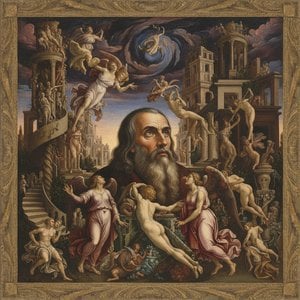
The Purification of the Temple 2

Witness El Greco's dramatic 'Purification of the Temple'! This iconic Mannerist masterpiece depicts Christ’s cleansing of the Jerusalem temple, brimming with vibrant color and intense emotion.

Upptäck El Grecos dramatiska konstverk! Mästerverk från Mannerismen och religiösa scener med långa figurer. En pionjär inom expressionism och kubism – se hans ikoniska målningar!

Giclée / Konsttryck

Giclée- eller canvasprint av museumskvalitet med snabb produktion och flexibla ytbehandlingsalternativ. ( Köp handmålat konstverk Byt till digital bildförsäljning)

P118B $10
P118H $10
P118W $10
P438Z $10
P508JH $12
P508YH $12
P805H $10
P805Z $10
P919BZ $10
P919G $10
P919XJ $10
P959ZH $10
P968JZ $12
W106C $8
W218G $10
W218JH $8
W218Y $10
W307PJ $10
W316G $10
W316PJ $8
W316Y $10
W398PJ $8
W4111J $10
W500HY $15
W500JH $15
W692G $12
W849H $8
W940BG $15
W953PJ $8

Standardstorlek
anpassad
CM
INCH

Välj bland våra förinställda storlekar som motsvarar konstverkets ursprungliga proportioner.

bredd
höjd

Du kan ange egna mått för att passa en specifik ram eller yta. Om det valda måttet inte överensstämmer med originalbildens proportioner kommer vi antingen att beskära konstverket eller utöka bilden med en speglad eller enfärgad kant. En digital mockup skickas för ditt godkännande innan produktionen påbörjas.
Vänligen notera att förhandsvisningen på skärmen inte återspeglar den faktiska beskärningen eller utökningen. Endast mockuppen visar den slutgiltiga kompositionen korrekt.
Även om anpassade storlekar är möjliga, rekommenderar vi att du väljer ett mått från den fördefinierade listan för att bevara de ursprungliga proportionerna.

Leverans över hela världen () på 2 veckor istället för standard 4/5 veckor. (24 september)

why_choose_icon
Fri expressfrakt över hela världen
why_choose_icon
Högkvalitativ linnecanvas
why_choose_icon
Fullständig fraktförsäkring
why_choose_icon
Garantier för återbetalning av tullavgifter
why_choose_icon
Garantier för exakt färgåtergivning
why_choose_icon
100 dagars returrätt vid fabrikationsfel
why_choose_icon
100% pengarna tillbaka-garanti
why_choose_icon
Mängdrabatt erbjuds

Totalt pris

$ 68

reproduction

The Purification of the Temple 2

Giclée / Konsttryck

Reproduktionsstorlek

-

Totalpris

$ 68

Snabbfakta

  • Title: The Purification of the Temple 2
  • Movement: Mannerism
  • Artist: El Greco
  • Location: Private Collection
  • Medium: Oil on canvas
  • Artistic style: Expressive, Vibrant colors
  • Notable elements or techniques: Elongated figures, Dramatic gestures

Konstquiz

Det finns endast ett korrekt svar på varje fråga.

Fråga 1:
What is the primary subject depicted in El Greco’s ‘The Purification of the Temple’?
Fråga 2:
El Greco’s style is most closely associated with which artistic movement?
Fråga 3:
The composition of ‘The Purification of the Temple’ utilizes a distinct structural element. What is it?
Fråga 4:
Which of the following best describes El Greco’s use of color in this painting?
Fråga 5:
The elongated figures characteristic of El Greco’s style are intended to convey what emotional or symbolic meaning?

The Tempestuous Vision of El Greco’s “Purification of the Temple”

Doménikos Theotokópoulos, universally known as El Greco – “the Greek” – wasn't merely a painter; he was a conjurer of emotion, a master of distortion, and a visionary who anticipated movements in art centuries ahead. Born in Crete in 1541, his journey through Venice, Rome, and finally to Toledo, Spain, forged a singular style that pulsates with spiritual intensity and dramatic dynamism. “The Purification of the Temple,” painted around 1600, stands as a potent testament to this unique vision – a swirling vortex of figures caught in a biblical drama rendered with an almost feverish energy. It’s not simply a depiction of Christ expelling merchants from the Temple; it's an exploration of faith, greed, and the struggle between order and chaos, all conveyed through El Greco’s masterful manipulation of line, color, and perspective.

A Symphony of Movement and Distortion

El Greco’s signature style is immediately apparent in “The Purification of the Temple.” The elongated figures, a hallmark of his Mannerist period, seem to defy gravity, stretching and contorting with an almost hallucinatory quality. These aren't realistic representations; they are embodiments of spiritual fervor, imbued with a palpable sense of urgency. Diagonal lines dominate the composition, creating a powerful sense of movement – the surging crowd, the outstretched arms of Christ, the frantic gestures of the merchants all contribute to this feeling of unrestrained energy. The perspective is deliberately flattened, sacrificing spatial accuracy for emotional impact. This distortion isn’t haphazard; it serves to heighten the drama and draw the viewer directly into the heart of the scene. Notice how the background cityscape, rendered in a hazy, distant manner, subtly reinforces the sense of depth while simultaneously contributing to the overall feeling of disorientation.

A Palette of Passion: Color and Light

The painting’s color palette is anything but subtle – it's an explosion of vibrant hues designed to evoke immediate emotional response. Strong contrasts between warm yellows, fiery reds, deep blues, and verdant greens create a visually arresting effect. El Greco eschewed smooth blending, opting instead for distinct areas of color applied with bold strokes. This technique adds texture and dynamism to the surface, mirroring the turbulent energy of the scene. The dramatic use of light is equally crucial. Christ is bathed in an almost ethereal glow, drawing our attention to his central role as a righteous figure battling against corruption. Conversely, the merchants are shrouded in shadow, representing their sinfulness and moral decay. This interplay of light and dark not only enhances the visual drama but also symbolizes the conflict between good and evil at the heart of the narrative.

Symbolism Woven into the Fabric of Faith

Beyond its immediate visual impact, “The Purification of the Temple” is rich in symbolic meaning. The scene itself – Christ’s expulsion of merchants from the Temple – carries significant weight within the Counter-Reformation context. It served as a potent symbol of the Catholic Church's need for purification and reform following the Protestant Reformation. El Greco cleverly incorporates additional layers of symbolism through carefully placed details. The relief sculpture depicting Abraham sacrificing his son, positioned to Christ’s left, alludes to the Old Testament narrative of obedience and divine will. The merchants themselves represent greed and materialism – forces that El Greco consistently depicted as corrupting influences on human behavior. The elongated figures can be interpreted as representing spiritual transcendence, suggesting a realm beyond earthly concerns.

A Legacy of Innovation

“The Purification of the Temple” is more than just a religious painting; it’s a landmark achievement in art history. El Greco's innovative use of elongated forms, distorted perspective, and expressive color foreshadowed developments in Expressionism and Cubism centuries later, demonstrating his profound influence on subsequent generations of artists. Reproductions of this powerful work offer a unique opportunity to experience the intensity and emotional depth of El Greco’s vision – a timeless testament to the enduring power of faith, struggle, and artistic genius.

Om konstnären

Doménikos Theotokópoulos, Known As El Greco – A Life Forged in Faith and Fire

Doménikos Theotokópoulos, universally recognized as El Greco – “the Greek” – stands apart from his contemporaries as a painter whose life and artistic output defied easy categorization. Born in Crete, Greece, around 1541, during the Venetian dominion of the island, his artistic journey unfolded across Venice and Rome before ultimately finding its most profound expression within the spiritual landscape of Spain: Toledo. El Greco wasn’t merely shaped by these locations; he synthesized their diverse influences into a singular style—one that foreshadowed the emotive fervor of Expressionism and the fragmented forms characteristic of Cubism centuries ahead of time. His formative years immersed in Byzantine iconography instilled within him meticulous attention to detail and an instinctive grasp of religious symbolism, grounding his artistic endeavors. Yet, he refused to be confined by tradition; he boldly embraced innovation, propelling himself beyond established conventions. He signed his canvases with Greek lettering – “Krḗs” – signifying his Cretan heritage—a defiant assertion of identity as he ventured into uncharted artistic territories. The genesis of El Greco’s distinctive style wasn't solely rooted in technique but also nurtured by the fervent religious fervor permeating Crete and invigorated by the opulent artistry emanating from Venice.

From Venetian Influence to Roman Exposure – A Transformation

Around 1567, El Greco relocated to Venice, initiating a pivotal phase of artistic maturation. Surrounded by luminaries like Titian, Tintoretto, and Veronese—masters who perfected color palettes, compositional strategies, and dramatic illumination—he absorbed their expertise with unwavering dedication. He deliberately loosened his brushstrokes, embracing the sensual richness of oil paint and injecting dynamism into his depictions of figures. This Venetian imprint is palpable in early works such as *St. Sebastian* (1600), where anatomical precision merges seamlessly with theatrical lighting, creating a mesmerizing visual experience. Subsequently, his sojourn in Rome exposed him to Mannerism—a stylistic movement characterized by elongated proportions, distorted perspectives, and sophisticated arrangements—though he struggled to gain widespread acclaim within the competitive Roman artistic milieu. Despite encountering challenges in establishing himself as a celebrated artist, El Greco’s exploration of Mannerist principles undeniably broadened his artistic horizons.

A Singular Style – Long Lines and Intense Emotion

El Greco's artistic style is instantly recognizable—a stylistic hallmark that continues to resonate with audiences today. His figures are frequently rendered with elongated proportions, their bodies contorted in poses conveying profound spiritual ecstasy or agonizing sorrow. This isn’t mere stylistic embellishment; it’s a deliberate attempt to transcend the physical realm and portray intangible realities—the unseen forces shaping human experience. He skillfully manipulated color—often employing hues far removed from naturalistic representations—to amplify emotional impact, mirroring the fervor of his subject matter. Dramatic lighting—characterized by stark contrasts between illumination and darkness—creates a theatrical atmosphere, drawing viewers into the core of the depicted scene and intensifying its emotive power. *The Burial of the Count of Orgaz* (1586-1588), arguably El Greco’s magnum opus, exemplifies these stylistic elements flawlessly. This monumental painting portrays a miraculous event – the ascension of saints to bury a pious nobleman—with remarkable realism interwoven with ethereal figures embodying divine intervention. It stands as testament to his ability to fuse meticulous observation with visionary imagination.

Toledo and Spiritual Depth

El Greco’s artistic trajectory culminated in his relocation to Toledo in 1577, coinciding with the ascendancy of the Counter-Reformation—a period marked by fervent religious devotion within Spain. This environment fostered both patronage and an atmosphere conducive to El Greco's deeply spiritual artistic endeavors. He channeled his convictions into canvases imbued with palpable emotion and symbolic resonance, reflecting a profound detachment from conventional aesthetic norms. His oeuvre expanded considerably during this time, producing iconic works that cemented his legacy as one of the foremost artists of his era.

Legacy and Recognition – A Pioneer Ahead Of His Time

Despite encountering difficulties gaining widespread recognition during his lifetime—primarily due to stylistic divergences from prevailing artistic trends—El Greco’s genius was belatedly acknowledged in the 20th century. Artists like Picasso and Braque recognized him as a precursor to modern art, particularly Cubism, admiring his distorted forms and unconventional perspectives. His expressive style captivated Expressionists who sought to convey emotional intensity through bold colors and dramatic compositions. Today, El Greco is revered as one of the most influential figures in Western artistic history—a visionary painter whose work continues to inspire awe and provoke contemplation centuries after its creation. He remains a beacon of artistic innovation, demonstrating that true artistry transcends temporal boundaries and speaks directly to the human spirit’s yearning for transcendence.
El Greco

El Greco

1541 - 1614 , Griechenland

Snabbfakta

  • Artistic Movement Or Style: Mannerism och Barock
  • Artists Who Influenced This Artist:
    • Titian
    • Tintoretto
  • Date Of Birth: 1541
  • Date Of Death: 1614
  • Full Name: Doménikos Theotokópoulos
  • Nationality: Grekisk-Spansk
  • Notable Artworks:
    • Burial av räknaren Orgaz
    • Vy över Toledo
    • El Espolio
    • Heliga Sebastian
  • Place Of Birth: Crete, Greece
Utforska konstverk sorterade efter tema, stil och egenskaper.