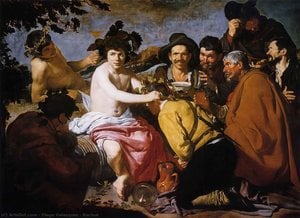
Mästaren av Ljus och Skugga: Diego Velázquez
Diego Rodríguez de Silva y Velázquez, född i Sevilla år 1599, intar en unik position inom konsthistorien – inte bara som en spansk mästare, utan som en avgörande gestalt vars innovationer genljudde genom århundradena. Hans liv utspelade sig under Spaniens gyllene tidsålder, en period präglad av imperiemakt och kulturell blomstring, och hans konst blev oskiljbart förbunden med den habsburgska hovets storhet och komplexitet. Från ödmjuka början steg Velázquez till att bli mer än bara en målare; han var ett empires visuella tolk, som fångade dess härskare, hovfolk och vardagsliv med en aldrig tidigare skådad realism och psykologisk djup. Hans resa började under handledning av Francisco de Herrera el Viejo och, avgörande nog, med Francisco Pacheco, vars rigorösa träning gav honom en grund i teknik, proportioner och klassisk lärdom. Det var dock Velázquez’s inneboende talang – en extraordinär känslighet för ljus, färg och mänsklig karaktär – som verkligen särpräglade honom. Redan tidiga verk som *En gammal kvinna steker ägg* antydde den revolutionerande ansats han skulle komma att använda inom genremåleriet, och gav vardagliga scener en värdighet och omedelbarhet som tidigare var osedd.
Uppstigningen vid Filip IV:s Hov
År 1623, vid tjugofyra års ålder, fattade Velázquez det omvälvande beslutet att flytta till Madrid och söka beskydd i Spaniens maktcentrum. Detta drag visade sig vara avgörande. Han fick snabbt erkännande och utnämndes till hovmålare hos kung Filip IV år 1628, en position han skulle behålla resten av sitt liv. Denna utnämning handlade inte bara om att säkra ett jobb; den gav Velázquez oöverträffad tillgång till kungafamiljen och adeln, vilket gjorde det möjligt för honom att bli deras krönikör genom måleri. Till skillnad från många hovkonstnärer som idealiserade sina modeller strävade Velázquez efter kompromisslös realism. Han skildrade Filip IV inte som en avlägsen symbol för auktoritet, utan som en man – intelligent, melankolisk och tyngd av ansvar. Detta engagemang för sanning, kombinerat med hans mästerliga teknik, vann honom kungens förtroende och ökande konstnärlig frihet. Hans tidiga hovporträtt visar en utvecklande stil, som rör sig bort från den rigida formaliteten i tidigare spansk porträttkonst mot ett mer naturalistiskt och psykologiskt insiktsfullt tillvägagångssätt. Påverkan av venetianska mästare som Tizian – vars verk Filip IV ivrigt samlade på sig – är tydlig i Velázquez’s alltmer flytande penseldrag och rika färgpaletter. Han absorberade lärdomarna från venetiansk målning, särskilt dess betoning på färg och lösa penselföring, och förvandlade dem till något unikt hans eget.
Konstens Zenith: *Las Meninas* och Bortom
Velázquez’s konstnärliga geni nådde sin höjdpunkt under 1550-talet, kulminerande i skapandet av hans mästerverk, *Las Meninas* (1656). Detta verk är inte bara ett porträtt; det är en komplex meditation över konsten själv. Det föreställer infantan Margarita Teresa omgiven av hennes hovdamer, dvärgar och andra medlemmar av hovet, medan Velázquez själv står framför en stor duk, till synes fångad i själva måleriprocessen. Inkluderingen av kungen och drottningen speglade i en spegel längst bak i rummet lägger till ett ytterligare lager av intriger, suddar ut gränserna mellan betraktare och sedd, verklighet och representation. *Las Meninas* är en tour de force i perspektiv, komposition och psykologisk insikt, som utmanar betraktarna att ifrågasätta sin egen roll i synakten. Det är en målning om att se, bli sedd och konstnärlig skapelse självt. Andra betydande verk från denna period inkluderar *Bredas överlämnande*, en kraftfull framställning av spansk seger med anmärkningsvärd mänsklighet, och porträtt som *Dona Mariana av Österrike*, som visar hans förmåga att fånga både kunglig värdighet och inre sårbarhet. Hans teknik fortsatte att utvecklas, kännetecknad av lösa penseldrag, subtila tonövergångar och en extraordinär känslighet för ljus och atmosfär – ett kännetecken som skulle påverka generationer av konstnärer.
Ett Bestående Arv
Diego Velázquez dog i Madrid år 1660, efterlämnande ett verk som skulle ha en djupgående inverkan på västerländsk konst. Hans betoning på realism, hans innovativa användning av ljus och skugga och hans psykologiska djup bröt ny mark inom måleriet. Han nöjde sig inte med att bara registrera yttre utseende; han fångade essensen av den mänskliga upplevelsen. Under 1800-talet såg franska realistiska målare som Gustave Courbet Velázquez som en förebild för sitt eget engagemang för att skildra livet utan idealisering. Édouard Manet, djupt inspirerad av *Las Meninas*, refererade direkt till Velázquez’s komposition i sina egna verk och demonstrerade den spanske mästarens visions bestående kraft. Under 1900-talet engagerade sig konstnärer som Pablo Picasso och Francis Bacon med Velázquez’s målningar genom omtolkningar och hyllningar, och erkände hans fortsatta relevans för modern konst.
Picasso skapade till exempel en serie variationer över *Las Meninas*, där han utforskade dess kompositionella struktur och psykologiska komplexitet. Idag finns Velázquez’s mästerverk på museer runt om i världen, mest anmärkningsvärt på Museo del Prado i Madrid, där besökare kan uppleva briljansen hos denna extraordinära konstnär på första hand. Hans arv fortsätter att inspirera vördnad och beundran, vilket befäster hans plats som en av de största målarna genom tiderna – en mästare av ljus, skugga och den mänskliga andan.
Nyckelverk och Samlingar
- *Las Meninas* (1656): Museo del Prado, Madrid - Förmodligen hans mest kända verk, ett komplext porträtt av kungafamiljen.
- *Bredas överlämnande* (1634-1635): Museo del Prado, Madrid – En kraftfull framställning av spansk seger med anmärkningsvärd mänsklighet.
- *Venus vid sin spegel* (ca 1647–1651): Museo del Prado, Madrid - Demonstrerar hans förmåga att balansera realism och skönhet.
- *Dona Mariana av Österrike, Spaniens drottning* (1649): Museo del Prado, Madrid – Ett fantastiskt porträtt som visar kunglig elegans.
- *Porträtt av påven Innocent X* (1650): Galleria Doria Pamphilj, Rom - En slående och okonventionell framställning av påven.
- *Självporträtt* (1643): Musée des Beaux-Arts, Valence – Avslöjar en värdig och introspektiv konstnär.
Hans verk finns framträdande representerade på: Museo del Prado (Madrid), Musée des Beaux-Arts (Valence) och många andra prestigefyllda samlingar världen över.



 Visa i rummet
 Köp handmålat konstverk
 Skicka
 Dela
Dela
 Detaljer
 Guide
Guide

 Ladda ner
 Liknande objekt
 Röntgen
 Bildspel
 Besökstatistik

 Läs mer






































 Glasalternativet är endast tillgängligt i storlekar under 110 cm.