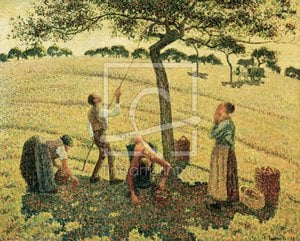
Meadows at Eragny: A Pointillist Masterpiece by Camille Pissarro
“Meadows at Eragny” by Camille Pissarro is a beautiful landscape that showcases the artist's skill in capturing the beauty of nature. Created in 1886, this oil on canvas piece measures 60 x 74 cm and is a stunning example of Pointillism, a technique that involves applying small dots of color to form an image.
Artistic Style and Technique
Camille Pissarro was a master of Pointillism, and “Meadows at Eragny” is one of his most notable works in this style. The painting features a serene landscape with trees, houses, and a clear blue sky, all created using small dots of color. This technique gives the painting a sense of depth and texture, drawing the viewer into the scene.
The colors used in “Meadows at Eragny” are predominantly shades of green and blue, which creates a natural and calming atmosphere. The pointillism technique is evident in the way the artist has applied small dots of color to create depth and texture within the scene. For more information on Pointillism, visit The Pointillism Art Movement page on WahooArt.
Historical Context and Symbolism
Painted in 1886, “Meadows at Eragny” reflects a period of significant artistic experimentation. Pissarro, along with artists like Seurat and Signac, embraced Pointillism as a reaction against the more traditional Impressionist style. This technique aimed to create a more scientific approach to color mixing, believing that placing dots of pure color side-by-side would allow the viewer's eye to blend them optically, resulting in a brighter and more vibrant image.
The choice of Eragny as a subject is also significant. Pissarro moved his family to Eragny-sur-Epte in 1884, seeking a quieter life away from the bustle of Paris. The landscape became a recurring theme in his work, representing a connection to nature and rural tranquility. The painting can be seen as a celebration of the French countryside and a reflection of Pissarro’s personal contentment with his new surroundings.
Emotional Impact and Legacy
“Meadows at Eragny” evokes a sense of peace and serenity. The gentle colors, the soft light, and the meticulous application of dots create a calming effect on the viewer. It invites contemplation and appreciation for the simple beauty of nature. The painting’s enduring appeal lies in its ability to transport viewers to a tranquil rural setting, offering a respite from the complexities of modern life.
Pissarro's work significantly influenced subsequent generations of artists, including Cézanne and Van Gogh. “Meadows at Eragny,” with its innovative technique and evocative subject matter, stands as a testament to Pissarro’s artistic vision and his contribution to the development of modern art.
Similar Works by Camille Pissarro
Where to See This Artwork
Kunstmuseum Basel in Switzerland is home to many notable artworks, including some by Camille Pissarro.
For more information on Camille Pissarro, visit his page on Wikipedia.



 Visa i rummet
 Köp handmålat konstverk
 Skicka
 Dela
Dela
 Detaljer
 Guide
Guide

 Ladda ner
 Liknande objekt
 Röntgen
 Bildspel
 Besökstatistik


 Läs mer






































 Glasalternativet är endast tillgängligt i storlekar under 110 cm.