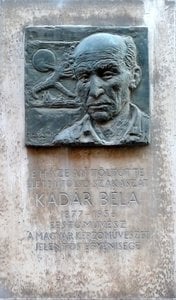
En ungersk röst inom avantgardet: Béla Kádárs liv och konst
Född i en judisk arbetarfamilj i Budapest 1877, var Béla Kádárs resa mot att bli en central gestalt inom det tidiga 1900-talets avantgardistiska konst präglad av både motgångar och en orubblig hängivenhet till konstnärligt utforskande. Hans formella utbildning begränsades till sex år, men denna brist på traditionell skolgång tycktes befria honom från konventionella begränsningars bojor, vilket lät ett unikt personligt visuellt språk växa fram. Kádár inledde inte sitt yrkesliv med penseln i hand, utan som lärling inom järnturnering – ett hantverk som satte djupa spår i hans konstnärliga sinnen och gav honom en grundläggande förståelse för form, struktur och den inneboende skönhet som finns i industriella material. Även under dessa tidiga år lyste hans kreativa anda igenom; han fokuserade initialt på att måla väggmålningar runt om i Budapest, vilket vittnade om en medfödd fallenhet för storskaligt visuellt uttryck och berättande. Denna formativa period lade grunden för de djärva och dynamiska kompositioner som senare skulle komma att definiera hans livsverk.
Paris, Berlin och en syntes av stilar
Den verkliga katalysatorn för Kádárs konstnärliga utveckling kom med hans resor till Paris och Berlin 1910. Dessa resor exponerade honom för de framväxande avantgardistiska rörelserna som svepte över Västeuropa och förändrade hans konstnärliga bana oåterkalleligt. Han mötte de radikala idéerna hos Der Blaue Reiter, kubismens fragmenterade former, futurismens dynamik och nyprimitivismens råa energi – influenser som han inte bara adopterade rakt av, utan snarare syntetiserade till ett eget, distinkt visuellt vokabulär. Kádár nöjde sig inte med att ansluta sig till en enda ”skola”; istället påbörjade han en ständig utforskning av form, färg och komposition, driven av en outsläcklig längtan efter att bryta sig loss från den traditionella representativa konstens begränsningar. Han absorberade element från konstruktivismen och till och med de drömlika kvaliteterna i metafysiskt måleri, och vävde samman dem i en komplex väv som speglade hans unika perspektiv. Denna period markerade en avgörande vändpunkt som förvandlade honom från en lovande väggmålare till en sann innovatör på randen till internationellt erkännande.
Erkännande och internationell exponering
Kádárs stora genombrott kom i oktober 1923 med en utställning på Herwarth Waldens prestigefyllda Galerie der Sturm i Berlin. Denna uppvisning presenterade hans verk i en tydligt expressionistisk stil, vilket omedelbart väckte uppmärksamhet och etablerade honom som en kraft att räkta med inom den europeiska konstscenen. Galleriet, känt för att främja radikala nya konstnärliga röster, erbjöd Kádár en idealisk plattform för att knyta kontakter med samlare och konstnärskollegor som delade hans passion för experimenterande. Hans internationella profil stärktes ytterligare genom två utställningar organiserade av Katherine Dreier på Brooklyn Museum of Art i New York, under 1926 och 1928. Noterbart var Kádárs närvaro vid den andra utställningen, vilket befäste hans ställning på det amerikanska konstlandskapet och skapade värdefulla kopplingar till den framväxande modernistiska rörelsen över Atlanten. Hans målningar under denna period avbildade ofta scener hämtade från ungersk folklore, intima porträtt och glimtar av byliv – motiv som framställdes med en djärv färgpalett och dynamiska kompositioner som fångade både hemlandets själ och den moderna tidsålderns energi.
lust
Ett arv av djärv innovation
Béla Kádárs konstnärliga stil är omedelbart igenkännlig genom sin livfulla och uttrycksfulla användning av färg, där han ofta använde icke-naturalistiska nyanser för att förmedla känslor och atmosfär. Hans kompositioner kännetecknas av en påtaglig känsla av rörelse och energi, uppnådd genom samspelet mellan linjer, former och figurer som tycks vibrera på duken. Han använde ofta impasto-teknik – applicering av tjocka lager färg – vilket skapade texturerade ytor som förstärker verkets visuella kraft och bjuder in till en taktil upplevelse. Men kanske det som verkligen utmärker Kádár är hans enastående förmåga att förena dessa mångsidiga konstnärliga influenser till en sammanhängande och originell stil. Han representerar en avgörande länk mellan den ungerska avantgardismen och de bredare europeiska rörelserna under sin tid, och speglar de sociala och politiska omvälvningarna i det tidiga 1900-talet genom sin konst. Även om han inte alltid hyllades lika brett under sin livstid som vissa av sina samtida, har Kádárs verk upplevt en renässans under de senaste decennierna, då forskare alltmer erkänner hans betydande bidrag till den moderna konsten. Han avled i Budapest 1956 och lämnade efter sig ett arv av djärva och innovativa målningar som fortsätter att inspirera konstnärer och fängsla publiken än idag – ett bevis på den bestående kraften hos en konstnär som vågade skapa sin egen väg.
Kännetecken i Kádárs verk
- Djärv färgpalett: Kádár var berömd för sin livfulla och uttrycksfulla användning av färg, där han ofta använde icke-naturalistiska nyanser för att förmedla känslor och stämning.
- Dynamisk komposition: Hans kompositioner präglas av en känsla av rörelse och energi, skapad genom ett samspel mellan linjer, former och figurer.
- Impasto-teknik: Han använde ofta tjocka lager färg (impasto) för att skapa texturerade ytor och förstärka verkets visuella slagkraft.
- Unik syntes: Kádárs förmåga att sammanföra olika konstnärliga influenser till en sammanhängande och originell stil gör honom till en betydelsefull gestalt inom det tidiga 1900-talets konst.
- Teman och motiv: Hans målningar skildrar ofta scener från folktro, byliv och intima porträtt, utförda med djärva färger och dynamiska kompositioner. Han utforskade även abstrakta teman och experimenterade med fragmenterade former.



 Visa i rummet
 Byt till tryckta exemplar
 Skicka
 Dela
Dela
 Detaljer
 Studentguide för konstverk

 Ladda ner
 Liknande objekt
 Röntgen
 Bildspel
 Besökstatistik
 Läs mer