Visa i rummet Se i AR Byt till tryckta exemplar Byt till digital bildförsäljning Skicka
Detaljer Guide Lägg till i favoriter Ladda ner Liknande objekt Röntgen Bildspel Besökstatistik

Untitled (study for

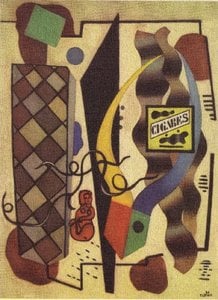
This artwork is a bold exploration of abstraction featuring geometric shapes and expressive blues and reds. Inspired by early Cubism and Expressionism, it showcases Souza-Cardoso's pioneering spirit in Portuguese art.

Upptäck Amadeo de Souza-Cardoso (1887–1918), en pionjär inom portugisisk modern konst. Utforska hans vibranta, abstrakta kompositioner influerade av Kubism & Futurism och hans bestående konstnärliga arv.

Handgjord oljereproduktion

Handmålad olja på duk i din valda storlek och ram, tillverkad efter beställning av våra konstnärer. ( Byt till tryckta exemplar Byt till digital bildförsäljning)

P118B $10
P118H $10
P118W $10
P438Z $10
P508JH $12
P508YH $12
P805H $10
P805Z $10
P919BZ $10
P919G $10
P919XJ $10
P959ZH $10
P968JZ $12
W106C $8
W218G $10
W218JH $8
W218Y $10
W307PJ $10
W316G $10
W316PJ $8
W316Y $10
W398PJ $8
W4111J $10
W500HY $15
W500JH $15
W692G $12
W849H $8
W940BG $15
W953PJ $8

Standardstorlek
anpassad
CM
INCH

Välj bland våra förinställda storlekar som motsvarar konstverkets ursprungliga proportioner.

bredd
höjd

Du kan ange egna mått för att passa en specifik ram eller yta. Om den valda storleken inte matchar originalbildens proportioner kommer vi antingen att beskära konstverket eller utöka målningen med ytterligare handmålade element. En digital skiss skickas till dig för godkännande innan produktionen påbörjas.
Observera att förhandsvisningen på skärmen inte återspeglar den faktiska beskärningen eller utökningen. Endast skissen visar den slutgiltiga kompositionen korrekt.
Även om anpassade storlekar är möjliga, rekommenderar vi att du väljer en dimension från den fördefinierade listan för att bevara originalproportionerna.

Exempel på vad som kan anpassas: Byt ut ansiktet mot ett foto av kunden; Lägg till ett husdjur (t.ex. byt ut en katt mot en hund); Inkludera ett dolt meddelande i bakgrunden; Ändra bakgrundens landskap eller element.
Efter beställning kommer WahooArt.com team att mejla kunden för instruktioner och tillhandahålla en skissförhandsvisning

Leverans över hela världen () på 3–4 veckor istället för standard 5 veckor. (24 september). Inga kompromisser med kvaliteten.

why_choose_icon
Fri expressfrakt över hela världen
why_choose_icon
Högkvalitativ linnecanvas
why_choose_icon
Fullständig fraktförsäkring
why_choose_icon
Garantier för återbetalning av tullavgifter
why_choose_icon
Garantier för exakt färgåtergivning
why_choose_icon
100 dagars returrätt vid fabrikationsfel
why_choose_icon
100% pengarna tillbaka-garanti
why_choose_icon
Mängdrabatt erbjuds

Totalt pris

$ 272

reproduction

Untitled (study for

Tryckteknik

Reproduktionsstorlek

-

Totalpris

$ 272

Snabbfakta

  • Influences: Futurism
  • Notable elements or techniques: Bold colors, geometric shapes
  • Medium: Watercolor/Gouache on paper
  • Location: Private Collection
  • Movement: Modernism
  • Dimensions: 33 x 28 cm
  • Artistic style: Cubism/Expressionism

Konstquiz

Det finns endast ett korrekt svar på varje fråga.

Fråga 1:
What artistic movement is Amadeo de Souza-Cardoso’s Untitled (study for) most closely associated with?
Fråga 2:
The image description mentions a ‘dynamic and abstract composition.’ What does this suggest about Souza-Cardoso’s approach to painting?
Fråga 3:
What medium is likely used in the artwork based on its appearance?
Fråga 4:
The color palette described as ‘dominated by blues and reds’ reflects a characteristic feature of which artistic style?
Fråga 5:
Considering Souza-Cardoso's connections with Parisian artists like Brancusi and Delaunay, what broader context does this artwork represent?

A Fragmented Vision of Modernity: Analyzing Amadeo de Souza-Cardoso’s “Untitled (study for )”

“Untitled (study for )”, executed in 1915 by Portuguese modernist painter Amadeo de Souza-Cardoso, stands as a testament to the burgeoning artistic fervor of its time—a pivotal moment where European avant-garde movements wrestled with capturing the dynamism and complexity of the modern experience. More than just pigment on paper, this piece embodies a profound engagement with Cubism’s revolutionary exploration of spatial perception and the expressive potential of color, establishing Souza-Cardoso as one of Portugal's foremost champions of artistic innovation amidst the broader European landscape.

Composition and Technique: Embracing Instability

The artwork’s visual impact immediately commands attention through its strikingly asymmetrical composition. Geometric shapes—primarily rectangles and squares—overlap and intersect with disconcerting abandon, creating a palpable sense of movement and disrupting any conventional notion of equilibrium. Souza-Cardoso eschews meticulous detail in favor of loose brushstrokes and broad color blocks, prioritizing expressive gesture over precise representation. This technique – characteristic of the early Cubist experimentation – reflects a desire to dismantle traditional artistic conventions and convey an emotional response to the subject matter rather than simply mirroring reality. The subtle variations in opacity within the paint layers contribute to textural interest without resorting to overtly decorative elements.

Color Palette: A Clash of Emotion

Dominating the canvas is a vibrant color palette dominated by hues of blue and red, punctuated by flashes of yellow, green, and purple. These colors aren’t blended harmoniously; instead, they are applied in bold strokes that create a jarring juxtaposition—a deliberate provocation designed to stimulate visual perception. The strategic use of warm reds against cool blues underscores the inherent tension within the composition, mirroring perhaps the anxieties and uncertainties prevalent during Souza-Cardoso's era. This chromatic dissonance speaks volumes about the artist’s intention to communicate feeling rather than simply depicting form.

Symbolism and Context: Echoes of Parisian Avant-Garde

Beyond its formal qualities, “Untitled (study for )” carries symbolic weight rooted in the intellectual currents circulating within Paris during Souza-Cardoso's formative years. Influenced by figures like Picasso and Gris, he actively participated in the dialogue between Portuguese art and the revolutionary ideas of Cubism—a movement that sought to challenge perspectival illusion and represent objects from multiple viewpoints simultaneously. The inclusion of “Corporation” – a simple inscription – adds another layer of meaning, hinting at broader concerns about social identity and artistic patronage within Portugal’s cultural milieu. It serves as a reminder that Souza-Cardoso's work wasn't merely an aesthetic exercise but also a reflection of his engagement with the pressing questions of his time.

Concluding Impression: A Legacy of Bold Experimentation

Ultimately, “Untitled (study for )” transcends its technical merits to convey a powerful emotional resonance—a feeling of restless energy and intellectual curiosity. Souza-Cardoso’s masterful manipulation of color and form encapsulates the spirit of early modernism, demonstrating an unwavering commitment to artistic innovation and establishing himself as a cornerstone of Portuguese art history. It remains a compelling visual testament to the transformative power of abstraction and the enduring fascination with capturing the complexities of human experience through unconventional stylistic choices.

Om konstnären

Amadeo de Souza-Cardoso, A Pioneer of Portuguese Modernism: The Life and Art of Amadeo de Souza-Cardoso

Amadeo de Souza-Cardoso, a name resonating with the vibrant energy of early 20th-century modernism, remains a somewhat enigmatic figure despite his pivotal role in bridging Portuguese art to the international avant-garde. Born on November 14, 1887, in Manhufe, Portugal, his brief but intensely creative life was marked by a restless spirit and an unwavering dedication to artistic innovation. From humble beginnings rooted in the rural landscapes of his homeland, Souza-Cardoso embarked on a journey that would lead him to the heart of Parisian modernism, where he forged connections with some of the most influential artists of his time – Modigliani, Brancusi, Delaunay, and Gris among them. His early education began with architectural studies in Lisbon, but it was the allure of painting, particularly the expressive power of caricature, that truly captured his imagination and set him on a path toward artistic exploration. This initial foray into art wasn’t merely technical training; it was an awakening to the potential of visual language as a means of commentary and self-expression.
  • Early Life: Amadeo was born in Manhufe, Portugal, the son of José Emygdio de Souza-Cardoso, rural landowner and Emília Cândida Ferreira Cardoso. His maternal uncle, Francisco José Ferreira Lopes Cardoso, affectionately nicknamed “Uncle Chico”, supports him on his artistic vocation since he was young.
  • Parisian Encounters: In 1906, Souza-Cardoso relocated to Paris, immersing himself in the city’s thriving artistic milieu. Initially continuing his architectural pursuits, he soon gravitated towards painting, quickly absorbing the radical ideas that were reshaping the art world. The influence of Cubism and Futurism became increasingly apparent in his work around 1910, establishing him as one of Portugal's first true modern painters.
  • Artistic Style: Souza-Cardoso didn’t simply mimic these movements; he synthesized them with his own unique sensibility, creating a style characterized by bold forms, vibrant colors, and dynamic compositions. His paintings weren’t merely representations of reality but rather explorations of perception, emotion, and the very essence of form itself.
  • Cultural Synthesis: Souza Cardoso’s artistic journey wasn't a complete severance from his Portuguese roots. Despite embracing the avant-garde spirit of Paris, he maintained a strong connection to his homeland, frequently returning to Manhufe. This duality is reflected in his art, where themes and motifs drawn from Portuguese culture – religious processions, rural landscapes, folk traditions – are interwoven with modernist techniques.

Key Characteristics of Souza-Cardoso’s Work

  • Innovative Style: A pioneering approach to modern Portuguese art, blending Cubism, Futurism, and his own unique sensibility.
  • Vivid Color Palette: Characterized by aggressive and vibrant use of color, creating dynamic and emotionally resonant compositions.
  • Dynamic Composition: Often employing fragmented perspectives and seemingly chaotic arrangements that are, in fact, carefully balanced and structured.
  • Cultural Synthesis: A unique ability to reconcile Portuguese themes and motifs with modernist techniques, creating a dialogue between cultures.
  • Early Abstraction: Exploration of abstraction, particularly in his later works, pushing the boundaries of representational art.

Legacy and Remembrance: A Lasting Impact

Tragically, Amadeo de Souza-Cardoso’s promising career was cut short by his untimely death on October 25, 1918, at the age of just thirty. He succumbed to pneumonia during the Spanish Flu pandemic, leaving behind a relatively small but remarkably impactful body of work. For many years, his contributions were overlooked, overshadowed by more prominent figures in the modernist movement. However, in recent decades, there has been a growing recognition of his significance as a pioneer of Portuguese modernism and an important voice within the broader European avant-garde. Two major retrospectives – one in 1958 and another at the Grand Palais in Paris in 2016 – have helped to reintroduce his work to a wider audience, solidifying his place in art history. Today, his paintings can be found in museums around the world, including the Plymouth City Museum and Art Gallery, alongside works by other notable artists. His legacy continues to inspire contemporary artists, serving as a reminder of the power of artistic innovation and the enduring importance of cultural exchange.

Useful Links

  • Wikipedia: This article includes a list of...
  • Swedish Wikipedia: Amadeo de Souza-Cardoso, född 14 november 1887 in Amarante – död 25 oktober 1918 in Espinho, var en portugisisk målare, en pionjär inom modern konst.

Additional Information

  • Souza Cardoso’s paintings can be found in museums around the world.

Amadeo de Souza-Cardoso

Amadeo de Souza-Cardoso

1887 - 1918 , Portugal

Snabbfakta

  • Artistic Movement Or Style: Modernism; Cubism; Futurism
  • Artists Or Movements Influenced By This Artist:
    • Cubism
    • Futurism
  • Artists Who Influenced This Artist:
    • Modigliani
    • Brancusi
    • Delaunay
    • Gris
  • Date Of Birth: 14 november 1887
  • Date Of Death: 25 oktober 1918
  • Full Name: Amadeo de Souza-Cardoso Ferreira
  • Nationality: Portugisisk
  • Notable Artworks:
    • Saut du Lapin
    • Cabeça
  • Place Of Birth: Manhufe, Portugal
Utforska konstverk sorterade efter tema, stil och egenskaper.