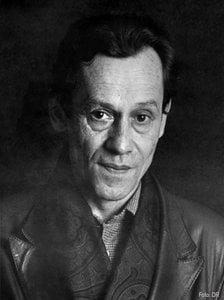
early life and education
álvaro lapa, a renowned portuguese artist, was born on july 31, 1939, in évora, portugal. he spent his formative years within the culturally isolated environment of this city during the 1940s and 1950s. lapa's interest in art and philosophy began in high school, which laid the foundation for his future endeavors. lapa graduated with a degree in philosophy from the faculty of letters at the university of lisbon, further solidifying his intellectual background. this academic pursuit would later influence his artistic approach, as seen in his works.
artistic career
in 1956, lapa moved to lisbon and began his artistic career as an isolated, self-taught artist. his first solo exhibition was held at galeria 111 in lisbon in 1964, marking the beginning of his professional journey.
lapa's work is characterized by a personal mythology, developed over time and structured like an enigma. he experimented with various mediums, including painting, drawing, collage, textile design, and scenography. this versatility showcases his innovative spirit and willingness to explore different artistic expressions.
notable works and collections
*
álvaro lapa's works can be found in several notable collections, including the
new hall art collection, which features an impressive array of contemporary art pieces. /en/art/show/art-d3alr5-en/ * the
ballarat fine art gallery in australia also showcases lapa's work, highlighting his global recognition. /en/art/show/art-d3c369-en/
legacy and later life
álvaro lapa passed away on february 11, 2006, in porto, portugal. his legacy continues to inspire artists and art enthusiasts alike, with his unique approach to art remaining a subject of fascination.
- view more of álvaro lapa's works at [https://WahooArt.com/@/álvaro-lapa](https://WahooArt.com/@/álvaro-lapa)
- explore the new hall art collection and its notable artists at /en/art/show/art-d3alr5-en/
- discover more about the ballarat fine art gallery and its collections at /en/art/show/art-d3c369-en/
conclusion
álvaro lapa's life and work serve as a testament to the power of art in transcending time and geographical boundaries. his legacy, now an integral part of portugal's rich cultural heritage, continues to inspire and influence contemporary artistic endeavors.



 Visa i rummet
 Byt till tryckta exemplar
 Skicka
 Dela
Dela
 Detaljer
 Guide
Guide

 Ladda ner
 Liknande objekt
 Röntgen
 Bildspel
 Besökstatistik


 Läs mer