Visa i rummet Se i AR Köp handmålat konstverk Byt till digital bildförsäljning Skicka
Detaljer Studentguide för konstverk Lägg till i favoriter Ladda ner Liknande objekt Röntgen Bildspel Besökstatistik

(80)

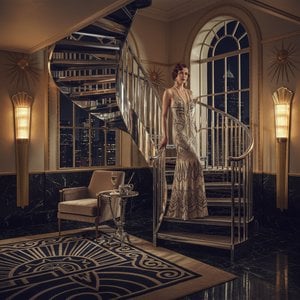
The image is a painting of a woman with long hair, wearing a dress, holding a bird in her arms. The woman appears to be looking at the viewer while she holds the bird. The painting has an Art Nouveau style and features intricate detailing. In addition to the main subject, there are several birds scattered throughout the image, some of which are close to the woman and others further away. These bir

Alphonse Mucha (1860-1939) var en tjeckisk konstnär känd för sin fantastiska Art Nouveau-stil med vackra kvinnor och symboliska verk som "Slav Epic". En mästare inom dekorativ konst och affischdesign.

Giclée / Konsttryck

Giclée- eller canvasprint av museumskvalitet med snabb produktion och flexibla ytbehandlingsalternativ. ( Köp handmålat konstverk Byt till digital bildförsäljning)

Corner sample of the P118B picture frame: formgjuten polystyren, 5 cm wide and 3 cm thick
P118B Skr10
Corner sample of the P118H picture frame: formgjuten polystyren, 5 cm wide and 3 cm thick
P118H Skr10
Corner sample of the P118W picture frame: formgjuten polystyren, 5 cm wide and 3 cm thick
P118W Skr10
Corner sample of the P438Z picture frame: formgjuten polystyren, 5.5 cm wide and 3.5 cm thick
P438Z Skr10
Corner sample of the P508JH picture frame: formgjuten polystyren, 7 cm wide and 3.5 cm thick
P508JH Skr12
Corner sample of the P508YH picture frame: formgjuten polystyren, 7 cm wide and 3.5 cm thick
P508YH Skr12
Corner sample of the P805H picture frame: formgjuten polystyren, 5 cm wide and 3.5 cm thick
P805H Skr10
Corner sample of the P805Z picture frame: formgjuten polystyren, 5 cm wide and 3.5 cm thick
P805Z Skr10
Corner sample of the P919BZ picture frame: formgjuten polystyren, 7 cm wide and 3.5 cm thick
P919BZ Skr10
Corner sample of the P919G picture frame: formgjuten polystyren, 7 cm wide and 3.5 cm thick
P919G Skr10
Corner sample of the P919XJ picture frame: formgjuten polystyren, 7 cm wide and 3.5 cm thick
P919XJ Skr10
Corner sample of the P959ZH picture frame: formgjuten polystyren, 5 cm wide and 3 cm thick
P959ZH Skr10
Corner sample of the P968JZ picture frame: formgjuten polystyren, 6 cm wide and 4 cm thick
P968JZ Skr12
Corner sample of the W106C picture frame: massivt trä, 5 cm wide and 3 cm thick
W106C Skr8
Corner sample of the W218G picture frame: massivt trä, 5 cm wide and 3 cm thick
W218G Skr10
Corner sample of the W218JH picture frame: massivt trä, 5 cm wide and 3 cm thick
W218JH Skr8
Corner sample of the W218Y picture frame: massivt trä, 5 cm wide and 3 cm thick
W218Y Skr10
Corner sample of the W307PJ picture frame: massivt trä, 6 cm wide and 3 cm thick
W307PJ Skr10
Corner sample of the W316G picture frame: massivt trä, 6 cm wide and 3 cm thick
W316G Skr10
Corner sample of the W316PJ picture frame: massivt trä, 6 cm wide and 3 cm thick
W316PJ Skr8
Corner sample of the W316Y picture frame: massivt trä, 6 cm wide and 3 cm thick
W316Y Skr10
Corner sample of the W398PJ picture frame: massivt trä, 5 cm wide and 3 cm thick
W398PJ Skr8
Corner sample of the W4111J picture frame: massivt trä, 6.5 cm wide and 3.5 cm thick
W4111J Skr10
Corner sample of the W500HY picture frame: massivt trä, 7 cm wide and 5 cm thick
W500HY Skr15
Corner sample of the W500JH picture frame: massivt trä, 7 cm wide and 5 cm thick
W500JH Skr15
Corner sample of the W692G picture frame: massivt trä, 8 cm wide and 4 cm thick
W692G Skr12
Corner sample of the W849H picture frame: massivt trä, 5 cm wide and 3 cm thick
W849H Skr8
Corner sample of the W940BG picture frame: massivt trä, 7.5 cm wide and 4.5 cm thick
W940BG Skr15
Corner sample of the W953PJ picture frame: massivt trä, 6 cm wide and 3.5 cm thick
W953PJ Skr8

Standardstorlek
anpassad
CM
INCH

Välj bland våra förinställda storlekar som motsvarar konstverkets ursprungliga proportioner.

bredd
höjd

Ange den bredd och höjd du behöver, för att passa din ram eller din vägg. Ett tryck kan endast beskäras, aldrig göras större än bilden, vilket innebär att ett format med en annan formform leder till att en del av bilden går förlorad. Vi skickar en digital mockup för godkännande innan vi trycker något. Bilden som visas på denna sida visar inte den faktiska beskärningen — det är endast mockuppen som gör det.

Leverans över hela världen () på 2 veckor istället för standard 4/5 veckor. (21 oktober)

Fri expressfrakt över hela världen
Högkvalitativ linnecanvas
Fullständig fraktförsäkring
Garantier för återbetalning av tullavgifter
Garantier för exakt färgåtergivning
100 dagars returrätt vid fabrikationsfel
100% pengarna tillbaka-garanti
Mängdrabatt erbjuds

Totalt pris

Skr 669

(80)

Giclée / Konsttryck

Reproduktionsstorlek

-

Totalpris

Skr 669

Snabbfakta

  • Title: The Slavonic Uprising
  • Dimensions: 65 x 48 cm
  • Year: 1897
  • Location: National Gallery Prague
  • Medium: Oil on canvas
  • Movement: Art Nouveau

Konstquiz

Det finns endast ett korrekt svar på varje fråga.

Fråga 1:
What artistic movement is Alphonse Mucha’s painting ‘The Slavonic Uprising’ primarily associated with?
Fråga 2:
Which artist heavily influenced Mucha's style, particularly in his use of decorative patterns and flowing lines?
Fråga 3:
The painting depicts a woman holding a bird. What symbolic significance might this imagery convey within the context of Art Nouveau?
Fråga 4:
Muchas illustrations were inspired by works like ‘The Daughters of Tespio’ by Gustave Moreau. What is a common characteristic found in Moreau's paintings?
Fråga 5:
What technique did Mucha predominantly use to create his artwork?

A Vision of Femininity and Mythic Harmony

In the golden twilight of the nineteenth century, few names evoke the sinuous elegance of the Belle Époque quite like Alphonse Mucha. His masterpiece, “The Slavonic Uprising,” stands as a breathtaking testament to the Art Nouveau movement, a period defined by its rejection of rigid academic structures in favor of organic, flowing lines and opulent ornamentation. Within this composition, we encounter a profound engagement with mythology and symbolism, where the boundaries between the human spirit and the natural world begin to dissolve. Mucha does not merely present a portrait; he invites the viewer into a dreamscape where idealized femininity meets the deep, resonant echoes of Slavic folklore.

The central figure of the work serves as an anchor for this mythic narrative—a woman whose presence is both ethereal and commanding. Draped in silks that seem to catch an unseen breeze, she embodies a sense of graceful movement that is characteristic of Mucha’s celebrated style. As her hair cascades down her shoulders like a waterfall of shimmering gold, it reflects the artist's meticulous fascination with botanical textures and natural forms. This fluidity is further enhanced by the presence of birds that dance through the composition, adding layers of depth and a rhythmic pulse to the scene, as if the very air around her is alive with song and motion.

The Alchemy of Line and Color

To behold this work is to witness a masterclass in technical precision. Mucha’s approach was far from accidental; it was a disciplined study of anatomy and botanical illustration blended with an almost magical use of color. Utilizing the delicate layering of thin washes—often employing tempera on canvas—he achieved a luminous surface that appears to glow from within. This technique creates a shimmering, pearlescent quality that makes the subject appear as though she is bathed in a soft, celestial light.

Every detail, from the intricate patterns on her garments to the delicate feathers of her avian companions, is rendered with an astonishing level of care. For the discerning collector or interior designer, this level of detail offers a profound visual richness. The way the colors interact—soft pastels meeting deeper, more resonant tones—creates a balanced palette that can anchor a room with both sophistication and warmth. It is a symphony of line and color that captures the eye and holds it, rewarding repeated observation with new discoveries in every curve and shadow.

Symbolism and the Soul of Art Nouveau

Beyond its aesthetic splendor, “The Slavonic Uprising” is deeply rooted in a complex web of allegory. Mucha’s work often sought to elevate the human experience through visual storytelling, weaving together Christian iconography and Slavic legends to create something transcendent. The interplay between the woman and the birds suggests a harmony between civilization and nature, a central theme of the Art Nouveau ethos. This piece is not just an object of beauty; it is a narrative vessel that carries the weight of cultural identity and spiritual aspiration.

For those seeking to bring a sense of historical depth and emotional resonance into a curated space, this reproduction offers more than mere decoration. It provides a window into a lost era of romanticism and intellectual curiosity. Whether placed in a grand salon or a quiet study, the painting radiates an aura of timeless elegance, making it an incomparable choice for anyone looking to inspire awe and contemplation through the enduring power of fine art.

Frågor och svar

Hur beskrivs färgpaletten i "(80)" av Alfons Mucha?

Färgerna i "(80)" utgör en Neutrals palett. Denna klassificering beskriver de dominerande färggrupperna.

Är färgerna i "(80)" av Alfons Mucha mättade eller dämpade?

"(80)" av Alfons Mucha är återgiven med en Balanced Soft mättnad.

Vilken atmosfär förmedlar "(80)"?

Den övergripande stämningen i "(80)" av Alfons Mucha är Romantic. Stämningen beskriver verkets allmänna atmosfär.


Om konstnären

Early Life and Artistic Beginnings

Alphonse Maria Mucha, född den 15 juli 1860 i den lilla byn Ivančice i Mähren – en region som idag tillhör Tjeckien – var redan i ung ålder tydligt markerad av ett konstnärligt talent. Hans förmåga att sjunga lockade honom till en musikskola, men det var dock måleriet som verkligen fängslade hans hjärta och sinne. Han började tidigt experimentera med olika tekniker och stilar, och hans tidiga verk vittnar om en stark fascination för traditionella motiv och den lokala konsttraditionen i Mähren.

Hans utbildning tog honom först till Brno, huvudstaden i Mähren, där han studerade vid den lokala gymnasiet. Där fick han dock inte riktigt briljera och blev avvisad från akademin i Prag – en besvikelse som formade hans syn på konsten och hans strävan efter att skapa sin egen unika stil. Det var under denna tid som han kom i kontakt med Jan Umlauf, en lokal konstnär vars freskar inspirerade honom djupt och ledde till ett tidigt intresse för dekorativa element och berättande genom bild.

Paris och Art Nouveau: En Genombrott

År 1887 flyttade Mucha till Paris, en stad som redan var centrum för konstnärlig innovation och experiment. Han fortsatte sin utbildning vid Académie Julian och Colarossi, men det var i den franska huvudstaden som hans unika stil verkligen började ta form. Han fascinerades av den nya rörelsen Art Nouveau, som präglades av flytande linjer, organiska former och en känsla av rörelse – en stil som skulle bli hans signatur.

Det var i Paris som han fick sitt stora genombrott. Hans poster för skådespelerskan Sarah Bernhardt, särskilt affischen till hennes pjäs Gismonda (1894), blev omedelbart sensationella och etablerade honom som en av de mest framstående konstnärerna inom Art Nouveau. Bernhardts entusiasm över hans arbete ledde till ett långvarigt samarbete, där Mucha designade affischer, kostymer och scenografi för hennes föreställningar.

Universal Exhibitionen och Internationellt Genomslag

År 1900 deltog Mucha i den stora Universal Exhibitionen i Paris, där hans Art Nouveau-stil fick ett enormt internationellt genomslag. Han designade interiörer och affischer för både Bosniens och Hercegovinas paviljong samt samarbetade med Österrikes paviljong. Exhibitionen cementerade hans rykte som en banbrytande konstnär och inspirerade efterföljande generationer av designers och konstnärer.

Under denna tid började han också att utforska andra områden inom design, inklusive inredningsarkitektur, glas och kläder. Hans verk präglades av en elegant och sofistikerad estetik, som ofta innehöll inslag av traditionella tjeckiska motiv och symbolik.

Slav Epicen och ett Nationaldåd

En av Muchas mest monumentala och betydelsefulla projekt var Slav Epic (1912-1930), en serie av 20 historiemålningar som han skapade med stöd från den amerikanska industrimagnaten Charles Richard Crane. Projektet syftade till att illustrera den slaviska folks historia och kultur, och det blev ett symboliskt uttryck för tjeckisk nationalkänsla och identitet.

Slav Epic är inte bara en konstnärlig prestation utan också ett politiskt statement. Mucha använde sin konst för att främja tjeckiska intressen och stärka nationens stolthet, vilket ledde till kontroverser och kritik från vissa håll. Trots detta har Slav Epic blivit en av hans mest kända och älskade verk.

Senare Liv och Arv

Efter första världskriget fick Mucha i uppdrag att designa postfrimärken, sedlar och andra officiella dokument för den nybildade staten Tjeckoslovakien. Hans konst spelade en viktig roll i att forma landets visuella identitet och symbolik.

Alphonse Mucha dog den 14 juli 1939 i Prag, och hans arv lever vidare genom hans fantastiska verk och hans inflytande på konsten och designen. Han är fortfarande en av de mest älskade och respekterade konstnärerna inom Art Nouveau-rörelsen, och hans stil fortsätter att inspirera konstnärer och designers världen över.

Alfons Mucha

Alfons Mucha

1860 - 1939 , Tjeckien

Snabbfakta

  • Artistic Movement Or Style: Art Nouveau
  • Artists Or Movements Influenced By This Artist: ['Prokopcová']
  • Artists Who Influenced This Artist:
    • Renoir
    • Moreau
  • Date Of Birth: 1860-07-15
  • Date Of Death: 1939-07-14
  • Full Name: Alphonse Maria Mucha
  • Nationality: Tjekkisk
  • Notable Artworks:
    • Slav Epic
    • Gismonda
    • Salon des Cent
  • Place Of Birth: Brno, Tjeckien