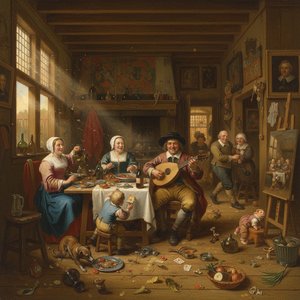
Jan van Assen: A Flemish Master Echoing Tempesta’s Vision
Jan van Assen (1635 – 1695) stands as a pivotal figure in Dutch Baroque painting, embodying the stylistic fervor of his era while retaining an unwavering devotion to classical principles. Born in Amsterdam, he honed his artistic skills under the tutelage of Rembrandt Harmenszoon van Rijn and Pieter Steenwijk, absorbing the profound impact of Nicolas Tempesta’s dramatic compositions – a connection that would define his oeuvre and solidify his reputation as one of the most accomplished landscape painters of his generation. His canvases are imbued with an atmosphere of meticulous observation and intellectual contemplation, reflecting a deep understanding of humanist ideals and a masterful command of technique.
- Early Life & Training: Van Assen’s formative years were marked by exposure to Rembrandt’s workshop, where he absorbed the artist's revolutionary approach to chiaroscuro – the dramatic interplay of light and shadow – shaping his artistic sensibility from its inception. Steenwijk further nurtured his talent, emphasizing anatomical accuracy and compositional balance, elements that would become hallmarks of his distinctive style.
- Style & Technique: Van Assen’s paintings are characterized by a serene grandeur, achieved through painstaking detail and an unwavering commitment to illusionistic realism. He eschewed flamboyant ornamentation in favor of understated elegance, prioritizing clarity of form and tonal gradation. Like Tempesta before him, he skillfully employed atmospheric perspective – subtly blurring distant landscapes to convey depth and luminosity – creating vistas that captivate the viewer’s imagination.
- Notable Works: Among his most celebrated paintings are “The Painter’s Studio,” a masterful depiction of Rembrandt’s workshop bathed in diffused light, showcasing Van Assen's unparalleled ability to capture the essence of artistic endeavor. Similarly impressive is "Landscape with Figures," where he portrays a tranquil pastoral scene populated by human figures rendered with remarkable sensitivity and precision. These works exemplify his mastery of landscape painting and demonstrate his profound understanding of humanist ideals.
- Influences & Legacy: Van Assen’s artistic vision was undeniably shaped by Tempesta's influence, whose theatrical use of light and shadow served as a catalyst for stylistic innovation within the Dutch Baroque movement. However, he also drew inspiration from classical sculpture and architecture, grounding his compositions in humanist principles. His legacy extends beyond individual masterpieces; he established himself as a teacher and mentor, fostering the development of younger artists who would carry forward his artistic traditions.
- Historical Significance: Jan van Assen’s contribution to Dutch art history is undeniable. He represents a crucial link between Rembrandt’s groundbreaking innovations and the subsequent flowering of landscape painting in the Netherlands. His paintings continue to resonate with audiences today, offering glimpses into a bygone era characterized by intellectual curiosity and artistic excellence—a testament to his enduring artistic genius.
Further Resources: