Gerrit de Wet: A Rembrandtian Echo in Dutch Landscape Painting
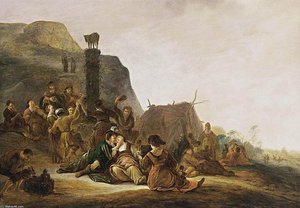
Gerrit de Wet (c. 1616 – 1674), a Leiden-born painter, stands as a fascinating figure within the artistic landscape of seventeenth-century Holland—a period dominated by giants like Rembrandt van Rijn and characterized by an intense preoccupation with biblical narratives and meticulously rendered landscapes. While his biographical details remain somewhat elusive, De Wet’s oeuvre reveals a profound engagement with Rembrandt's stylistic innovations, particularly his masterful use of chiaroscuro and psychological depth, alongside a remarkable talent for capturing the beauty and tranquility of Dutch countryside vistas. De Wet’s formative years coincided with Rembrandt’s ascendancy to fame, establishing him as a student deeply influenced by the master’s groundbreaking approach to painting. This connection is palpable in numerous works where De Wet skillfully replicates Rembrandt's dramatic lighting effects and emotive portrayal of human subjects—a testament to his dedication to mastering the techniques that defined the era. However, De Wet wasn’t merely an imitator; he forged a distinctive artistic voice, blending Rembrandtian principles with a sensitivity to color and composition that distinguishes him from many contemporaries. His activity centered primarily in Haarlem between 1643 and 1662, where he gained considerable renown for his biblical scenes—most notably “Finding of Moses” and “Saul & David”—which exemplify the prevailing artistic tastes of the time. These paintings demonstrate De Wet’s ability to convey profound spiritual contemplation through carefully crafted imagery and nuanced tonal gradations. The meticulous detail with which he depicts natural elements – rolling hills, serene rivers, and expansive skies – underscores his commitment to landscape painting as a genre, reflecting the humanist ideals prevalent during the Golden Age of Dutch art. Beyond his biblical commissions, De Wet produced a substantial body of landscapes that showcase his exceptional color palette and compositional skill. His paintings capture the essence of Dutch rural life with remarkable accuracy, presenting scenes bathed in soft light and imbued with an atmosphere of peaceful contemplation. These works are considered to be among the finest examples of Dutch landscape painting from the period, demonstrating De Wet’s mastery of capturing both visual beauty and psychological resonance. Gerrit de Wet's legacy resides not only in his individual masterpieces but also in his contribution to the broader artistic tradition of Holland. He represents a crucial link between Rembrandt’s revolutionary style and subsequent developments in Dutch art, securing his place as a significant artist of his time—a painter who honored the past while forging an enduring connection with the visual language of the seventeenth century.- Notable Works: “Finding of Moses,” “Saul & David,” “Meleager Presents The Calydonian Boar To Atalanta
- Influences: Rembrandt van Rijn
- Style: Rembrandtian Chiaroscuro, Landscape Painting