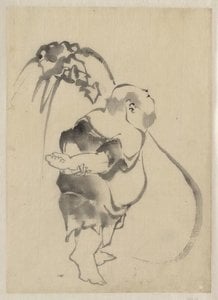
The Silent Resonance of the Brush: The Life of Zotaku Yoshida
In the quietude of the Edo period, a time defined by both rigid social structures and a blossoming of refined cultural expression, the artist Zotaku Yoshida (1722–1802) emerged as a master of the ephemeral. Born into a family of artisans, Yoshida’s life was shaped by the stability of an era that allowed for deep contemplation and the pursuit of aesthetic perfection. While historical records offer only glimpses into his personal journey, his brushwork speaks volumes of a soul attuned to the subtle rhythms of the natural world. As a member of the samurai class, Yoshida lived through a transformative epoch where the martial duties of the warrior were increasingly eclipsed by the cultivation of calligraphy, poetry, and the fine arts. This transition from the sword to the brush allowed him to channel the discipline of his station into the fluid, meditative strokes of sumi-e, creating a legacy that transcends the boundaries of mere decoration.
A Symphony of Ink and Spirit
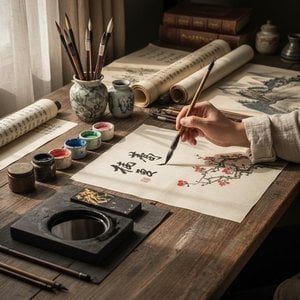
Yoshida’s artistic development was deeply rooted in the classical traditions of Japan, particularly the revival of Chinese landscape painting styles that permeated the intellectual circles of his time. He was profoundly influenced by the legacy of masters such as Sesshu Toyokuni, whose emphasis on capturing the essential spirit—the qi—of a subject rather than its literal likeness became a cornerstone of Yoshida’s approach. Trained within the orthodox Kano School, an academic style patronized by the ruling elite, he eventually transcended rigid formalism to find a more personal, evocative voice. His technique was a masterful study in contrast; he utilized thick, dark ink to ground his compositions with strength and permanence, while simultaneously employing diluted, pale grays to suggest the misty, atmospheric depths of a mountain morning or the delicate translucency of a leaf.
The beauty of his work lies in its profound respect for symbolism. To gaze upon a Yoshida scroll is to engage in a silent dialogue with Zen philosophy. His frequent subjects were not merely botanical specimens but vessels of meaning:
- Bamboo: Rendered with sturdy, deliberate strokes, the bamboo served as a powerful metaphor for resilience and unyielding strength in the face of adversity.
- Orchids and Flowering Trees: These delicate forms captured the fleeting nature of beauty and the grace of existence.
- Nature's Essence: Through his use of negative space, he allowed the white expanse of the paper to breathe, representing the infinite and the void.
Legacy of a Master
The historical significance of Zotaku Yoshida lies in his ability to bridge the gap between the formal academic traditions of the Kano School and the more spontaneous, expressive qualities of ink wash painting. His versatility allowed him to navigate different genres, from the sweeping panoramic vistas of landscapes to the more intimate yakusha-ga (actor portraits), demonstrating an adaptability that mirrored the evolving tastes of the merchant class and the aristocracy alike. Even as the world around him changed, his commitment to the principles of tranquility and symbolic depth remained steadfast. Today, his works stand as enduring testaments to the Edo period's artistic sophistication, inviting modern viewers to pause, breathe, and find stillness within the rhythmic dance of black ink upon paper.



 Pregledaj u prostoru
 Pređi na prodaju štampanih primeraka
 Podeli
 Podeli
 Detalji
 Vodič
Vodič

 Preuzmi sliku
 Slični predmeti
 Rendgenski snimak
 Automatska prezentacija
 Statistika

 Pročitaj više






































 Opcija sa staklom dostupna je samo za dimenzije manje od 110 cm