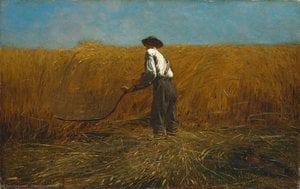
Vinslov Homer: Američki Majstor Svetlosti i Snažnog Izražavanja
Rođen 1836. godine u Bostonu, Vinslov Homer nije bio umetnik formiran tradicionalnim evropskim akademijama, već je izrastao iz specifičnog američkog iskustva – ukorenjenog u praktičnosti i posmatranju. Njegovo putovanje počelo je ne sa grandioznih istorijskih platna, već kao komercijalni ilustrator za Harper's Weekly kada je imao samo dvanaest godina. Ta rana praksa bila je ključna, oplemenjujući izvanrednu sposobnost da uhvati scene jasnoćom i detaljima – veštine koje će postati obeležja njegovog zrelog rada. On nije učio perspektivu u Parizu; on je učio da *vidi* Ameriku, njen narod i njenu neprestano razvijajuću priču. Bulevarima Bostona, tihom dostojanstvenošću ruralnog Nju Englanda – to su bili njegovi prvi subjekti, prikazani preciznošću rođenom iz potrebe za zahtevima štampanih medija. Ta osnova mu je omogućila da se prebaci na slikanje, prvo u akvarelu, a zatim potpuno prihvativši ekspresivni potencijal uljane boje.
Od Pastoralnih Prizora do Sirove Moći Prirode
Homerove rane slike često su prikazivale idilične scene – deca koja se igraju, farmeri koji obrađuju polja, tihi trenuci porodičnog života. Iako su te radove bili šarmantni, oni su nagovestavali dublji umetnički senzibilitet koji je čekao da bude oslobođen. Katalizator za tu transformaciju bila je bez sumnje građanski rat. Kao ratni dopisnik za Harper's Weekly, Homer je iz prve ruke svedočio brutalnim realnostima sukoba. On se nije fokusirao na herojske bitke ili grandiozne strategije; umesto toga, dokumentovao je svakodnevni život vojnika i civila, tihe trenutke tuge i otpornosti usred haosa. To iskustvo je duboko izmenilo njegovu umetničku viziju. Pastoralne scene su ustupile mesto izazovnijim temama: veterani koji se bore sa traumom, oslobođeni robovi koji snalaze novi svet i oštra lepota pejzaža obeleženog poteškoćama. Počeo je da istražuje teme borbe, izolacije i krhkosti čovečnosti u odnosu na prirodu – teme koje će dominirati njegovim najsnažnijim delima. Njegov stil se takođe razvio, postajući hrabriji i direktniji, odražavajući siromašan emotivni utisak onoga što je video.
Majstorstvo Svetlosti, Teksture i Američkog Pejzaža
Winslow Homerova umetnička tehnika odmah prepoznatljiva po svojoj čvrstini i teksturi. On nije bio zainteresovan za prolazne utiske; želeo je da izgradi osećaj opipljive stvarnosti na platnu. Njegove slike uljane boje karakteriše direktan pristup slikanju – slojevi boje primenjeni sa samopouzdanjem, stvarajući dubinu i luminozitet. Imao je izvanrednu sposobnost da uhvati svetlost, bilo da se radi o blještavilu sunca na moru ili mekom sjaju sumraka nad ruralnim pejzažem. Ta veština se protezala i na njegove akvarele, gde je postigao izvanredne atmosferske efekte živim bojama i nežnim prelivima.
Breezing Up (A Fair Wind), naslikana 1876. godine, oličava tu veštinu – tipičan prikaz američkog pomorskog života, prepun energije i pokreta.
The Gulf Stream, stvorena decenijama kasnije, možda je njegovo najpoznatije delo, snažan i simboličan prikaz jednog čoveka koji se bori protiv sila prirode, metafora ljudske borbe protiv premoćnih teškoća. On nije samo slikao ono što je video; on je prenosio osećaj, emocionalnu istinu o čovekovom stanju.
Nasleđe Kovano u Američkom Realizmu
Iako je Homer divio se evropskim umetnicima kao što su oni iz škole Barbizonske, poznati po svojim realističkim prikazima ruralnog života – i priznao uticaje od Courbeta i Milet-a, on je na kraju iskovao svojstven put koji je bio specifičan za Ameriku. On je odbacio preovlađujuće akademske konvencije i umesto toga se fokusirao na hvatanje jedinstvenog duha svoje zemlje. Njegovo nasleđe leži u njegovoj sposobnosti da prikaže Ameriku sa iskrenošću i autentičnošću, bez romantizovanja ili idealizovanja. On nije bio zainteresovan za oponašanje evropskih stilova; želeo je da stvori umetnost koja je jedinstvena američka, odražavajući njene pejzaže, njen narod i njene izazove.
Innocence, poletan prikaz detinjstva na pozadini prirode, i
Man of Science, koji demonstrira njegovu veštinu u hvatanju ljudske psihologije, svedoče o toj posvećenosti. Njegov uticaj se može videti u radu kasnijih američkih slikara koji su težili da svoju zemlju prikažu sa sličnom direktnošću i emotivnom dubinom.
Trajni Utisak: Homerova Istorijska Značajnost
Homerova umetnost nudi prodoran prozor u 19. vek Amerike, pružajući neprocenjive uvide u socijalni, politički i kulturni pejzaž njegovog vremena. Njegove slike nisu samo lepe reprezentacije; one su snažne izjave o ljudskoj otpornosti, lepoti i moći prirode i složenostima američkog iskustva. Umro je 1910. godine, ostavivši iza sebe plodno delo koje i danas rezonuje sa publikom. Njegova sposobnost da uhvati suštinu nacije koja prolazi kroz brze promene – od posledica građanskog rata do zore novog veka – osigurava njegovo mesto kao jednog od najvažnijih i trajnijih američkih umetnika. On nije samo slikao slike; on je dokumentovao trenutak u vremenu, čuvajući ga za generacije koje dolaze.
- Njegov rad nastavlja da inspiriše savremene umetnike.
- Homer ostaje ključna figura u razvoju američkog realizma.



 Pregledaj u prostoru
 Kupite ručno oslikano delo
 Pošalji
 Podeli
 Detalji o delu
 Vodič
Vodič

 Preuzmi
 Slični predmeti
 Rendgenski snimak
 Automatska prezentacija
 Q&A
Q&A Statistika


 Pročitaj više






































 Opcija sa staklom dostupna je samo za dimenzije manje od 110 cm


![Indian Tobacco Shop Sign [reverse, Indian Facing Right] — Винслоу Хомер, Contemporary Realism](/media/artworks/images-thumb/74/22/7422432cafc295265ef3b7f7fa62d35d.jpg)