Giclée štampa ili print na platnu muzejskog kvaliteta uz brzu proizvodnju i fleksibilne opcije završne obrade. ( Kupi ručno naslikanu sliku Kupi digitalnu sliku)





























Izaberite jednu od naših unapred definisanih veličina koje odgovaraju originalnim proporcijama umetničkog dela.

Možete uneti sopstvene dimenzije kako biste umetničko delo prilagodili specifičnom okviru ili prostoru. Ako odabrani format ne odgovara proporcijama originalne slike, mi ćemo ili iscrtati deo dela ili proširiti sliku pomoću ogledane ivice ili jednobojnog popunjavanja. Digitalni prikaz će vam biti poslat na odobrenje pre početka proizvodnje.
Imajte na umu da pregled na ekranu ne odražava stvarno iscrtavanje ili proširivanje. Samo će prikaz (mockup) precizno pokazati finalnu kompoziciju.
Iako su prilagođene dimenzije dostupne, preporučujemo da odaberete dimenziju sa unapred definisane liste kako biste očuvali originalne proporcije.
Dostava širom sveta () za 2 nedelje umesto uobičajenih 4/5 nedelja. (7 септембар)


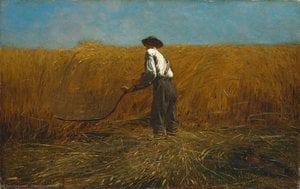
Farmer with a Pitchfork
Dimenzije reprodukcije
Winslow Homer (1836 – 1910), an artist who defied convention and forged his own path to artistic greatness, remains one of America's most beloved painters. Unlike many of his peers who pursued formal training in Europe, Homer cultivated a singular vision—a deeply rooted connection to the American landscape and its inhabitants—resulting in works that resonate with enduring power.
"The Pitchfork," completed in 1865, exemplifies this distinctive approach. Painted shortly after the Civil War’s conclusion, it depicts a solitary man standing amidst tall grass, clutching a pitchfork – an instrument of labor and sustenance – against a backdrop of muted blues and greens.
Homer favored watercolor as his primary medium. This technique allowed for remarkable subtlety and luminosity, capturing the ephemeral qualities of light and atmosphere with unparalleled grace. Unlike oil paints which build up layers of pigment, watercolor relies on transparent washes that blend seamlessly together, creating an image that feels both immediate and deeply contemplative.
The artist’s meticulous observation is evident in every detail—the texture of the grass, the posture of the man, even the slight curve of his hat. Homer employed a loose brushstroke style, prioritizing tonal harmony over precise delineation. This deliberate choice contributes to the painting's overall sense of tranquility and understated emotion.
“The Pitchfork” emerged from a period marked by profound social upheaval. The Civil War had irrevocably altered the fabric of American life, leaving scars of loss and division. Homer’s depiction of rural America—a scene of quiet resilience amidst devastation—can be interpreted as a symbolic affirmation of enduring values: perseverance, connection to the land, and the promise of renewal.
The painting wasn't merely documenting a moment in time; it was responding to it. Homer sought to convey not just what he *saw*, but also what he *felt*—a quiet dignity born from confronting hardship with unwavering resolve.
The pitchfork itself is laden with symbolic significance. Representing agricultural labor, it symbolizes the fundamental human need for sustenance and productivity. Yet, in Homer’s hands, it transcends its literal function to become a symbol of hope—a tool poised to cultivate new beginnings from the ashes of old.
"The Pitchfork" invites viewers to contemplate themes of vulnerability, fortitude, and the beauty inherent in simplicity. Its muted palette reinforces this emotional resonance, fostering a feeling of contemplative stillness. It’s a painting that speaks not to the intellect alone, but directly to the soul—a testament to Homer's ability to transform observation into profound artistic expression.
Winslow Homer’s “The Pitchfork” stands as an enduring emblem of American art. Its masterful technique, evocative symbolism, and poignant historical context continue to captivate audiences today. More than just a depiction of a rural scene, it's a meditation on the human spirit—a reminder that even in times of darkness, beauty and resilience can flourish.


1836 - 1910 , Сједињене Америчке Државе

Explore the profound beauty of American Regionalism. Delve into the art history of Grant Wood and John Steuart Curry, uncovering how these masters captured the soul of the American Heartland through iconic landscapes and rural identity.

Explore the profound beauty of American Realism. From Winslow Homer’s rural landscapes to the dignity of everyday life, discover how master artists captured the soul of a nation through evocative oil paintings and timeless fine art techniques.

 Pregledaj u prostoru
 Pošalji
 Podeli
 Detalji o delu

 Преузми
 Slični predmeti
 Rendgenski snimak
 Slajdovi

 Pročitaj više







 Opcija sa staklom dostupna je samo za dimenzije manje od 110 cm


![Indian Tobacco Shop Sign [reverse, Indian Facing Right] — Винслоу Хомер, Contemporary Realism](/media/artworks/images-thumb/74/22/7422432cafc295265ef3b7f7fa62d35d.jpg)