Seeking for Gold - Cradling: A Pioneer's Vision of Australian Landscape
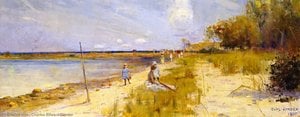
Walter Herbert Withers’ “Seeking for Gold – Cradling,” painted in 1893, stands as a cornerstone of Heidelberg School Impressionism and embodies the spirit of Australia’s burgeoning gold rush era. More than just a depiction of physical labor, it’s a profound meditation on the relationship between man and nature—a theme central to the artistic movement that flourished in Victoria during this period.
The painting captures two men diligently fossicking for gold within a shallow creek bed bathed in brilliant sunlight. Withers meticulously rendered the scene with loose brushstrokes characteristic of Impressionism, prioritizing capturing fleeting moments of light and color rather than precise detail. The artist’s focus isn't on portraying individual faces or expressions; instead, he conveys an atmosphere of determination and quiet contemplation—a reflection of the hardships endured by miners striving for prosperity.
The central element is the gold cradle – a simple wooden box fitted with inclined rockers and sieves – which was skillfully moved by hand to process soil. Withers’ masterful use of color contributes significantly to the painting's emotive power. Warm hues dominate, mirroring the radiant sunlight illuminating the creek and highlighting the earthy tones of the miners’ clothing and surroundings. These colors aren’t merely descriptive; they evoke a sense of optimism and resilience.
- Artist: Walter Herbert Withers
- Year Painted: 1893
- Location: Creswick, Victoria, Australia
- Medium: Oil on Hardboard
- Dimensions: 67 x 49 cm (framed)
“Seeking for Gold – Cradling” resides in the National Gallery of Australia and exemplifies Withers’ commitment to portraying the Australian landscape with sensitivity and artistic innovation. Its enduring appeal lies in its ability to convey not only a snapshot of historical circumstance but also a deeper exploration of human perseverance against challenging conditions—a timeless testament to the beauty found within the everyday.
The Heidelberg School, established in Melbourne in 1886, championed plein air painting – working outdoors directly from nature – rejecting studio conventions and embracing Impressionistic techniques. Withers’ work aligns perfectly with this ethos, demonstrating a profound respect for the Australian environment and its influence on artistic expression. Collectors and interior designers alike appreciate “Seeking for Gold – Cradling” for its evocative color palette, masterful brushwork, and ability to transport viewers back to a pivotal moment in Australian history.
Consider commissioning a high-quality reproduction of this iconic artwork to infuse your home with the spirit of Heidelberg School Impressionism—a celebration of light, color, and the enduring human connection to the natural world.



 Pregledaj u prostoru
 Kupi ručno naslikanu sliku
 Pošalji
 Podeli
 Detalji o delu

 Преузми
 Slični predmeti
 Rendgenski snimak
 Slajdovi
 Statistika


 Pročitaj više






































 Opcija sa staklom dostupna je samo za dimenzije manje od 110 cm