Nabavite datoteku spremnu za štampu koja nudi znatno veći kvalitet od onlajn pregleda. Svaka digitalna slika koju nudimo potiče iz visokorezolucičnog master fajla iz naše baze — obično širine od 5.000 do 15.000 piksela — što vam omogućava štampu u velikom formatu, precizno kadriranje ili bezbrižnu reprodukciju najfinijih detalja.
Nijedan fajl ne napušta naš studio netaknut. Digitalni stručnjak vrši proveru boja u odnosu na originalno delo i koriguje ih po potrebi, a zatim unapređuje jasnoću i detalje pomoću profesionalnih alata za retuširanje — uvek ostajući veran umetnikovim potezima četkice i stilu. Rezultat je slika koja izgleda kao pravo delo, a ne kao sken sa filterom.
Proverite i odobrite pre završetka: naš stručnjak vam šalje sliku putem e-pošte u roku od 72 sata na pregled. Niste zadovoljni? Zatražite poboljšanja ili ispravke, ili tražite povraćaj novca ukoliko kvalitet ne ispunjava vaša očekivanja.
Ovo je kvalitet kojem poverenje ukazuju izdavači, dizajnerski studiji, galerije i štamparije.
Preuzmite datoteku visoke rezolucije za ličnu upotrebu, štampanje i kreativne projekte. ( Pređi na štampu Kupite ručno oslikano delo)
Kada odaberete WahooArt.com, ne dobijate samo sliku – vi primate profesionalno unapređeno digitalno umetničko delo, izrađeno sa najvećom preciznošću i uz garanciju zadovoljstva. Evo svega što automatski dolazi uz vašu porudžbinu:
Vaša digitalna slika visoke rezolucije biće vam poslata putem e-pošte u roku od 72 sata od poručivanja – spremna za trenutnu upotrebu.
Vaše umetničko delo je profesionalno optimizovano primenom naprednih AI alata i ručne obrade, čime se osiguravaju maksimalni detalji, oštrina i preciznost boja.
Slučajno ste obrisali ili izgubili svoju datoteku? Ne brinite – poslaćemo vam je ponovo u bilo kom trenutku, potpuno besplatno.
Uživajte u svojim umetničkim delima trenutno, bez carine, akciza ili troškova dostave – digitalni download je uvek bez poreza.
Uz pomoć profesionalnih alata i upravljanja bojama, osiguravamo da vaša digitalna slika što vernije odražava originalne boje.
Ako niste zadovoljni svojom digitalnom slikom, izvršićemo reviziju ili ćemo vam vratiti 100% novca u roku od 100 dana – bez ikakvih pitanja.
Niste zadovoljni? Dobijte puni povraćaj novca u roku od 100 dana od prijema digitalne datoteke – bez suvišnih pitanja.
Kupite 3 slike, uštedite 10% - Kupite 5 slika, uštedite 15% - Kupite 10+ slika, uštedite 20%. Odlično za kreativne projekte, galerije i agencije.
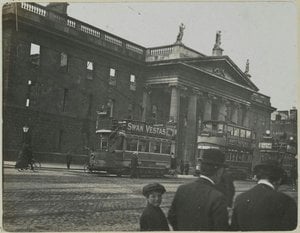
Thomas Johnson Westropp’s “Eden Quay” isn't merely a photograph; it’s a frozen moment in time—a visceral testament to the devastation wrought by the Easter Rising of 1916. Captured on May 17th, just weeks after Dublin endured the brutal bombardment of British forces during the rebellion, this monochrome image transcends documentation and becomes an emblem of loss interwoven with an undeniable spirit of defiance.
The composition is strikingly simple yet profoundly effective. A long, straight street dominates the frame, receding into a hazy distance—a deliberate choice that amplifies the sense of scale and underscores the immensity of the destruction surrounding it. Buildings loom large in the background, their facades scarred by explosions and fires, forming a jagged skyline that speaks volumes about the conflict’s destructive force. At the forefront stands a horse-drawn carriage, providing a grounding element against which the grandeur of ruin is contrasted.
Westropp's masterful use of light contributes significantly to the photograph’s mood. Diffused illumination softens shadows and minimizes harsh contrasts, fostering an atmosphere of solemn contemplation rather than dramatic spectacle. This understated lighting emphasizes textures—the rough cobblestones beneathfoot, the crumbling brickwork of the buildings—drawing the viewer into a detailed sensory experience.
Beyond its technical merits, “Eden Quay” resonates with powerful symbolic significance. The ruined buildings serve as poignant reminders of human vulnerability in the face of overwhelming power – a visual representation of fragility against the backdrop of historical upheaval. Yet, amidst the devastation, figures populate the sidewalk, symbolizing enduring life and resilience—a subtle but crucial element that elevates the photograph beyond mere depiction to profound contemplation.
Ultimately, “Eden Quay” compels us to confront not only the horrors of war but also the capacity for beauty to emerge from ruin. It’s a hauntingly evocative piece that invites viewers to consider themes of loss, memory, and the enduring spirit of humanity—a timeless image destined to inspire admiration and contemplation for generations to come.
Originalno delo "Eden Quay" čuva se u muzeju Biblioteka Trinity College Dublin, a rad je u javnom vlasništvu – autorska prava su istekla.
U pogledu percepcije osvetljenosti, „Eden Quay”, autor Thomas Johnson Westropp je brilliant.
Tehnika dela „Eden Quay”, autor Thomas Johnson Westropp je Giclée Print, a rad je datiran sa 1916.

Thomas Johnson Westropp was born on August 16, 1860, at Attyflin Park, Patrickswell, County Limerick, Ireland. His ancestors were landowners of English origin who had resided in the area since the mid-16th century. From a young age, Westropp displayed a keen interest in antiquities, meticulously documenting topography, ancient buildings, and folk life during family trips throughout neighboring counties.
He pursued higher education at Trinity College Dublin, earning an MA in 1882. He furthered his studies with a degree in civil engineering in 1885, subsequently apprenticing under Bindon Blood Stoney, who was overseeing the expansion and dredging of the Dublin port entrance.
Despite his initial training as an engineer, Westropp soon abandoned professional practice to dedicate himself fully to archaeological research. He became assistant surveyor for County Meath briefly but quickly prioritized his passion for uncovering Ireland’s past. For the remainder of his life, he focused on researching antiquities along the western seaboard of Ireland.
Westropp is renowned for his incredibly detailed sketches of buildings, grave slabs, and other archaeological remains found throughout Ireland. These drawings are not merely artistic representations; they serve as invaluable historical records. Many of these sketches are now preserved by the Royal Irish Academy.
His work extended beyond visual documentation to include the collection of folklore and local traditions, providing a rich tapestry of cultural insights into 19th and early 20th-century Ireland.
Westropp’s initial engineering training likely influenced his meticulous approach to documentation and precise rendering of architectural details. His mentor, Bindon Blood Stoney, a prominent engineer involved in significant infrastructural projects, instilled a sense of technical precision. However, it was his innate curiosity and passion for Irish history that truly shaped his artistic development.
His work can be seen as part of a broader movement of antiquarianism prevalent during the Victorian era, where there was growing interest in preserving and understanding historical artifacts and traditions.
Thomas Johnson Westropp died in 1922, leaving behind a substantial body of work that continues to be studied by historians, archaeologists, and folklorists today. His detailed sketches and meticulous notes remain essential resources for understanding Ireland’s rich past. He is remembered as a dedicated scholar who played a crucial role in preserving Irish cultural heritage.
His publications are widely accessible in libraries throughout the west of Ireland, ensuring his contributions continue to inspire future generations.

1860 - 1922 , Ireland
 Pošalji
 Podeli
 Detalji o delu
 Vodič
Vodič

 Preuzmi
 Slični predmeti
 Automatska prezentacija
 Pitanja i odgovori
 Statistika


 Pročitaj više