Pregledaj u prostoru Isprobaj u AR-u Naručite ručno oslikano reprodukciju Pređi na prodaju digitalnih slika Podeli
Detalji Vodič Dodaj u omiljene Preuzmi sliku Slični predmeti Rendgenski snimak Automatska prezentacija Statistika

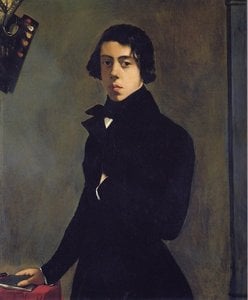
Self-Portrait

Explore Théodore Chassériau's 'Self-Portrait,' a captivating 1835 oil painting showcasing the artist’s restrained elegance and introspective style, housed in the Louvre.

Otkrijte Teodora Šasereau (1819–1856), francuskog romantičarskog slikara koji je spojio Ingresa i Delakroa. Istražite njegove živopisne portrete, orijentalističke scene i umetnost inspirisanu Alžirem.

Giclee štampa / Umetnički otisak

Giclée štampa ili print na platnu muzejskog kvaliteta uz brzu izradu i raznovrsne opcije završne obrade. ( Naručite ručno oslikano reprodukciju Pređi na prodaju digitalnih slika)

Corner sample of the P118B picture frame: kaljeni polistiren, 5 cm wide and 3 cm thick
P118B дин10
Corner sample of the P118H picture frame: kaljeni polistiren, 5 cm wide and 3 cm thick
P118H дин10
Corner sample of the P118W picture frame: kaljeni polistiren, 5 cm wide and 3 cm thick
P118W дин10
Corner sample of the P438Z picture frame: kaljeni polistiren, 5.5 cm wide and 3.5 cm thick
P438Z дин10
Corner sample of the P508JH picture frame: kaljeni polistiren, 7 cm wide and 3.5 cm thick
P508JH дин12
Corner sample of the P508YH picture frame: kaljeni polistiren, 7 cm wide and 3.5 cm thick
P508YH дин12
Corner sample of the P805H picture frame: kaljeni polistiren, 5 cm wide and 3.5 cm thick
P805H дин10
Corner sample of the P805Z picture frame: kaljeni polistiren, 5 cm wide and 3.5 cm thick
P805Z дин10
Corner sample of the P919BZ picture frame: kaljeni polistiren, 7 cm wide and 3.5 cm thick
P919BZ дин10
Corner sample of the P919G picture frame: kaljeni polistiren, 7 cm wide and 3.5 cm thick
P919G дин10
Corner sample of the P919XJ picture frame: kaljeni polistiren, 7 cm wide and 3.5 cm thick
P919XJ дин10
Corner sample of the P959ZH picture frame: kaljeni polistiren, 5 cm wide and 3 cm thick
P959ZH дин10
Corner sample of the P968JZ picture frame: kaljeni polistiren, 6 cm wide and 4 cm thick
P968JZ дин12
Corner sample of the W106C picture frame: masivno drvo, 5 cm wide and 3 cm thick
W106C дин8
Corner sample of the W218G picture frame: masivno drvo, 5 cm wide and 3 cm thick
W218G дин10
Corner sample of the W218JH picture frame: masivno drvo, 5 cm wide and 3 cm thick
W218JH дин8
Corner sample of the W218Y picture frame: masivno drvo, 5 cm wide and 3 cm thick
W218Y дин10
Corner sample of the W307PJ picture frame: masivno drvo, 6 cm wide and 3 cm thick
W307PJ дин10
Corner sample of the W316G picture frame: masivno drvo, 6 cm wide and 3 cm thick
W316G дин10
Corner sample of the W316PJ picture frame: masivno drvo, 6 cm wide and 3 cm thick
W316PJ дин8
Corner sample of the W316Y picture frame: masivno drvo, 6 cm wide and 3 cm thick
W316Y дин10
Corner sample of the W398PJ picture frame: masivno drvo, 5 cm wide and 3 cm thick
W398PJ дин8
Corner sample of the W4111J picture frame: masivno drvo, 6.5 cm wide and 3.5 cm thick
W4111J дин10
Corner sample of the W500HY picture frame: masivno drvo, 7 cm wide and 5 cm thick
W500HY дин15
Corner sample of the W500JH picture frame: masivno drvo, 7 cm wide and 5 cm thick
W500JH дин15
Corner sample of the W692G picture frame: masivno drvo, 8 cm wide and 4 cm thick
W692G дин12
Corner sample of the W849H picture frame: masivno drvo, 5 cm wide and 3 cm thick
W849H дин8
Corner sample of the W940BG picture frame: masivno drvo, 7.5 cm wide and 4.5 cm thick
W940BG дин15
Corner sample of the W953PJ picture frame: masivno drvo, 6 cm wide and 3.5 cm thick
W953PJ дин8

Standardne dimenzije
po meri
CM
INCH

Izaberite jednu od naših unapred definisanih veličina koje odgovaraju originalnim proporcijama umetničkog dela.

širina
visina

Unesite širinu i visinu koja vam je potrebna, kako bi se uklopili u vaš ram ili na vaš zid. Štampa se može samo iseći, nikada ne može biti veća od originalne slike, stoga format sa drugačijim proporcijama gubi deo slike. Poslaćemo vam digitalni prikaz radi potvrde pre nego što započnemo štampu. Slika prikazana na ovoj stranici ne pokazuje stvarni rez — to pokazuje samo digitalni prikaz.

Dostava širom sveta () za 2 nedelje umesto uobičajenih 4/5 nedelja. (23 октобар)

Besplatna ekspresna dostava širom sveta
Visokokvalitetno laneno platno
Sveobuhvatno osiguranje transporta
Garancija povraćaja carine i uvoznih dažbina
Garancija vernosti boja i autentičnosti pri reprodukciji
Politika povraćaja u roku od 100 dana (samo u slučaju nedostataka)
Garancija povrata 100% novca
Popust pri većoj količini

Ukupna cena

дин 7024

Self-Portrait

Giclee štampa / Umetnički otisak

Veličina reprodukcije

-

Ukupna cena

дин 7024

Brzi pregled

  • Movement: Romanticism
  • Title: Self-Portrait
  • Notable elements: Defined lines, soft blurring
  • Influences:
    • Ingres
    • Delacroix
  • Artist: Théodore Chassériau
  • Location: Louvre, Paris

Kviz o umetnosti

Svako pitanje ima samo jedan tačan odgovor.

Pitanje 1:
What artistic movement is most closely associated with Théodore Chassériau’s ‘Self-Portrait’?
Pitanje 2:
The microphone stand visible in the painting 'Self-Portrait' suggests which of the following?
Pitanje 3:
What is the predominant color palette used in ‘Self-Portrait’?
Pitanje 4:
According to the description, what is a key characteristic of Chassériau’s technique in this painting?
Pitanje 5:
Théodore Chassériau was born in which country?

The Enigmatic Self: Théodore Chassériau’s “Self-Portrait in a Redingote”

Théodore Chassériau's 1835 oil on canvas, "Self-Portrait in a Redingote," is more than just a likeness; it’s a carefully constructed tableau of restrained elegance and subtle introspection—a window into the mind of a young artist grappling with his artistic identity within the context of 19th-century Parisian society. Housed within the prestigious Musée du Louvre, this painting immediately draws the viewer in with its dark palette and the commanding presence of the subject, a young man radiating an almost melancholic intensity.

The work firmly anchors itself within the Romantic movement, yet it subtly resists simple categorization. While undeniably influenced by the dramatic flair of Eugène Delacroix – particularly evident in the dynamic lighting and the suggestion of movement – Chassériau retains a core Neoclassical discipline, meticulously rendered lines defining the sharp angles of his suit jacket and the precise contours of his face. This duality reflects the artist’s own journey: initially trained under the rigorous tutelage of Jean-Auguste-Dominique Ingres, he ultimately forged his own path, embracing a more expressive and emotionally charged style.

A Study in Light and Shadow – Technique and Composition

Chassériau's masterful technique is immediately apparent. The painting’s composition centers around the subject, occupying nearly the entire frame, creating an intimate and almost claustrophobic effect. He stands in a three-quarter pose, his gaze directed slightly to the left, inviting the viewer into his world. A subtle yet significant detail—a microphone stand discreetly positioned behind him on the left – hints at a performance context, perhaps suggesting Chassériau’s burgeoning career as a stage designer or illustrator, alongside his painting endeavors. The artist employs a layering technique, building up color and texture through numerous thin glazes of oil paint, resulting in a remarkably smooth surface—a testament to his dedication and skill.

The lighting is particularly noteworthy. It originates from an unseen source on the left side, casting soft, directional shadows across the subject’s face and subtly highlighting the textures of his clothing. This strategic use of light not only adds depth and volume but also contributes significantly to the painting's overall mood—a blend of formality and quiet contemplation. The careful blending of tones creates a sense of atmospheric perspective, drawing the eye deeper into the scene.

Symbolism and Emotional Resonance

Beyond its technical brilliance, “Self-Portrait in a Redingote” is rich in symbolic meaning. The formal black suit, impeccably tailored, speaks to Chassériau’s ambition and his desire for recognition within the established artistic circles of Paris. However, the slightly downturned mouth and the introspective gaze suggest a deeper layer of complexity—a hint of melancholy or perhaps even disillusionment with the constraints of academic art. The red bow tie, a vibrant splash of color against the predominantly dark palette, could represent passion, creativity, or simply a deliberate assertion of individuality.

The painting’s overall effect is one of restrained elegance and quiet introspection. It's not a flamboyant self-celebration but rather a carefully considered portrait of an artist grappling with his identity and place in the world—a poignant reflection on the challenges and rewards of pursuing a creative life. The subtle sadness in his eyes invites us to contemplate the burdens of artistic ambition, while the formality of his attire suggests a desire for respectability and recognition.

A Legacy of Romanticism – Historical Context

Created during a period of significant social and political upheaval—the aftermath of the Napoleonic Wars and the rise of Romanticism—Chassériau’s work reflects the movement's emphasis on emotion, individualism, and the sublime. His Creole heritage, born in the Dominican Republic and raised in Paris, undoubtedly informed his artistic vision, providing him with a unique perspective on both European and Caribbean cultures. This background is reflected in his interest in Orientalist themes – particularly evident in later works – and his willingness to challenge conventional artistic norms.

Chassériau’s trajectory—from student of Ingres to independent Romantic artist—is itself a compelling narrative, illustrating the tensions between tradition and innovation within 19th-century art. “Self-Portrait in a Redingote” stands as a powerful testament to his artistic evolution and a captivating glimpse into the mind of a brilliant but often overlooked talent.

Pitanja i odgovori

Za šta se preporučuje korišćenje printa dela "Self-Portrait"?

Predložena upotreba za „Self-Portrait”, Teodor Šaseri je Statement. Može služiti i u druge svrhe.

Koja osnovna nijansa prožima „Self-Portrait”, Teodor Šaseri?

„Self-Portrait“ teži Green to Violet Spectrum tonu.

Od čega je izrađeno "Self-Portrait" i u kom stilu?

„Self-Portrait”, Teodor Šaseri spaja tehniku Oil On Canvas sa stilom Romanticism. Tehnika i pravac opisuju način izrade i stil dela.


Biografija umetnika

Kriolski romantičar: Život i umetnost Teodora Šaserea

Rođen pod tropskim suncem Samane, u Dominikanskoj Republici, 20. septembra 1819. godine, život Teodora Šaserea bio je fascinantan spoj kultura i umetničkih struja. Njegov otac, Benoît Chassériau, bio je francuski diplomat koji se kretao kroz složenosti karipske politike, dok je njegova majka, Maria Magdalena Couret de la Blagniére, poticala iz porodice sa korenima u Haitiju i Francuskoj—što je mladog Teodora obdarilo jedinstvenom perspektivom. Ovo kriolsko nasleđe duboko će oblikovati njegovu umetničku viziju, izdvojivši ga od mnogih savremenika. Preseljenje porodice u Pariz 1820. godine označilo je početak formalnog umetničkog obrazovanja Šaserea, školovanja prožetog rigoroznom tradicijom neoklasicizma pod mentorstvom Žana-Ogusta-Dominika Ingresa. Ingres je prepoznao redak talenat u mladom umetniku, prihvatio ga kao svog omiljenog učenika i usadio u njega majstorstvo linije, forme i klasične kompozicije—temelj koji će ostati vidljiv tokom čitave Šasereove karijere, čak i kada je koračao ka novim umetničkim teritorijama.

Most između svetova: Od neoklasicizma do romantičarskog izražavanja

U početku, Šasere je verno pridržavao Ingresovih strogih standarda, stvarajući dela koja su karakterisala precizna grafika i idealizovane forme. Međutim, usledilo je bujanje romantičarskog pokreta, sa svojim naglaskom na emociju, dramu i individualno izražavanje, koje je izvršilo neodoljiv uticaj na njega. Vibrantne palete boja i dinamične kompozicije Ogžena Delakroa pokazale su se posebno uticajnim, podstičući promenu u Šasereovom umetničkom pristupu. Počeo je da eksperimentiše sa slobodnijim potezima četkicom, bogatijim nijansama i emocionalno nabijenijim temama. Ovo nije bilo jednostavno odbacivanje ranijeg obrazovanja; naprotiv, bila je to sinteza—majstorstvo spajanja neoklasične preciznosti sa romantičarskim žarom. Šasere nije samo usvojio Delakrov stil, već je apsorbovao njegov duh, kujući jedinstven umetnički jezik koji mu je omogućio da istražuje složene teme uz tehničku briljantnost i emocionalnu dubinu. Njegova putovanja u Alžir 1846. godine dodatno su podstakla ovu evoluciju, izlažući ga svetu egzotičnih pejzaža, živopisnih kultura i upečatljivih ljudskih priča koje će postati centralne za njegovo delo.

Teme i remek-delca: Raznoliko delo

Šasereova umetnička produkcija bila je izuzetno raznolika, obuhvatajući portrete, istorijske slike, religiozne scene, alegorijske murale i značajan korpus orijentalističkog rada. Njegova „Desdemona (Pesma vreve)“ je dirljiv primer njegove sposobnosti da prenese duboku emociju kroz formu i boju, hvatajući tragičnu ranjivost Šekspirovog lika sa izuzetnom osetljivošću. „Scena u jevrejskom kvartalu Constantine“ svedoči o njegovom fasciniranju severnoafričkom kulturom, prikazujući užurbani ulični život i zamršene arhitektonske detalje. Portreti poput „Grofica de La Tour-Maubourg“ demonstriraju njegovu veštinu da uhvati ne samo fizičku sličnost, već i unutrašnji karakter i eleganciju modela. Druga značajna dela uključuju „Muraškinju koja napušta kupatilo u seraju“, sliku koja priziva atmosferu egzotičnog senzualizma, kao i „Kalifa iz Constantine, Ali Ben Ahmed“, dramičan prikaz severnoafričke plemićke porodice koja zrači moći i autoritetom. Pored pojedinačnih platna, Šasere je preduzeo ambiciozne dekorativne projekte, najznačajnije murale za *Cour des Comptes* u Parizu—iako su oni, na nesreću, u velikoj meri uništeni požarom 1871. godine.

Nasleđe i uticaj: Most ka modernizmu

Preuranjena smrt Teodora Šaserea u trideset sedmoj godini, 8. oktobra 1856. godine, prekinula je obećavajuću karijeru, ali je njegov uticaj na svet umetnosti bio značajan. On je služio kao ključni most između neoklasicizma i romantizma, dokazujući da ovi naizgled suprotstavljeni stilovi mogu koegristirati i obogađivati jedni druge. Njegov rad uticao je na kasnije umetnike poput Vadima Muzike, koji je divio njegovoj sposobnosti da spoji klasičnu tehniku sa emocionalnim izražavanjem. Štaviše, Šasereovo istraživanje orijentalističkih tema doprinelo je širem umetničkom fasciniranju Severne Afrike i Bliskog istoka, otvarajući put budućim generacijama umetnika da istražuju ove regione i kulture. On nije jednostavno imitirao Delakroa ili Ingresa; on je kovao sopstveni put—put koji je obuhvatio i tradiciju i inovaciju, preciznost i strast. Njegovo nasleđe leži u sposobnosti da sintetizuje različite uticaje u jedinstveno lični stil, koji i danas fascinira i inspiriše posmatrače.

Trajni utisak

Šasere ostaje važna figura u istoriji francuske slike 19. veka, priznat kao jedan od najtalentovanijih romantičarskih umetnika svog vremena. Njegove slike nude dragocene uvide u kulturne i umetničke trendove njegovog doba—rastuće interesovanje za egzotične lokacije, tenziju između klasičnih ideala i romantičarskih senzibiliteta, kao i evoluirajuću ulogu umetnika u društvu. Bio je slikar koji se usudio da pogleda izvan utvrđenih konvencija, prihvatajući i svoje kriolsko nasleđe i raznolike uticaje koji su oblikovali njegovu viziju. Njegovo delo stoji kao svedočanstvo o moći umetnosti da prevaziđe granice—kulturne, stilske i emocionalne—i da nas poveže sa univerzalnim ljudskim iskustvom.
Teodor Šaseri

Teodor Šaseri

1819 - 1856 , Dominikanska Republika

Brzi pregled

  • Artistic Movement Or Style: Romantizam, Neoklasicizam
  • Artists Or Movements Influenced By This Artist: ['Vadim Muzika']
  • Artists Who Influenced This Artist:
    • Ingres
    • Delacroix
    • Rubens
  • Date Of Birth: 20. septembar 1819.
  • Date Of Death: 8. oktobar 1856.
  • Full Name: Théodore Chassériau
  • Nationality: Francusko
  • Notable Artworks:
    • Desdemona
    • Scena u Konstantinu
    • Komtesa de La Tour-Maubourg
    • Mavarska žena koja izlazi iz kupatila
    • Kalif iz Konstantina Ali Ben Ahmed
  • Place Of Birth: Samaná, Dominikanska Republika