


Giclée štampa ili print na platnu muzejskog kvaliteta uz brzu izradu i raznovrsne opcije završne obrade. ( Kupite ručno oslikano delo Pređi na digitalnu sliku)
Izaberite jednu od naših unapred definisanih veličina koje odgovaraju originalnim proporcijama umetničkog dela.

Unesite željenu širinu i visinu kako bi se štampa uklopila u vaš ram ili zid. Štampu je moguće samo iseći, ali nikada povećati iznad dimenzija originalne slike, stoga format sa drugačijim proporcijama uzrokuje gubitak dela slike. Pre početka štampe, poslaćemo vam digitalni prikaz radi potvrde. Slika prikazana na ovoj stranici ne predstavlja stvarni isrez — to pokazuje samo digitalni prikaz.
Dostava širom sveta () za 2 nedelje umesto uobičajenih 4/5 nedelja. (19 новембар)
The Good Samaritan
Dimenzije reprodukcije

Born in Nancy, France, Aimé Morot was a painter and sculptor who began his artistic journey at the age of twelve. His early studies in drawing, painting, and gravure printing took place at the l'Ecole Municipal de Dessin et de Peinture de Nancy. He later attended the workshop of Alexandre Cabanel at the École Nationale Supérieure des Beaux-Arts in Paris. Despite leaving the formal academy after receiving two corrections from Cabanel, Morot pursued independent study in the Jardin des Plantes, where he focused on observing and portraying animals. In 1873, he won the Grand Prix de Rome with his work Babylonian Captivity (Super Flumina Babylonis), which is held in the collection of the École des Beaux-Arts in Paris. This achievement allowed him to reside at the Villa Medici in Rome.
Morot’s diverse body of work includes:
In addition to his studio work, Morot was a professor at the École Nationale Supérieure des Beaux-Arts and a member of the Institute. He was awarded the title of Chevalier in the Legion of Honour in 1883, later becoming an Officier in 1901, and eventually a Commandeur in the Légion d'Honneur in 1912.

1850 - 1913 , France
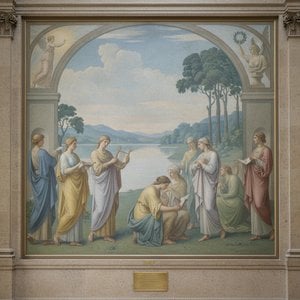
Explore the life & work of Pierre Puvis de Chavannes, a pivotal Symbolist painter renowned for his monumental murals. Discover his aesthetic principles, key artworks like 'Hope,' and lasting influence on modern art. A deep dive into 19th-century French painting.
 Pregledaj u prostoru

 Pošalji
 Podeli
 Detalji o delu
 Vodič


 Preuzmi
 Slični predmeti
 Rendgenski snimak
 Automatska prezentacija
 Pitanja i odgovori

 Statistika


 Pročitaj više






































 Opcija sa staklom dostupna je samo za dimenzije manje od 110 cm


