A Glimpse of Hollywood Glamour: Salvatore Ferragamo’s “Laced Shoe”
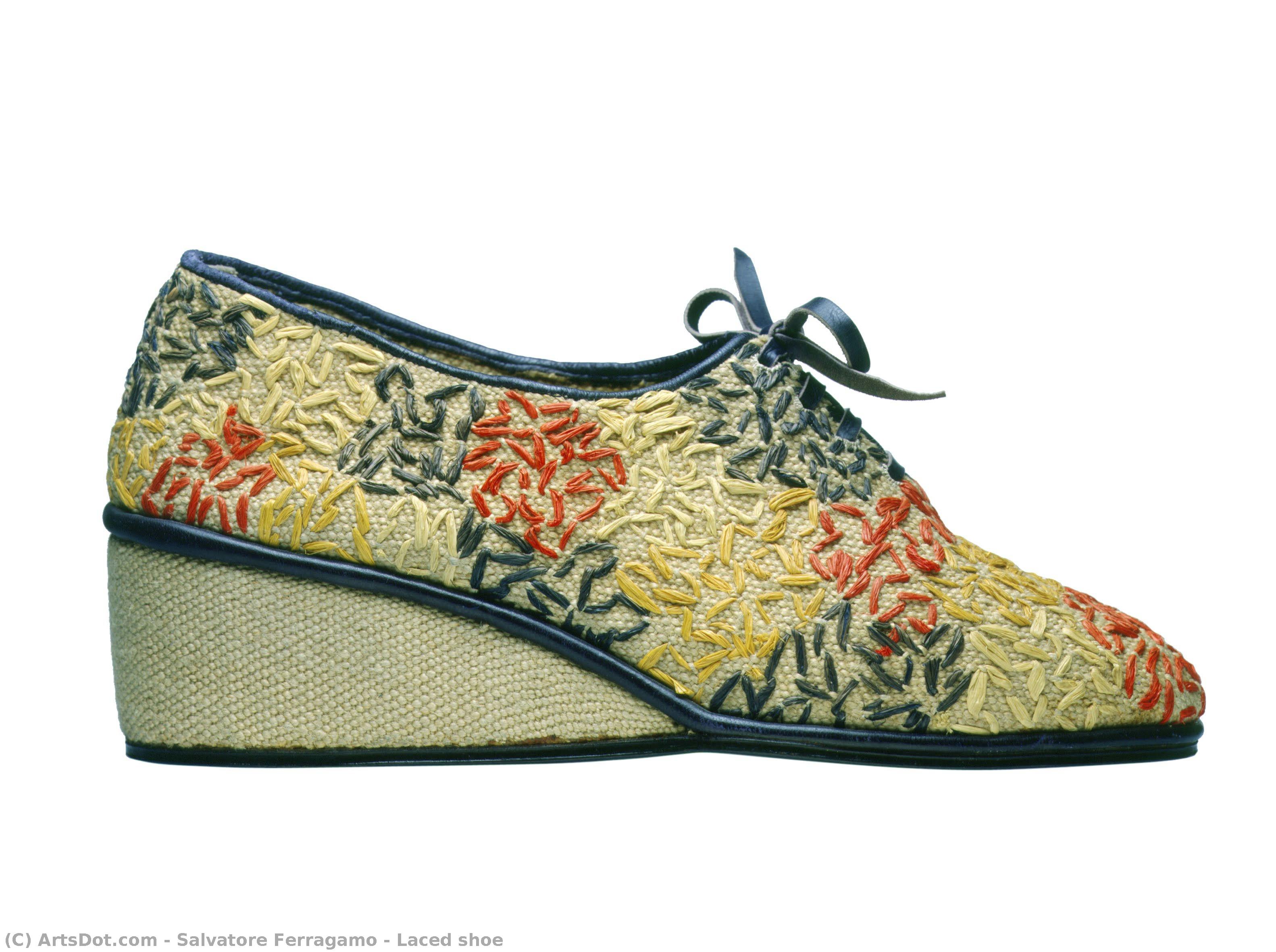
Salvatore Ferragamo's "Laced Shoe," a captivating painting housed within the intimate confines of the Salvatore Ferragamo Museum in Florence, Italy, isn’t merely a depiction of footwear; it’s a portal into an era defined by audacious style and unparalleled craftsmanship. Created around 1940, during the height of his international acclaim, this work embodies the Italian designer's signature blend of artistic vision and meticulous attention to detail – a combination that would forever elevate shoemaking beyond a functional necessity and transform it into wearable art.
The painting itself is deceptively simple in its composition. A single, elegant shoe dominates the canvas, rendered in a rich palette of black leather accented by vibrant yellow and red laces. The heel, a sturdy wedge shape characteristic of the period, hints at both stability and a subtle defiance of convention. Yet, it’s not the technical precision that immediately commands attention; rather, it's the palpable sense of movement and energy emanating from the piece. The laces, meticulously depicted with a slight curl and tension, suggest a dynamic quality – as if the shoe is poised to take flight, embodying the spirit of Hollywood glamour and the adventurous spirit of the 1940s.
The Man Behind the Shoe: Salvatore Ferragamo’s Legacy
Understanding “Laced Shoe” requires appreciating the extraordinary journey of its creator. Born in Bonito, Italy, in 1898, Salvatore Ferragamo's early life was far removed from the Parisian ateliers and Hollywood premieres that would become synonymous with his name. His upbringing amidst rural poverty instilled a profound respect for craftsmanship and an unwavering determination to master his chosen trade – shoemaking. Initially discouraged by his father’s skepticism regarding the profession’s social standing, young Salvatore persevered, honing his skills through countless hours of observation and practice.
This early dedication laid the foundation for a career that would revolutionize the world of footwear. Ferragamo's innovative designs quickly gained recognition in America during the 1930s, fueled by his collaborations with Hollywood stars like Judy Garland and Greta Garbo. He wasn’t simply creating shoes; he was crafting experiences – sculpting footwear to perfectly complement the movements and aspirations of his clientele. The “Laced Shoe” exemplifies this philosophy, capturing a moment of poised elegance and hinting at the transformative power of well-made clothing.
A Symbol of Innovation and Artistic Expression
Beyond its aesthetic appeal, "Laced Shoe" represents a pivotal shift in the perception of shoemaking. Ferragamo’s approach was fundamentally artistic – he viewed shoes as three-dimensional sculptures, meticulously shaping them to enhance both form and function. The use of vibrant colors, particularly the bold yellow and red laces, is deliberate, injecting a sense of playfulness and individuality into an otherwise traditionally understated subject. This wasn't merely about creating a comfortable shoe; it was about expressing a unique artistic vision.
Furthermore, the painting’s creation coincided with a period of significant technological advancement in shoemaking. Ferragamo embraced new materials and techniques, experimenting with innovative construction methods to achieve unprecedented levels of comfort and durability. The prototype for this particular design, created in 1938, demonstrates his commitment to pushing boundaries and challenging conventional notions of footwear design – a spirit that continues to resonate within the brand today.
The Enduring Appeal: Reproduction and Inspiration
Today, “Laced Shoe” remains a treasured artifact within the Salvatore Ferragamo Museum, offering a tangible connection to the designer’s remarkable legacy. The painting's influence extends far beyond Florence, inspiring contemporary designers and collectors alike. High-quality reproductions capture the essence of this iconic work, allowing art enthusiasts to experience its beauty and artistry in their own homes. The enduring appeal lies not only in its exquisite craftsmanship but also in its timeless representation of style, innovation, and the transformative power of a single pair of shoes.


 Pregledaj u prostoru
 Pređi na štampu
 Pošalji
 Podeli
 Detalji o delu

 Преузми
 Slični predmeti
 Rendgenski snimak
 Slajdovi
 Statistika


 Pročitaj više


