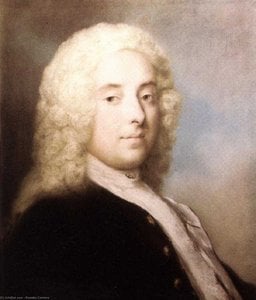
A Vision of Rococo Grace
In the soft, luminous glow of Rosalba Carriera’s "Flora," we encounter more than just a portrait; we step into the very heart of the Venetian Rococo. Painted during the height of the eighteenth century, this pastel masterpiece captures a moment of ethereal beauty that feels both timeless and deeply rooted in its era. The subject, a young woman whose features possess a porcelain-like delicacy, gazates at the viewer with an expression of serene contemplation. Adorned with a gentle floral accent in her hair, she embodies the mythological spirit of Flora, the Roman goddess of flowers and spring. This choice of subject matter is not merely decorative but serves as a profound symbol of renewal, fertility, and the fleeting nature of youth—themes that resonated deeply within the aristocratic circles of 1730s Venice.
The emotional impact of the work lies in its quiet intimacy. Unlike the grand, sweeping narratives of Baroque history painting, Carriera directs her focus toward the subtle nuances of human emotion and the tactile softness of skin and fabric. There is a palpable sense of breath and life within the frame, inviting the observer to linger on the slight parting of her lips and the gentle light dancing across her brow. For the collector or the interior designer, this piece offers a sophisticated emotional anchor, providing a sense of calm, elegance, and romantic nostalgia that can transform a contemporary space into a sanctuary of classical refinement.
The Mastery of Pastel and Light
To understand the brilliance of "Flora," one must appreciate Carriera’s revolutionary command over the medium of pastel. While many of her contemporaries relied on the heavy, layered textures of oil paint, Carriera embraced the dry, powdery nature of pastels to achieve an unparalleled luminosity. This technique allowed her to blend colors with a seamless fluidity, creating the delicate gradations of peach, cream, and rose that define the subject's complexion. The result is a surface that seems to radiate light from within, mimicking the natural translucency of human skin.
The artist’s technical prowess is further evidenced in her ability to manipulate contrast. Against a minimalist, deep-hued background—reminiscent of twilight shadows—the luminous tones of the figure emerge with striking clarity. This careful use of chiaroscuro directs the eye toward the intricate details: the soft texture of the hair, the subtle folds of the period attire, and the delicate bloom nestled in her updo. For those seeking a high-quality reproduction, capturing these subtle tonal shifts is essential to preserving the artwork's original magic. A faithful hand-painted recreation brings this interplay of light and shadow into a room, acting as a focal point that breathes life and texture into any curated collection.
A Legacy of Venetian Innovation
The historical significance of "Flora" is inseparable from the life of Rosalba Carriera herself. As a trailblazer in an era when female artists faced immense societal barriers, Carriera rose to become one of Europe's most celebrated portraitists. Her journey from painting miniature portraits on ivory snuffbox lids to mastering large-scale pastel works represents a monumental shift in the art world. She did not merely participate in the Rococo movement; she helped define its aesthetic language through her obsession with grace, charm, and the idealized feminine form.
Bringing a reproduction of this work into a home or gallery is an act of honoring art history. It serves as a tribute to the Venetian spirit—a period characterized by artistic flourishing, luxury, and a profound appreciation for beauty. Whether placed in a sunlit morning room or a sophisticated study, "Flora" provides a continuous dialogue between the splendor of the eighteenth century and the modern aesthetic, offering an enduring sense of prestige and artistic depth.
Pitanja i odgovori
Koliko je godina imao/la Rozalba Karijera kada je stvorio/la "Flora"?
Kada je delo "Flora" nastalo 1730. godine, Rozalba Karijera – rođen/a 1675. godine – imao/la je 55 godina.
Koliko svetlosti se čini da boje dela "Flora" reflektuju?
„Flora”, autor Rozalba Karijera ima luminancu od Gentle Luminance. Luminanca opisuje koliko se čini da boje reflektuju svetlosti.
Koji umetnički pravac pripada delu "Flora"?
„Flora”, autor Rozalba Karijera pripada pravcu Rococo Pastel Portraiture. Ovaj pravac pruža stilski kontekst dela.



 Pregledaj u prostoru
 Pređi na štampu
 Pošalji
 Podeli
 Detalji o delu
 Vodič
Vodič

 Preuzmi
 Slični predmeti
 Rendgenski snimak
 Automatska prezentacija
 Q&A
Q&A Statistika


 Pročitaj više






































 Opcija sa staklom dostupna je samo za dimenzije manje od 110 cm