


Ručno oslikano uljanim bojama na platnu u dimenzijama i okviru po vašem izboru, izrađeno po porudžbini od strane naših umetnika. ( Kupi print Kupi digitalnu sliku)





























Izaberite jednu od naših unapred definisanih veličina koje odgovaraju originalnim proporcijama umetničkog dela.

Можете унети сопствене димензије како бисте прилагодили дело одређеном оквиру или простору. Ако одабрана величина не одговара пропорцијама оригинала, слика ће бити исечена или проширена додатним елементима који се ручно насликавају. Дигитални prikaz ће вам бити послат на одобрење пре почетка производње.
Имајте на уму да преглед на екрану не одражава стварно исецање или проширење. Само приказ (mockup) ће тачно приказати коначну композицију.
Иако су доступне прилагођене величине, препоручујемо да одаберете димензију из дефинисане листе како бисте сачували оригиналне пропорције.
Isporuka širom sveta () za 3/4 nedelje umesto uobičajenih 5 nedelja. (7 септембар). Bez kompromisa po pitanju kvaliteta.


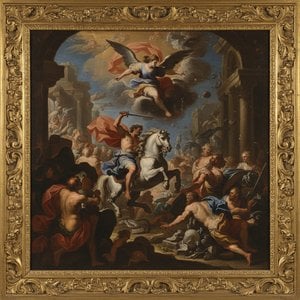
HERCULE SUR LE BUCHER
Dimenzije reprodukcije
In the grand theater of the Baroque era, few images capture the raw intersection of human agony and divine destiny as poignantly as Guido Reni’s Hercules Sur Le Bucher. Painted during the height of the seventeenth century, this monumental work serves as a breathtaking window into a moment of profound mythological crisis. As the legendary hero Hercules prepares for his pyre, the canvas vibrates with an almost palpable tension. Reni does not merely depict a scene from antiquity; he orchestrates a cosmic drama where the muscular weight of the mortal form meets the swirling, ethereal uncertainty of the heavens. For the discerning collector or lover of classical beauty, this piece offers more than just visual splendor—it provides a window into the very soul of Baroque classicism.
The composition is a masterclass in directed movement, utilizing a sweeping diagonal trajectory that pulls the viewer’s gaze from the lower left toward the upper right. This upward surge mimics the hero's own struggle, creating a sense of breathless ascension amidst a turbulent sky. Reni employs chiaroscuro with unparalleled skill, casting deep, oppressive shadows that contrast sharply against the radiant light illuminating Hercules’ torso and face. This interplay of light and dark does more than create depth; it mirrors the internal conflict of a man caught between his earthly labors and his impending apotheosis. The flesh tones are rendered with an anatomical precision that celebrates the strength of the human spirit, while the surrounding clouds appear as restless, painterly strokes of grey and azure, suggesting a world in flux.
Beyond its striking visual impact, Hercules Sur Le Bucher is steeped in layers of symbolic meaning that resonate with anyone moved by themes of resilience and transformation. The figure of Hercules, stripped of his armor and vulnerable yet powerful, represents the eternal struggle against adversity. The swirling clouds and stormy atmosphere serve as metaphors for the chaotic forces of fate and divine intervention that govern the lives of even the greatest legends. In the context of interior design, such a piece acts as a profound focal point, bringing an air of intellectual depth and dramatic gravitas to any curated space. It is a work that demands attention, inviting contemplation on the nature of suffering and the eventual triumph of the heroic will.
The palette chosen by Reni—a sophisticated blend of earthy ochres, deep browns, and sudden flashes of ivory—grounds the mythological subject in a tangible, visceral reality. This careful balance of warmth and coolness ensures that the painting remains both emotionally accessible and aesthetically timeless. For those seeking to adorn a home or gallery with a high-quality reproduction, this artwork offers an unparalleled opportunity to embrace the elegance of the Italian Baroque. It is an invitation to live surrounded by art that does not merely decorate a wall, but tells a story of enduring strength, capturing a moment where the mortal and the divine collide in a spectacular display of artistic mastery.

Guido Reni, poznat i kao Le Guide, rođen je u Bologni, Italija, 1575. godine. Bio je jedinac Daniele Renija, muzičara, i Ginevre Pozzi, takođe iz muzičke porodice. Ovo odrastanje usadilo mu je cenjenje za harmoniju i formu koji će kasnije uticati na njegov umetnički stil. Već sa devet godina Guido je započeo svoj staž pod Denišom Kalvaertom, flamanskim slikarom koji je radio u Bologni. Studirao je zajedno s budućim aspirantima Albanijem i Domenikinom, formirajući čvrstu osnovu klasičnih principa.
Reni’s umetnička karijera obuhvatila je nekoliko italijanskih gradova, uključujući Rim, Napulj i njegov rodni Bologna. Njegovi rani radovi pokazali su uticaj Kalvaerta i porodice Karaci, naglašavajući anatomsku preciznost i dramatičnu kompoziciju. Međutim, Reni je brzo razvio prepoznatljiv stil karakterisan elegancijom klasicizma, rafiniranom tehnikom i emotivnim intenzitetom. Postao je dominantna figura u Bolonjskoj školi, poznatoj po naglasku na akademskom obrazovanju i idealizovanim formama.
Reni’s opus obuhvata širok spektar tema, uključujući religijske scene, mitološke priče i alegorijske predstave. Neka od njegovih najpoznatijih dela uključuju:
Renijev stil se često opisuje kao eklektični klasicizam. Spojio je preciznost klasične umetnosti sa dinamikom i emocijama baroknog perioda. Njegove figure su obično idealizovane, posedujući mirnu lepotu i graciozan pokret.
Guido Reni je igrao ključnu ulogu u oblikovanju razvoja visokog baroka u Italiji. Uticao je na generacije umetnika svojom rafiniranom tehnikom, elegantnim kompozicijama i emotivnom dubinom. Njegovi radovi se mogu pronaći u istaknutim muzejima širom sveta, uključujući Palatu Kapodimonte u Napulju. Renijevo nasleđe se proteže dalje od slikarstva; bio je takođe pesnik i poštovani intelektualac svog vremena.
Njegova umetnost nastavlja da inspiriše umetnike i ljubitelje umetnosti danas, učvršćujući njegov položaj kao jednog od najvažnijih slikara 17. veka. Njegov uticaj se može videti u kasnijim baroknim umetnicima koji su težili da oponašaju njegovu gracioznost i emotivnu snagu.
Guido Reni umro je u Bologni 1642. godine, ostavljajući iza sebe bogato umetničko nasleđe koje nastavlja da očarava publiku vekovima kasnije.

1575 - 1642 , Италија
Explore the breathtaking power of Baroque art. Delve into the dramatic interplay of light, shadow, and motion through the works of masters like Caravaggio. Discover how the era's intense emotional realism continues to inspire collectors and connoisseurs of classical grandeur.

Embark on a sophisticated journey through Italian Baroque art. Discover the dramatic interplay of light and emotion in Caravaggio’s masterpieces and explore how to bring this timeless grandeur into your collection with expert art insights.

 Pregledaj u prostoru
 Pošalji
 Podeli
 Detalji o delu

 Преузми
 Slični predmeti
 Rendgenski snimak
 Slajdovi


 Pročitaj više







 Opcija sa staklom dostupna je samo za dimenzije manje od 110 cm


