Pregledaj u prostoru Isprobaj u AR-u Pređi na prodaju štampanih primeraka Pređi na prodaju digitalnih slika Podeli
Detalji Vodič Dodaj u omiljene Preuzmi sliku Slični predmeti Rendgenski snimak Automatska prezentacija Statistika

The female thief

René Magritte's 'The Female Thief' (1927) is a haunting surrealist painting exploring identity, mystery, and perception through a masked figure and enigmatic setting. Discover its symbolism & impact on art history.

René Magritte je belgijski umetnik koji je poznat po svojim surrealističkim slikama koje izazivaju pitanja o stvarnosti i percepciji. Najpoznatije su njegove slike kao što su „Ljubavnici“, „La trahèrie des images“ i „Čovek u stanju“.

Ručno rađena uljana reprodukcija

Ručno oslikano uljanim bojama na platnu u dimenzijama i okviru po vašem izboru, izrađeno po porudžbini od strane naših umetnika. ( Pređi na prodaju štampanih primeraka Pređi na prodaju digitalnih slika)

P118B $10
P118H $10
P118W $10
P438Z $10
P508JH $12
P508YH $12
P805H $10
P805Z $10
P919BZ $10
P919G $10
P919XJ $10
P959ZH $10
P968JZ $12
W106C $8
W218G $10
W218JH $8
W218Y $10
W307PJ $10
W316G $10
W316PJ $8
W316Y $10
W398PJ $8
W4111J $10
W500HY $15
W500JH $15
W692G $12
W849H $8
W940BG $15
W953PJ $8

Standardne dimenzije
po meri
CM
INCH

Izaberite jednu od naših unapred definisanih veličina koje odgovaraju originalnim proporcijama umetničkog dela.

širina
visina

Možete uneti sopstvene dimenzije kako biste prilagodili umetničko delo određenom okviru ili prostoru. Ako odabrana veličina ne odgovara proporcijama originala, slika će biti isečena ili proširena dodatnim elementima koji se ručno oslikavaju. Digitalni prikaz će vam biti poslat na odobrenje pre početka proizvodnje.
Imajte na umu da pregled na ekranu ne odražava stvarno prisecanje ili proširenje. Samo mockup će precizno prikazati konačnu kompoziciju.
Iako su dostupne prilagođene veličine, preporučujemo da izaberete dimenziju iz unapred definisane liste kako biste sačuvali originalne proporcije.

Primeri mogućih izmena: Zamena lica fotografijom kupca; Dodavanje ljubimca (npr. zamena mačke psom); Uključivanje skrivene poruke u pozadini; Promena pejzaža ili elemenata pozadine.
Nakon narudžbine, tim WahooArt.com će klijentu putem e-pošte poslati uputstva i dostaviti prikaz predloženog rešenja

Svetska isporuka () za 3/4 nedelje umesto uobičajenih 5 nedelja. (22 септембар). Bez kompromisa po pitanju kvaliteta.

why_choose_icon
Besplatna ekspresna dostava širom sveta
why_choose_icon
Visokokvalitetno laneno platno
why_choose_icon
Sveobuhvatno osiguranje transporta
why_choose_icon
Garancija povraćaja carine i uvoznih dažbina
why_choose_icon
Garancija vernosti boja i autentičnosti pri reprodukciji
why_choose_icon
Politika povraćaja u roku od 100 dana (samo u slučaju nedostataka)
why_choose_icon
Garancija povrata 100% novca
why_choose_icon
Popust pri većoj količini

Ukupna cena

$ 272

reproduction

The female thief

Tehnika izrade reprodukcije

Veličina reprodukcije

-

Ukupna cena

$ 272

Brzi pregled

  • Location: Private Collection
  • Artist: René Magritte
  • Movement: Surrealism
  • Year: 1927
  • Artistic style: Symbolic painting
  • Influences: De Chirico
  • Medium: Oil on canvas

Kviz o umetnosti

Svako pitanje ima samo jedan tačan odgovor.

Pitanje 1:
What is the primary mood or atmosphere conveyed by René Magritte’s ‘The Female Thief’?
Pitanje 2:
The masked figure in ‘The Female Thief’ is most likely intended to represent:
Pitanje 3:
Which art movement is most closely associated with René Magritte’s style, as exemplified by ‘The Female Thief’?
Pitanje 4:
What is the significance of the wooden bench in ‘The Female Thief’?
Pitanje 5:
Considering Magritte’s broader body of work, what is a common theme explored in ‘The Female Thief’?

A Shadowed Figure, a Silent Question: René Magritte’s *The Female Thief*

René Magritte's 1927 painting, *The Female Thief*, isn’t merely a depiction of a woman; it’s an invitation to a profound meditation on perception, identity, and the very nature of representation. Created during his pivotal years immersed in Surrealism in Paris, this work embodies the movement’s core tenet: challenging the viewer's assumptions about reality by presenting familiar elements in unsettling, dreamlike contexts. The painting immediately arrests the eye with its stark simplicity – a dark, almost featureless figure leaning against a wooden bench beneath a brooding sky. Yet, within this apparent stillness lies a complex web of symbolic layers that continue to intrigue and provoke interpretation decades later.

The Female Thief by René Magritte

The Anatomy of Mystery: Style, Technique, and Composition

Magritte’s style in *The Female Thief* is a masterful synthesis of Surrealist principles and his own unique artistic vocabulary. The painting leans heavily into the tenets of Surrealism, prioritizing illogical juxtapositions and unsettling imagery to disrupt conventional ways of seeing. His technique is characterized by an almost unnerving smoothness – the paint appears to flow effortlessly across the canvas, creating a sense of quietude that belies the underlying tension. Notice the meticulous rendering of the wooden bench, its grain meticulously depicted with a tactile quality that contrasts sharply with the obscured figure. The muted palette—primarily dark blues and browns—further enhances the painting’s atmosphere of mystery and concealment. The composition itself is carefully constructed; the figure's placement against the bench creates a sense of contained movement, while the receding background draws the viewer into the scene, inviting them to contemplate the unseen.

Echoes of Trauma: Symbolism and Historical Context

To understand *The Female Thief*, it’s crucial to consider Magritte's personal history. The painting was created shortly after the tragic death of his mother by suicide in 1912, an event that profoundly shaped his artistic vision. The image of her body being recovered from the River Sambre – with her dress obscuring her face – became a recurring motif throughout his work. While not explicitly represented here, scholars believe this early trauma is deeply embedded within the painting’s symbolism. The masked figure can be interpreted as representing loss, concealment, and the lingering presence of the past. The act of ‘theft,’ too, carries symbolic weight—it suggests an attempt to steal something intangible, perhaps a memory or a truth. Furthermore, the 1920s was a period of significant social and political upheaval, marked by anxieties about identity and societal norms – themes that resonate powerfully within Magritte’s oeuvre.

A Timeless Enigma: Emotional Impact and Artistic Legacy

*The Female Thief* is not a painting that offers easy answers. Instead, it presents a series of questions—about perception, representation, the nature of identity, and the enduring power of memory. Its unsettling atmosphere and ambiguous symbolism invite viewers to engage in a dialogue with the artwork, projecting their own interpretations onto its enigmatic surface. The painting’s continued relevance speaks to Magritte's profound understanding of the human psyche and his ability to capture the complexities of the subconscious. It remains a powerful example of Surrealism’s capacity to challenge our assumptions about reality and to explore the hidden depths of the human experience. A hand-painted reproduction from WahooArt.com allows you to bring this captivating enigma into your home, offering a unique opportunity to contemplate its enduring mysteries.


Biografija umetnika

Early Life and the Seeds of Surrealism

René Magritte, geboren René François Ghislain Magritte am 21. November 1898 in Lessines, Belgien, trat in eine Welt ein, die sein enigmatisches künstlerisches Sehen tiefgreifend prägen würde. Sein frühes Leben war geprägt von einem erschütternden Ereignis – dem Selbstmord seiner Mutter als er nur dreizehn Jahre alt war. Das Bild ihrer Leiche beim Wiederaufbau durch den Sambre Fluss mit ihrem Kleid, das ihr Gesicht verdeckte, wurde ein obsessives Motiv, das sich subtil in seinen späteren Arbeiten widerspiegelte und eine kontinuierliche Erforschung verborgener Realitäten zum Ausdruck brachte. Dieses frühe Trauma instillte ihm eine Faszination für Mysterium, Verlust und die erschreckende Macht dessen, was nicht gesehen wird. Obwohl Einzelheiten seines Kindeslebens nur schwer zu finden sind, ist klar, dass diese formative Erfahrung seinen lebenslangen Zweifel an Wahrnehmung und Darstellung begründete. Er begann mit Zeichnungen im Alter von zehn Jahren und offenbarte eine natürliche Neigung zum visuellen Ausdruck, erkundete aber zunächst Impressionismus bevor er einen Weg einschlug, der ihn dazu führte, einer der bedeutendsten Figuren in der Surrealistischen Kunst zu werden.

Artistic Development and Influences

Magrittes künstlerische Reise war nicht unmittelbar oder einfachweg erfolgreich. Er studierte an der Académie Royale des Beaux-Arts in Brüssel und fand ihre traditionellen Methoden erstickend. Sein frühes Werk experimentierte mit Futurismus und Kubismus und ließ sich Elemente dieser Avantgarde Bewegungen aufnehmen, lehnte aber deren ausschließlich formale Interessen ab. Es gelang ihm nicht bis zum Begegnen mit Giorgio de Chiricos Gemälde *Die Melodie der Liebe* im Jahr 1922, dass Magritte eine Resonanz entdeckte, die seinen künstlerischen Kurs für immer veränderte. De Chiricos traumhafte Landschaften und verstörende Kombinationen öffneten ihm einen neuen Blick – eine Welt, in der das Bekannte fremd erscheinen konnte und das Gewöhnliche tiefgreifende Mysterium aufnehmen konnte. Dieses Erlebnis entfachte sein Engagement für Surrealismus, obwohl er oft eine einzigartige Distanz zu seinen ausgeprägtesten psychologischen oder automatischen Ansätzen bewahrte. Er bevorzugte eine präzise Technik, um reale Szenarien darzustellen und ließ sich nicht von anderen Mitgliedern der Bewegung beeinflussen.

The Heart of Surrealism: Challenging Reality

Bis 1926 hatte Magritte sich vollständig dem Wesen des Surrealismus verschrieben und schuf *Le Jockey Perdu (Der Verlorene Jockey)*, das allgemein als sein erstes wirklich surrealistisches Werk angesehen wird. Allerdings war seine Art von Surrealismus einzigartig. Er interessierte sich nicht für die Erkundung des Unterbewusstseins durch frei assoziative oder traumhafte Bilder wie einige seiner Zeitgenossen. Stattdessen suchte Magritte nach einer neuen Möglichkeit zu sehen – eine Welt, in der das Bekannte fremd erscheinen konnte und das Gewöhnliche tiefgreifende Mysterium aufnehmen konnte. Er war nicht daran interessiert, die Oberfläche von Objekten zu erforschen oder eine bestimmte Perspektive einzunehmen wie andere Künstler seiner Zeit. Magritte konzentrierte sich darauf, die Wahrnehmung von Realität herauszufordern, indem er alltägliche Objekte in unerwarteten Kontexten präsentierte und damit dazu aufforderte, eigene Annahmen über die Welt um uns herum zu hinterfragen.

Iconic Works: Paradoxes of Perception

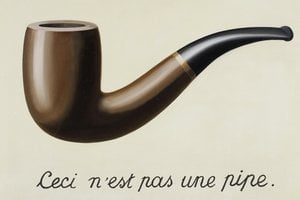
Magritte’s oeuvre is marked by a distinctive preoccupation with paradoxes – visual illusions that disrupt our understanding of reality and invite contemplation. *Les Amants (Die Liebenden)*, geschaffen zwischen 1927 und 1928, zeigt zwei Figuren hinter einem Vorhang, deren Gesichter verdeckt sind und somit eine zentrale Frage aufwirft: Wie können wir wirklich sehen? Diese berühmte Darstellung wird oft als ein Echo des frühen Traumas von Magrittes Mutter interpretiert – einer Figur, die sowohl eine Faszination für Geheimnis und Intimität als auch eine Reflexion über Verlust und Verbergenheit zum Ausdruck bringt. *The Treachery of Images (Dieses Bild ist kein Rohr)* (1929) ist ein Meisterwerk der Surrealistischen Kunst und stellt einen klassischen Fall von Dekonstruktion dar: Ein Bild wird nicht das Ding selbst, sondern lediglich eine Darstellung davon. Magritte nutzt eine hohe technische Präzision und eine sorgfältige Auswahl von Materialien, um diese paradoxe Aussage zu verstärken und uns daran zu erinnern, dass eine Repräsentation niemals die Sache ist.

Legacy and Influence

Despite initial difficulties in gaining recognition, Magritte’s work gradually gained prominence, insbesondere in den Vereinigten Staaten mit Ausstellungen im Jahr 1936 und später retrospektiven Veranstaltungen beim Museum of Modern Art (1965) und dem Metropolitan Museum of Art (1992). Er blieb politisch engagiert und setzte sich für künstlerische Autonomie ein. Er entwickelte weiterhin seinen unverwechselbaren Stil und erkundete Themen wie Wiederholung, Täuschung und die Macht der Sprache in Gemälden, die sowohl intellektuell anregend als auch visuell beeindruckend sind. Magritte starb am 15. August 1967 und hinterließ ein Werkkörper, das weiterhin Publikum weltweit fasziniert und herausfordert. Sein Einfluss reicht weit über die Malerei hinaus und umfasst Pop Art, Minimalismus und Konzeptkunst.

Рене Магрит

Рене Магрит

1898 - 1967 , Belgija

Brzi pregled

  • Artistic Movement Or Style: Surrealizam
  • Artists Who Influenced This Artist: ['Žorž De Čiriko']
  • Date Of Birth: 21 novembra 1898
  • Date Of Death: 15 augusta 1967
  • Full Name: René François Ghislain Magritte
  • Nationality: Belgijac
  • Notable Artworks:
    • Les Amants
    • Trešcarenj ulaga
    • Vreme zamrzeno
    • Čovečanstvo
  • Place Of Birth: Lesennes, Belgiju
Istražite umetnička dela organizovana prema temama, stilovima i karakteristikama.