Pregledaj u prostoru Isprobaj u AR-u Pređi na prodaju štampanih primeraka Pređi na prodaju digitalnih slika Podeli
Detalji Vodič Dodaj u omiljene Preuzmi sliku Slični predmeti Rendgenski snimak Automatska prezentacija Statistika

La Modéle rouge

René Magritte’s ‘La Modèle Rouge’ presents a striking surrealist composition of two feet in black boots against a green wall, embodying the artist's exploration of perception and hidden realities. Discover this iconic piece and bring its enigmatic beauty into your collection.

René Magritte je belgijski umetnik koji je poznat po svojim surrealističkim slikama koje izazivaju pitanja o stvarnosti i percepciji. Najpoznatije su njegove slike kao što su „Ljubavnici“, „La trahèrie des images“ i „Čovek u stanju“.

Umetničko delo prikazano na ovoj stranici zaštićeno je autorskim pravima, što znači da zakonski nismo u mogućnosti da kreiramo niti prodajemo identičnu reprodukciju. Ova zaštita se sprovodi u skladu sa međunarodnim sporazumima kao što su Bernska konvencija i nacionalnim zakonima, uključujući i one koji su definisani u Američki zakon o autorskom pravu – Naslov 17.

Kao poštovana i legalna alternativa, nudimo prilagođene, ručno oslikane umetničke radove inspirisane originalom. Naši stručni i profesionalni umetnici pažljivo proučavaju stil, ambijent i umetničku suštinu originala kako bi kreirali novo, unikatno delo koje budi istu emociju – ostajući pritom potpuno autentično stvaranje.

Ovaj metod je u potpunosti usklađen sa regulativama o autorskim pravima jer ne podrazumeva kopiranje ili dupliranje zaštićenih umetničkih dela. Umesto toga, reč je o kreativnoj reinterpretaciji – novom slikarskom delu koje je inspirisano originalom, ali nije identično njemu.

Ručno rađena uljana reprodukcija

Ručno oslikano uljanim bojama na platnu u dimenzijama i okviru po vašem izboru, izrađeno po porudžbini od strane naših umetnika. ( Pređi na prodaju štampanih primeraka Pređi na prodaju digitalnih slika)

Corner sample of the P118B picture frame: kaljeni polistiren, 5 cm wide and 3 cm thick
P118B дин10
Corner sample of the P118H picture frame: kaljeni polistiren, 5 cm wide and 3 cm thick
P118H дин10
Corner sample of the P118W picture frame: kaljeni polistiren, 5 cm wide and 3 cm thick
P118W дин10
Corner sample of the P438Z picture frame: kaljeni polistiren, 5.5 cm wide and 3.5 cm thick
P438Z дин10
Corner sample of the P508JH picture frame: kaljeni polistiren, 7 cm wide and 3.5 cm thick
P508JH дин12
Corner sample of the P508YH picture frame: kaljeni polistiren, 7 cm wide and 3.5 cm thick
P508YH дин12
Corner sample of the P805H picture frame: kaljeni polistiren, 5 cm wide and 3.5 cm thick
P805H дин10
Corner sample of the P805Z picture frame: kaljeni polistiren, 5 cm wide and 3.5 cm thick
P805Z дин10
Corner sample of the P919BZ picture frame: kaljeni polistiren, 7 cm wide and 3.5 cm thick
P919BZ дин10
Corner sample of the P919G picture frame: kaljeni polistiren, 7 cm wide and 3.5 cm thick
P919G дин10
Corner sample of the P919XJ picture frame: kaljeni polistiren, 7 cm wide and 3.5 cm thick
P919XJ дин10
Corner sample of the P959ZH picture frame: kaljeni polistiren, 5 cm wide and 3 cm thick
P959ZH дин10
Corner sample of the P968JZ picture frame: kaljeni polistiren, 6 cm wide and 4 cm thick
P968JZ дин12
Corner sample of the W106C picture frame: masivno drvo, 5 cm wide and 3 cm thick
W106C дин8
Corner sample of the W218G picture frame: masivno drvo, 5 cm wide and 3 cm thick
W218G дин10
Corner sample of the W218JH picture frame: masivno drvo, 5 cm wide and 3 cm thick
W218JH дин8
Corner sample of the W218Y picture frame: masivno drvo, 5 cm wide and 3 cm thick
W218Y дин10
Corner sample of the W307PJ picture frame: masivno drvo, 6 cm wide and 3 cm thick
W307PJ дин10
Corner sample of the W316G picture frame: masivno drvo, 6 cm wide and 3 cm thick
W316G дин10
Corner sample of the W316PJ picture frame: masivno drvo, 6 cm wide and 3 cm thick
W316PJ дин8
Corner sample of the W316Y picture frame: masivno drvo, 6 cm wide and 3 cm thick
W316Y дин10
Corner sample of the W398PJ picture frame: masivno drvo, 5 cm wide and 3 cm thick
W398PJ дин8
Corner sample of the W4111J picture frame: masivno drvo, 6.5 cm wide and 3.5 cm thick
W4111J дин10
Corner sample of the W500HY picture frame: masivno drvo, 7 cm wide and 5 cm thick
W500HY дин15
Corner sample of the W500JH picture frame: masivno drvo, 7 cm wide and 5 cm thick
W500JH дин15
Corner sample of the W692G picture frame: masivno drvo, 8 cm wide and 4 cm thick
W692G дин12
Corner sample of the W849H picture frame: masivno drvo, 5 cm wide and 3 cm thick
W849H дин8
Corner sample of the W940BG picture frame: masivno drvo, 7.5 cm wide and 4.5 cm thick
W940BG дин15
Corner sample of the W953PJ picture frame: masivno drvo, 6 cm wide and 3.5 cm thick
W953PJ дин8

Standardne dimenzije
po meri
CM
INCH

Izaberite jednu od naših unapred definisanih veličina koje odgovaraju originalnim proporcijama umetničkog dela.

širina
visina

Unesite širinu i visinu koja vam je potrebna, kako bi se uklopili u vaš ram ili zid. Pošto je ovo ručno oslikano delo, umetnik može naslikati malo više prostora oko slike ili malo skratiti ivice za dimenzije drugačijeg oblika — izbor je na vama. Pre početka rada, poslaćemo vam digitalni prikaz radi potvrde. Slika prikazana na ovoj stranici ne predstavlja konačan rezultat — samo digitalni prikaz pokazuje stvarnu sliku.

Primeri mogućih izmena: Zamena lica fotografijom kupca; Dodavanje ljubimca (npr. zamena mačke psom); Uključivanje skrivene poruke u pozadini; Promena pejzaža ili elemenata pozadine.
Nakon narudžbine, tim WahooArt.com će klijentu putem e-pošte poslati uputstva i dostaviti prikaz predloženog rešenja

Svetska isporuka () za 3/4 nedelje umesto uobičajenih 5 nedelja. (27 октобар). Bez kompromisa po pitanju kvaliteta.

Besplatna ekspresna dostava širom sveta
Visokokvalitetno laneno platno
Sveobuhvatno osiguranje transporta
Garancija povraćaja carine i uvoznih dažbina
Garancija vernosti boja i autentičnosti pri reprodukciji
Politika povraćaja u roku od 100 dana (samo u slučaju nedostataka)
Garancija povrata 100% novca
Popust pri većoj količini

Ukupna cena

дин 28105

La Modéle rouge

Tehnika izrade reprodukcije

Veličina reprodukcije

-

Ukupna cena

дин 28105

Brzi pregled

  • Movement: Surrealism
  • Title: La Modéle rouge
  • Artistic style: Magrittean
  • Year: 1967
  • Influences: Impressionism

A Study in Absence: Deconstructing Reality with René Magritte’s *La Modéle rouge*

René Magritte's La Modèle Rouge, a deceptively simple depiction of two feet clad in black boots against a verdant wall, is far more than a mere still life. It’s a potent meditation on perception, representation, and the unsettling nature of reality – hallmarks of the artist’s signature Surrealist style. Painted by Magritte around 1937, this work exemplifies his deliberate rejection of traditional artistic conventions, opting instead to challenge the viewer's assumptions about what they are seeing.

  • Subject Matter: The painting focuses on the lower half of a female figure’s body, specifically her feet and boots. This deliberate reduction in detail – stripping away recognizable human form – is central to Magritte’s strategy.
  • Color Palette: The stark contrast between the black boots and the vibrant green background immediately draws attention, creating a visual tension that mirrors the underlying thematic concerns. The red hue of the model's skin adds a subtle yet significant element, hinting at both passion and vulnerability.

The Surrealist Project: Challenging Visual Norms

Magritte was deeply influenced by the burgeoning Surrealist movement, which sought to liberate art from the constraints of rational thought and conscious control. He embraced the idea of juxtaposing incongruous elements – as seen here – to provoke a subconscious response in the viewer. His work aligns with the broader Surrealist project of disrupting established visual norms, questioning the relationship between image and reality. This approach was partly inspired by his early life experiences, particularly the trauma of his mother's death, which fueled his preoccupation with hidden meanings and obscured identities.

The painting’s composition echoes the work of masters like Vermeer, but Magritte subverts this classical influence through his deliberate ambiguity. The boots could be interpreted as symbols of protection, concealment, or even a veiled representation of the female form itself – echoing themes explored in his earlier works where the faces of women are often obscured.

Technique and Materiality: A Deliberate Simplicity

Magritte’s technique is characterized by meticulous detail within a limited scope. He employed oil paints with a smooth, almost enamel-like finish, creating a sense of stillness and precision. The rendering of the boots is particularly noteworthy – each crease, shadow, and reflection is rendered with painstaking accuracy. This technical mastery serves to heighten the painting’s unsettling effect; the realism of the boots contrasts sharply with their reduced context, amplifying the feeling of disorientation.

The green background, likely applied in multiple layers, contributes to the overall sense of depth and atmosphere. It's a color often associated with nature and fertility, yet here it feels strangely detached and artificial, further contributing to the painting’s dreamlike quality.

Symbolic Resonance: Loss, Identity, and the Unseen

La Modèle Rouge is laden with symbolic potential. The obscured feet can be seen as a representation of lost identity or the difficulty in grasping the complete truth. The red skin tone, reminiscent of his mother’s death scene, subtly alludes to themes of grief, memory, and the enduring power of trauma. Magritte's work consistently explores the idea that reality is often constructed through our perceptions, and that what we see may not be what truly exists. This painting invites us to confront the unsettling possibility that appearances can be deceiving, and that beneath the surface lies a world of hidden meanings.

Pitanja i odgovori

Gde mogu kupiti ručno oslikano reprodukciju dela „La Modéle rouge”, Рене Магрит?

Ručno oslikane kopije dela „La Modéle rouge”, Рене Магрит mogu se kupiti na stranici ovaj veb-sajt: ručno oslikana uljana reprodukcija na lanenom platnu, putem njihove stranice za naručivanje reprodukcija Ručno oslikana reprodukcija.

Gde se preporučuje izlaganje dela "La Modéle rouge" u formatu Portrait?

Format Portrait dela „La Modéle rouge”, Рене Магрит preporučuje se za Reception. Format i prostor zajedno služe kao smernica za postavljanje reprodukcije.

Koji emocionalni ton prati stil Surrealist Object u delu "La Modéle rouge"?

Unutar pokreta Surrealist Object, delo "La Modéle rouge" je zabeleženo sa Mysterious tonom.


Biografija umetnika

Early Life and the Seeds of Surrealism

René Magritte, geboren René François Ghislain Magritte am 21. November 1898 in Lessines, Belgien, trat in eine Welt ein, die sein enigmatisches künstlerisches Sehen tiefgreifend prägen würde. Sein frühes Leben war geprägt von einem erschütternden Ereignis – dem Selbstmord seiner Mutter als er nur dreizehn Jahre alt war. Das Bild ihrer Leiche beim Wiederaufbau durch den Sambre Fluss mit ihrem Kleid, das ihr Gesicht verdeckte, wurde ein obsessives Motiv, das sich subtil in seinen späteren Arbeiten widerspiegelte und eine kontinuierliche Erforschung verborgener Realitäten zum Ausdruck brachte. Dieses frühe Trauma instillte ihm eine Faszination für Mysterium, Verlust und die erschreckende Macht dessen, was nicht gesehen wird. Obwohl Einzelheiten seines Kindeslebens nur schwer zu finden sind, ist klar, dass diese formative Erfahrung seinen lebenslangen Zweifel an Wahrnehmung und Darstellung begründete. Er begann mit Zeichnungen im Alter von zehn Jahren und offenbarte eine natürliche Neigung zum visuellen Ausdruck, erkundete aber zunächst Impressionismus bevor er einen Weg einschlug, der ihn dazu führte, einer der bedeutendsten Figuren in der Surrealistischen Kunst zu werden.

Artistic Development and Influences

Magrittes künstlerische Reise war nicht unmittelbar oder einfachweg erfolgreich. Er studierte an der Académie Royale des Beaux-Arts in Brüssel und fand ihre traditionellen Methoden erstickend. Sein frühes Werk experimentierte mit Futurismus und Kubismus und ließ sich Elemente dieser Avantgarde Bewegungen aufnehmen, lehnte aber deren ausschließlich formale Interessen ab. Es gelang ihm nicht bis zum Begegnen mit Giorgio de Chiricos Gemälde *Die Melodie der Liebe* im Jahr 1922, dass Magritte eine Resonanz entdeckte, die seinen künstlerischen Kurs für immer veränderte. De Chiricos traumhafte Landschaften und verstörende Kombinationen öffneten ihm einen neuen Blick – eine Welt, in der das Bekannte fremd erscheinen konnte und das Gewöhnliche tiefgreifende Mysterium aufnehmen konnte. Dieses Erlebnis entfachte sein Engagement für Surrealismus, obwohl er oft eine einzigartige Distanz zu seinen ausgeprägtesten psychologischen oder automatischen Ansätzen bewahrte. Er bevorzugte eine präzise Technik, um reale Szenarien darzustellen und ließ sich nicht von anderen Mitgliedern der Bewegung beeinflussen.

The Heart of Surrealism: Challenging Reality

Bis 1926 hatte Magritte sich vollständig dem Wesen des Surrealismus verschrieben und schuf *Le Jockey Perdu (Der Verlorene Jockey)*, das allgemein als sein erstes wirklich surrealistisches Werk angesehen wird. Allerdings war seine Art von Surrealismus einzigartig. Er interessierte sich nicht für die Erkundung des Unterbewusstseins durch frei assoziative oder traumhafte Bilder wie einige seiner Zeitgenossen. Stattdessen suchte Magritte nach einer neuen Möglichkeit zu sehen – eine Welt, in der das Bekannte fremd erscheinen konnte und das Gewöhnliche tiefgreifende Mysterium aufnehmen konnte. Er war nicht daran interessiert, die Oberfläche von Objekten zu erforschen oder eine bestimmte Perspektive einzunehmen wie andere Künstler seiner Zeit. Magritte konzentrierte sich darauf, die Wahrnehmung von Realität herauszufordern, indem er alltägliche Objekte in unerwarteten Kontexten präsentierte und damit dazu aufforderte, eigene Annahmen über die Welt um uns herum zu hinterfragen.

Iconic Works: Paradoxes of Perception

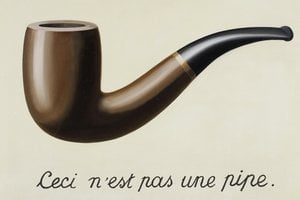
Magritte’s oeuvre is marked by a distinctive preoccupation with paradoxes – visual illusions that disrupt our understanding of reality and invite contemplation. *Les Amants (Die Liebenden)*, geschaffen zwischen 1927 und 1928, zeigt zwei Figuren hinter einem Vorhang, deren Gesichter verdeckt sind und somit eine zentrale Frage aufwirft: Wie können wir wirklich sehen? Diese berühmte Darstellung wird oft als ein Echo des frühen Traumas von Magrittes Mutter interpretiert – einer Figur, die sowohl eine Faszination für Geheimnis und Intimität als auch eine Reflexion über Verlust und Verbergenheit zum Ausdruck bringt. *The Treachery of Images (Dieses Bild ist kein Rohr)* (1929) ist ein Meisterwerk der Surrealistischen Kunst und stellt einen klassischen Fall von Dekonstruktion dar: Ein Bild wird nicht das Ding selbst, sondern lediglich eine Darstellung davon. Magritte nutzt eine hohe technische Präzision und eine sorgfältige Auswahl von Materialien, um diese paradoxe Aussage zu verstärken und uns daran zu erinnern, dass eine Repräsentation niemals die Sache ist.

Legacy and Influence

Despite initial difficulties in gaining recognition, Magritte’s work gradually gained prominence, insbesondere in den Vereinigten Staaten mit Ausstellungen im Jahr 1936 und später retrospektiven Veranstaltungen beim Museum of Modern Art (1965) und dem Metropolitan Museum of Art (1992). Er blieb politisch engagiert und setzte sich für künstlerische Autonomie ein. Er entwickelte weiterhin seinen unverwechselbaren Stil und erkundete Themen wie Wiederholung, Täuschung und die Macht der Sprache in Gemälden, die sowohl intellektuell anregend als auch visuell beeindruckend sind. Magritte starb am 15. August 1967 und hinterließ ein Werkkörper, das weiterhin Publikum weltweit fasziniert und herausfordert. Sein Einfluss reicht weit über die Malerei hinaus und umfasst Pop Art, Minimalismus und Konzeptkunst.

Рене Магрит

Рене Магрит

1898 - 1967 , Belgija

Brzi pregled

  • Artistic Movement Or Style: Surrealizam
  • Artists Who Influenced This Artist: ['Žorž De Čiriko']
  • Date Of Birth: 21 novembra 1898
  • Date Of Death: 15 augusta 1967
  • Full Name: René François Ghislain Magritte
  • Nationality: Belgijac
  • Notable Artworks:
    • Les Amants
    • Trešcarenj ulaga
    • Vreme zamrzeno
    • Čovečanstvo
  • Place Of Birth: Lesennes, Belgiju
Istražite umetnička dela organizovana prema temama, stilovima i karakteristikama.