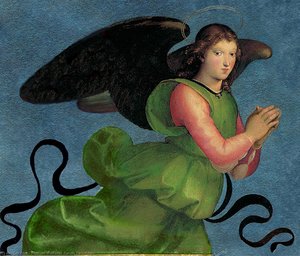
The Serene Majesty of Raphael’s Madonna and Child
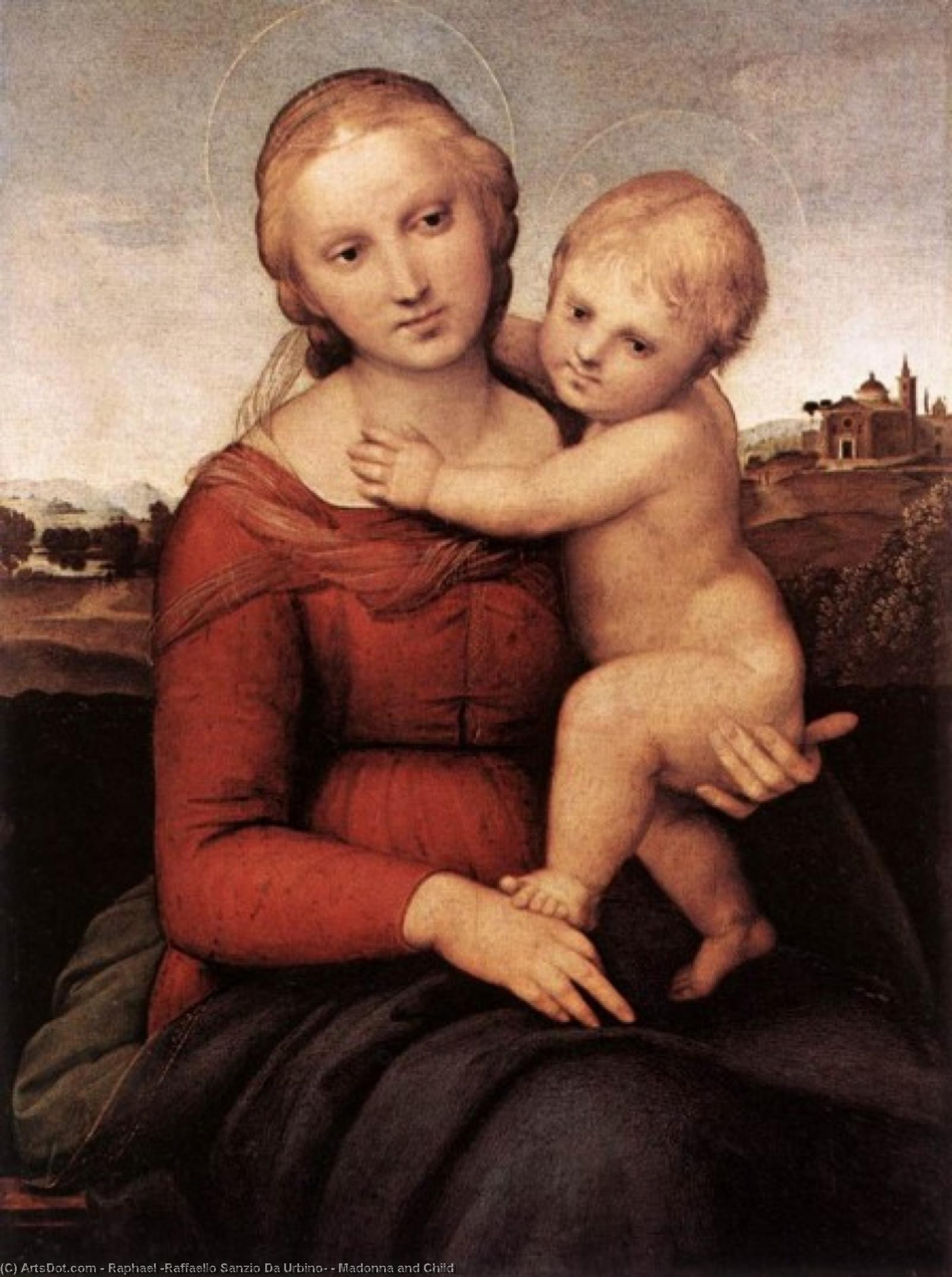
Raphael’s Madonna and Child, painted in 1505, isn't merely a depiction of the Virgin Mary cradling her infant son; it’s a profound distillation of the High Renaissance ideal – a harmonious blend of divine grace, human beauty, and technical mastery. This oil-on-wood masterpiece, executed in the format of a circular tondo, immediately draws the viewer into its intimate world, inviting contemplation on themes of motherhood, faith, and the eternal bond between mother and child. The painting’s quiet elegance speaks volumes about Raphael's skill at capturing not just likeness but also an atmosphere of profound tenderness and spiritual serenity.
The composition itself is a testament to Renaissance principles. Rather than a traditional profile view, Raphael presents Mary and Jesus in a gentle three-quarter pose, fostering a sense of direct engagement with the viewer. The baby, positioned comfortably on her left side, appears to be nursing – a scene brimming with warmth and maternal love. His gaze meets hers, creating an immediate connection that transcends time and space. Behind them, subtly rendered within theo depth, is a building, adding a layer of architectural interest and grounding the intimate scene in a recognizable reality. The careful placement of each element contributes to a balanced and harmonious whole, reflecting the Renaissance pursuit of perfect proportion and beauty.
A Symphony of Technique: Chiaroscuro and Sfumato
Raphael’s genius lies not only in his compositional skill but also in his masterful application of artistic techniques. He employs chiaroscuro – the dramatic interplay of light and dark – to sculpt the figures, creating a palpable sense of volume and depth. Notice how the soft glow illuminates Mary's face and robes, while carefully shadowed areas define her form and create a subtle three-dimensionality. Complementing this is his skillful use of sfumato, a technique borrowed from Leonardo da Vinci, which involves subtly blending colors to create hazy, atmospheric effects. This softens the edges of the figures, lending them an ethereal quality and contributing to the painting’s overall sense of serenity.
The rich palette – dominated by warm reds, blues, and golds – further enhances the painting's visual impact. The vibrant red of Mary’s dress symbolizes her role as Queen of Heaven and signifies royalty and grace. The gold accents, particularly in the background building, add a touch of divine splendor, elevating the scene to a realm beyond earthly concerns. Raphael’s meticulous attention to detail is evident in every brushstroke, from the delicate folds of Mary's garments to the tiny details of the baby’s face – each element contributing to the painting’s overall sense of realism and beauty.
A Renaissance Masterpiece Within its Historical Context
Madonna and Child was created during the Cinquecento, a period of unparalleled artistic flourishing in Italy. This era witnessed a renewed interest in classical art and philosophy, as well as groundbreaking advancements in painting technique. Raphael’s work stands alongside those of Leonardo da Vinci and Michelangelo – titans of the Renaissance – demonstrating his mastery of perspective, anatomy, and composition. The tondo format itself was popular during this period, often associated with private devotion and intimate settings.
Interestingly, Raphael's style evolved throughout his career, moving from the more subdued Umbrian influences of his early works to the refined elegance of his Roman masterpieces. This particular painting reflects a transitional phase, showcasing elements of both styles while firmly establishing Raphael’s signature approach – characterized by grace, clarity, and an almost effortless beauty. It's worth noting that this work shares stylistic similarities with Leonardo da Vinci’s Virgin of the Rocks and Michelangelo’s depictions of Mary, highlighting the shared artistic language of the era.
Symbolism and Emotional Resonance
Beyond its technical brilliance, Madonna and Child is rich in symbolism. The act of nursing represents not only maternal love but also themes of nourishment, protection, and divine grace. The circular composition itself symbolizes eternity and the cyclical nature of life. The painting’s overall effect is profoundly moving – evoking feelings of peace, serenity, and a deep sense of connection to something larger than oneself. It's a timeless image that continues to resonate with viewers centuries after its creation, reminding us of the enduring power of motherhood and faith.
At WahooArt.com, we are proud to offer meticulously crafted hand-painted reproductions of this iconic masterpiece, allowing you to bring the serenity and beauty of Raphael’s Madonna and Child into your home or studio. Explore our collection today and experience the artistry firsthand.
Experience the beauty of Renaissance art with WahooArt’s handmade oil painting reproductions.



 Naručite reprodukciju
 Pošalji
 Podeli
 Detalji

 Преузми
 Slični predmeti
 Rendgenski snimak
 Slajdovi

 Pročitaj više






































 Opcija sa staklom dostupna je samo za dimenzije manje od 110 cm