Oil On Panel
WallArt
Northern Renaissance
1525
Renaissance
135.0 x 90.0 cm
Staatliche Museen zu BerlinRučno oslikano uljanim bojama na platnu u dimenzijama i okviru po vašem izboru, izrađeno po porudžbini od strane naših umetnika. ( Pređi na štampu
Pređi na digitalnu sliku)

Izaberite jednu od naših unapred definisanih veličina koje odgovaraju originalnim proporcijama umetničkog dela.
Можете унети сопствене димензије како бисте прилагодили дело одређеном оквиру или простору. Ако одабрана величина не одговара пропорцијама оригинала, слика ће бити исечена или проширена додатним елементима који се ручно насликавају. Дигитални prikaz ће вам бити послат на одобрење пре почетка производње.
Имајте на уму да преглед на екрану не одражава стварно исецање или проширење. Само приказ (mockup) ће тачно приказати коначну композицију.
Иако су доступне прилагођене величине, препоручујемо да одаберете димензију из дефинисане листе како бисте сачували оригиналне пропорције.
Isporuka širom sveta () za 3/4 nedelje umesto uobičajenih 5 nedelja. (11 септембар). Bez kompromisa po pitanju kvaliteta.
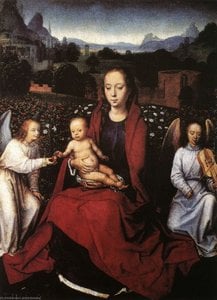
The Virgin Enthroned
Dimenzije reprodukcije
In the quiet, hallowed atmosphere of the Staatliche Museen Berlin, there exists a window into the spiritual heart of the sixteenth century. Quentin Massys’ “The Virgin Enthroned,” completed around 1525, is far more than a mere religious portrait; it is a profound meditation on grace and the intersection of the earthly and the divine. As a cornerstone of the Antwerp School, this masterpiece captures a pivotal moment in art history where the meticulous, almost microscopic devotion of the Early Netherlandish tradition began to breathe the air of Renaissance humanism. The painting presents the Virgin Mary not as a distant icon, but as a serene, maternal presence, seated upon an intricately carved throne that commands both reverence and wonder.
The composition draws the viewer into a sacred architectural space, where Gothic arches rise with a sense of eternal grandeur. Through these arches, light filters in a way that feels both natural and supernatural, illuminating the central figures with a soft, celestial glow. This interplay of light and shadow—the masterful use of chiaroscuro—creates a palpable sense of three-dimensionality, making the figures feel as though they might step forward from the panel into our own world. For the collector or the lover of classical beauty, this painting offers an unparalleled sense of depth, inviting the eye to wander through its detailed textures and architectural splendor.
What truly distinguishes Massys is his ability to translate his early training as an ironsmith into a painterly language of tactile brilliance. Every surface in “The Virgin Enthroned” tells a story of material richness. One can almost feel the heavy, velvet weight of Mary’s crimson cloak and the delicate, woven complexity of the carpet beneath her feet. The artist’s precision is evident in the way he captures the glint of enamel on the throne and the subtle sheen of light upon the golden chalice resting on a nearby table. This obsession with realism serves a higher purpose: it grounds the spiritual mystery of the Christ child in a world that feels tangible, real, and deeply precious.
Every element within the frame is steeped in theological significance. The presence of the bread and the golden chalice on the white-draped table serves as a poignant reference to the Eucharist, inviting the viewer into a state of sacramental contemplation. Even the architectural details, with their stained glass and intricate patterns, act as symbols of the heavenly Jerusalem. This layering of meaning ensures that the artwork remains intellectually stimulating long after the first glance. For an interior designer, such a piece provides a sophisticated focal point, bringing a sense of historical weight, narrative complexity, and quiet dignity to any curated space.
To possess a reproduction of this caliber is to bring a piece of the Northern Renaissance into the contemporary home. Massys’ ability to balance the heavy symbolism of his era with a breathtakingly realistic technique creates an emotional resonance that transcends time. The painting evokes a sense of peace, stability, and profound reverence—qualities that are increasingly sought after in modern art decoration. It is a work that does not merely decorate a wall; it anchors a room, providing a soulful connection to the masters of the past.
Whether you are an art historian captivated by the evolution of the Antwerp School or a decorator seeking to infuse a room with classical elegance, “The Virgin Enthroned” stands as a testament to human skill and spiritual aspiration. It remains a luminous example of how light, color, and texture can be woven together to create an eternal moment of devotion.
U živopisnom, uzrastajućem pejzažu šesnaestovečnih Niskih Zemalja, malo je imena koja odjekuju sa toliko temeljnom važžnošću kao Kventin Masis. Često proglašen pionirem Antverpenske škole, Masis je bio slikar koji je premostio jaz između pedantne, duhovne posvećenosti rane nederlandske tradicije i bujajućeg humanizma Severne renesanse. Rođen oko 1466. godine uLeuvenu, u Belgiji, njegov rani život ostaje tkanina isprepletana legendama i istorijskim fragmentima. U svetu istorije umetnosti često se šapuće da je pre nego što je ikada dotakao finu četkicu, bio obučen za zanat kovača gvožđa—detalj koji daje duboku, taktilnu težinu njegovom kasnijem majstorstvu u prikazivan lica teksture i materijala. Ovo iskustvo u obradi metala verovatno je u njemu usadilo jedinstveno poštovanje prema fizičkom svetu, omogućavajući mu da prikaže sjaj svile, hladni odsjaj novčića i izbruđenu ljudsku kožu sa neprevaziđenom preciznošću.
Dok je oko 1490. godine prešao iz akademske atmosfere Leuvena u užurbani trgovački centar Antverpen, Masis je počeo da utka sopstvenu, posebnu nit u tkaninu flamanske umetnosti. Njegovo rano obrazovanje, potencijalno pod vođstvom Dirka Boutsа, povezalo ga je sa lozom majstora kao što su Hans Memling i Rogier van der Weyden. Od ovih prethodnika nasledio je posvećenost verisimilitudu—traganju za istinom u prikazu. Ipak, Masis je bio daleko od običnog imitatora. Dok je zadržao izvrsne detalje karakteristične za svoje pretodnike, on je svoja dela prožela novom, bujomnom vitalnošću i spremnošću da istražuje složenost ljudskog stanja kroz religioznu svečanost, ali i kroz oštre društvene komentare.
Masisova briljantnost leži u njegovoj izvanrednoj sposobnosti da navigira između dva naizgled nepovezana sveta: svetog i svetovnog. S jedne strane, njegove religiozne kompozicije služe kao duboke meditacije o veri. U delima kao što je Hrist na krstu sa darovnicima, on beleži sirovu, emocionalnu težinu raspeća, koristeći senzibilitet visoke renesanse kako bi predstavio scenu koja je istovremeno duboko dirljiva i tehnički besprekorna. Njegova sposobnost da prikaže božansko kroz prizmu ljudske patnje omogućila je njegovim religioznim motivima da odjeknu sa visceralnom intimnošću, čineći duhovno opipljivim za posmatrača.
Nasuprot tome, Masis je bio majstor satiričnog žanra, koristeći svoju četkicu kao ogledalo koje prati promenljive društvene moralne vrednosti svog doba. Posedovao je oštro oko za ljudske slabosti, često stvarajući scene koje su spajale realizam sa suptilnim, podrugljivim duhom. Ova dualnost je možda najočiglednija u njegovom pristupu portretu i žanrovskom slikarstvu, gde je mogao da pređe sa spokojne lepote Device i deteta na složenije, moralno slojevite prikaze savremenog života. Njegov rad je često istraživao teme pohlepe, taštine i tenzije između materijalnog bogatstva i duhovne čistote, čineći ga pretećom velikim žanrovskim slikarima koji će uslediti u narednim vekovima.
Istorijski značaj Kventina Masisa ne može se preuveličati; on je bio katalizator umetničke revolucije u Antverpenu. Uvodeći nove motive i tehnike, a ostajući usidren u bogatim tradicijama svoje domovine, pružio je nacrt za školu slikarstva koja će dominirati Flandrijom tokom čitavog šesnaestog veka. Njegov uticaj se može pratiti kroz evoluciju evropske umetnosti Severa, jer je otvorio put ekspresivnijem, opservacionom stilu koji je prihvatio složenosti modernizujućeg se sveta.
Danas Masisa ne sećamo samo kao zanatliju, već kao pripovedača koji je uhvatio dušu jedne ere. Njegovo nasleđe je sačuvano u trajnoj snazi njegovih slika:
1466 - 1530 , Belgija