A Village Chronicle: Pieter Bruegel's "The Peasant Wedding"
Pieter Bruegel the Elder’s “The Peasant Wedding,” painted around 1567-1568, is a monumental canvas offering an unparalleled glimpse into 16th-century rural life in the Netherlands. More than just a depiction of a festive occasion, it's a complex social commentary and a masterful display of Bruegel’s observational skills and narrative prowess.
Subject Matter & Composition
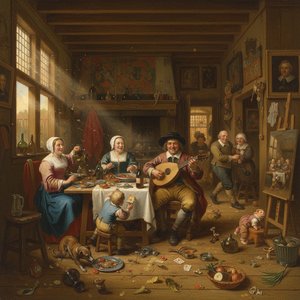
The painting portrays a boisterous wedding feast taking place within a rustic farmhouse. The scene is teeming with activity: guests are seated at long tables laden with food, musicians play lively tunes, and various individuals engage in conversations or amusements. Bruegel’s composition is remarkably intricate, filled with numerous figures and details that create a sense of bustling realism. The central focus is on the newly married couple, seated prominently at the head table, though their expressions are somewhat enigmatic. The overall impression is one of joyous celebration tempered by an underlying sense of social complexity.
Style & Technique
Bruegel’s style in “The Peasant Wedding” exemplifies his unique blend of Renaissance realism and Northern European detail. He employs a meticulous technique, rendering each figure and object with remarkable precision. His use of color is earthy and muted, reflecting the rustic setting and the clothing of the peasants. The painting's scale (approximately 117 cm x 162 cm) contributes to its immersive quality, drawing the viewer into the heart of the scene. Bruegel’s mastery lies in his ability to capture not just the physical appearance of his subjects but also their individual personalities and social roles.
Symbolism & Historical Context
Beyond its surface-level depiction of a wedding feast, “The Peasant Wedding” is rich in symbolism. Bruegel subtly critiques aspects of peasant society, highlighting both its joys and its flaws. The abundance of food suggests prosperity, but also potential gluttony. Certain figures appear to be engaged in questionable activities, hinting at moral ambiguities within the community. Historically, the painting reflects a period of social change in the Netherlands, as rural populations gained increasing economic importance. Bruegel’s work provides valuable insights into the lives and customs of ordinary people during this transformative era.
Emotional Impact & Legacy
“The Peasant Wedding” evokes a complex range of emotions in the viewer. It's simultaneously joyous, humorous, and thought-provoking. The painting’s enduring appeal lies in its ability to connect with audiences across centuries, offering a timeless portrait of human nature. Bruegel’s masterpiece remains one of the most celebrated works of Northern Renaissance art, influencing generations of artists and continuing to inspire awe and admiration.



 Pregledaj u prostoru
 Pređi na prodaju štampanih primeraka
 Podeli
 Podeli
 Detalji
 Vodič
Vodič

 Preuzmi sliku
 Slični predmeti
 Rendgenski snimak
 Automatska prezentacija
 Statistika

 Pročitaj više






































 Opcija sa staklom dostupna je samo za dimenzije manje od 110 cm