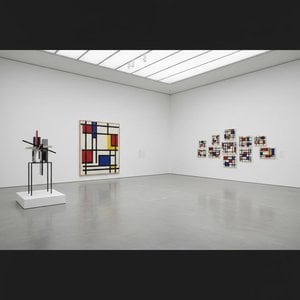
Pieta Mondrijana: Vizija Univerzalne Harmonije
Rođen kao Pieter Cornelis Mondriaan 7. marta 1872. godine u mirnom holandskom gradu Amersfoortu, umetnički put Pieta Mondrijana nije bio trenutno otkriće, već postepeno razvijanje. Njegov raniji život bio je prožet tradicijom; njegov ujak, Frits Mondriaan, već je bio etablirani slikar, a ta porodična veza ga je prvobitno usmerila ka slikanju pejzaža. Te prve radove, podsećajući na Hagšku školu i holandski impresionizam – dela poput *Crvenog Mlina* – otkrivaju mladog umetnika koji marljivo studira prirodu, savladava tehniku, ali suptilno traži nešto izvan pukog predstavljanja. Čak i tada, čežnja za pojednostavljivanjem činila se kao da povlači njegov kist. Nije bio zadovoljan samo ogledalom sveta; želeo je destilovati njegovu esenciju. Ta rana period videla je eksperimentisanje sa Pointilizmom i Fauvizmom, svaki stil nudeći drugačiju perspektivu boja i oblika, ali nijedan u potpunosti nije zadovoljio njegovo rastuću umetničku viziju. Bilo je to vreme istraživanja, neophodan predhodnik radikalnog odstupanja koje će definisati njegovu ostavštinu.
Pariskog Buđenja i Rođenje Neoplastičnosti
Ključni trenutak nastupio je 1912. godinom kada se Mondrijan preselio u Pariz. Grad je pulsirao avangardnom energijom, a on se našao uronjen u revolucionarni svet kubizma. Ovaj susret se pokazao transformativnim. Počeo je dekonstruisati oblike, razlagati objekte na njihove geometrijske komponente, odmaknuvši se od prikazivanja *šta* vidi prema istraživanju *kako* to vidi. Ali Mondrijan nije samo usvajao novi stil; kreće se na duhovno putovanje. Duboko pod uticajem Teozofije – mistične filozofije koja naglašava univerzalna načela – verovao je da umetnost može biti sredstvo za izražavanje ovih skrivenih istina. Ta vera je poterala njegovu neumornu težnju ka apstrakciji, gurajući ga da smanji boju i oblik na njihove najfundamentalnije elemente. Oko 1917. godine, ovo putovanje je kulminiralo formulacijom Neoplastičnosti, često nazvanom ‘čista plastična umetnost’. Bila je to radikalna estetika zasnovana na bitnim oblicima – ravnim linijama, pravim uglovima – i ograničenoj paleti: primarne boje (crvena, plava, žuta), crna, bela i siva. Za Mondrijana, ovo smanjenje nije bilo o praznini; rečilo se o otkrivanju podređene harmonije univerzuma, vizuelnom manifestaciji duhovnog reda. Suosnovao je pokret *De Stijl* sa Teom van Doesburgom kako bi promovisao ove ideje, čime je učvrstio Neoplastičnost kao vodeću silu u modernoj umetnosti. Remek-dela poput *Kompozicije sa crvenim, plavim i žutim* i *Tableau br. 2 Kompozicija br. V* stoje kao svedočanstva ovog perioda, ikonične reprezentacije njegove neumorne posvećenosti geometrijskoj čistoti.
Njujorški Ritam: Kasnoprofiliranje
Izbijanje Drugog svetskog rata primoralo je Mondrijana da 1940. godine pobegne iz Evrope, pronalazeći utočište u užurbanom gradu Njujorku. Ovo preseljenje se neočekivano ispostavilo kao ohrabrujuće. Gridska struktura grada – jasan kontrast organskim pejzažima koje je poznavao – rezonirala je sa njegovim umetničkim principima. Njegova kasnija dela, naročito *Broadway Boogie Woogie* (1943), odražavaju taj uticaj. Iako zadržava temeljna načela Neoplastičnosti, slika uvodi dinamičnu energiju, živahni ritam inspirisan pulsirajućim životom grada i džez muzikom. Prave linije su još prisutne, ali sada plešu i presecaju se sa većom slobodom, stvarajući osećaj pokreta i radosti. Čini se kao da je Mondrijan pronašao novi jezik unutar svog uspostavljenog vokabulara, način da izrazi složenost modernog urbanog postojanja kroz jednostavnost geometrijske apstrakcije. Nastavio je da dorađuje svoj stil sve do svoje smrti 1944. godine, ostavljajući iza sebe delo koje i dalje fascinira i inspirishe.
Trajna Ostavština: Mondrijanova Trajna Uticaj
Mondrijanov uticaj na umetnički svet je neprocenjiv. On nije bio samo umetnik; bio je vizionar koji je fundamentalno promenio naše razumevanje apstrakcije i njenog potencijala za izražavanje univerzalnih istina. Njegovo delo je duboko uticalo na bezbroj umetnika, pokreta i disciplina. Apstraktni ekspresionizam, minimalizam i slika polja boja duguju svoj dug njegovom pionirskom duhu. Ali njegov uticaj se proteže daleko izvan platna. Principi Neoplastičnosti – jednostavnost, jasnoća, geometrijski red – proželi su arhitekturu, dizajn i modu. Od nameštaja i tekstila do fasada zgrada i grafičkih rasporeda, Mondrijanova estetika nastavlja da oblikuje naš vizuelni svet. Ostaje ikonična figura u modernoj umetnosti, simbol neumorne potrage za apstrakcijom i trajne moći umetničke inovacije. Kao što je istakao istorijaš dizajna Stiven Bejli, Mondrijan je postao „totem za sve što je modernizam težio da bude“. Njegova ostavština nije samo jedna od estetske lepote, već i intelektualne rigoroznosti, duhovne dubine i neumorne vere u transformativni potencijal umetnosti.
Uticaji i Ključna Dela
- Rani Uticaji: Hagška škola, holandski impresionizam, Pointilizam, Fauvizam pružili su osnovu za njegove početne umetničke iskaze.
- Transformativni Uticaj: Kubizam u Parizu bio je ključan za njegov prelazak ka apstrakciji i geometrijskim oblicima.
- Filozofski Temelj: Teozofija duboko je informisala njegovo verovanje da umetnost može izraziti univerzalne duhovne principe.
- Ključna Dela: *Crveni Mlin* (rani naturalistički period), *Kompozicija sa crvenim, plavim i žutim* (tipičan Neoplastizam), *Tableau br. 2 Kompozicija br. V* (demonstrira redukciju na esencijalne oblike), *Broadway Boogie Woogie* (kasnoprofilski dinamizam pod uticajem Njujorka).
- Trajna Uticaj: Mondrijanovo delo i dalje inspiriše umetnike, arhitekte i dizajnere, oblikujući modernu estetiku u različitim disciplinama.
Njegovi estetski principi protezali su se izvan slikarstva da utiču na arhitekturu, dizajn i modu. Ostaje ikonična figura u modernoj umetnosti, predstavljajući potragu za apstrakcijom i univerzalnom harmonijom.



 Pregledaj u prostoru
 Naručite ručno oslikano reprodukciju
 Podeli
 Podeli
 Detalji
 Vodič
Vodič

 Preuzmi sliku
 Slični predmeti
 Rendgenski snimak
 Automatska prezentacija
 Statistika


 Pročitaj više






































 Opcija sa staklom dostupna je samo za dimenzije manje od 110 cm