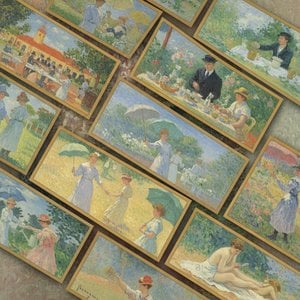
Pierre-Auguste Renoir: Svet obasjan svetlom i radosti
Rođen 1841. godine u Limogeu, malom gradu na jugu Francuske, Pierre-Auguste Renoir je krenuo put slavu iz neobičnih početaka – kao mladić koji je radio sa porcelanom. Ta skromna pozadina nije ga sprečila da postane jedan od najznačajnijih slikara impresionizma, čovek koji je proslavio jednostavne radosti života i ženske lepote svojim živopisnim kompozicijama. Preseljenje porodice u Pariz, potraga za boljim životom, otvorila su mladom Renoiru vrata sveta umetnosti. Ubrzo se našao u srcu grada koji pulsira kreativnošću, gde je upijao atmosferu i inspiraciju koja će ga definisati kao umetnika. Iako je prvobitno morao da zaradi za život oslikavajući porculan, njegova strast prema slikarstvu bila je neukaljiva. Posete Louvru postale su ritual, a studiranje majstora prošlosti – temelj njegovog budućeg stila. Učešće u radionicama Charlesa Gleyrea i susreti sa budućim impresionistima kao što su Monet, Sisley i Bazille bili su ključni za formiranje njegove umetničke vizije i pokretanja revolucionarnog talasa u slikarstvu.
Od realizma do blistavih impresija: Evolucija stila
Renoir je svoju umetničku putanju započeo pod uticajem realista, divio se iskrenosti i direktnosti Gustavea Courbeta i Édouarda Maneta. Međutim, upravo su radovi Rubensa i Watteaua, sa njihovim sjajnim paletama i senzualnim formama, ostavili najdublji trag na njegovu umetnost. Te rane uticaje sjedinio je u sopstveni jedinstveni stil, karakterističan po živopisnim bojama, razbijenim potezima kista i fokusiranju na hvatanje prolaznih efekata svetlosti. Učešće na prvoj impresionističkoj izložbi 1874. godine predstavljalo je prekretnicu – hrabar korak u odbacivanju akademskih konvencija i prihvatanje novog umetničkog izraza, koji je nastojao da uhvati ne samo ono što oko vidi, već i kako se osećamo dok doživljavamo određeni trenutak. Slike poput
Ples na Moolnu de la Galete (1876) savršeno ilustruju ovaj pristup, uranjajući gledaoca u živopisnu atmosferu pariškog noćnog života sa svojim razbijenim sunčanim zracima i veselim likovima.
Hvatanje prolaznih trenutaka: Ključna dela i teme
Renoir je posvetio svoj rad slavlju jednostavnih životnih zadovoljstava – intimnim susretima, obasjanih suncem pejzažima i zagonetnoj lepoti ljudskog tela.
Ručak na čamcu (1880-81) predstavlja možda jednu od njegovih najpoznatijih slika, prikazujući veselu družinu koja uživa u opuštenom popodnevnom izletu na Seni. Slike je majstorski uhvaćena igra svetlosti i pokreta, a figure su obasjane toplim sunčanim zracima, a odrazi se prelamaju na vodi.
Posle kupanja (1885-87) demonstrira Renoiru izuzetan talenat u portretisanju ženskog nagog tela, naglašavajući nežne tonove kože i graciozne poze. Njegove slike nisu samo reprezentacije stvarnosti; one su prožete toplinom, intimnošću i radošću koja duboko rezonuje sa posmatračima. On nije bio zainteresovan za grandiozne istorijske priče ili dramatične alegorije; umesto toga se fokusirao na lepota koja je prisutna u svakodnevnom životu, uzvišujući obične trenutke u dela umetnosti.
Ples na Bougivalu, još jedno slavno delo, pokazuje njegovu sposobnost da uhvati prolazne utiske i atmosferske efekte, stvarajući osećaj pokreta i spontanosti.
Promena prema formi i strukturi: Godine zrelosti i nasleđe
U 1890-im godinama Renoirjev stil doživeo je značajnu transformaciju. Iako nikada u potpunosti nije napustio svoje impresionističke korene, počeo je da teži ka skulpturalnijem i klasičnijem pristupu, pod uticajem putovanja u Italiju i obnovljenog interesovanja za formu i strukturu. Ta promena bila je delimično uslovljena fizičkim ograničenjima – artritis mu je postepeno smanjivao mobilnost, što ga je nateralo da prilagodi svoju tehniku. Uprkos tim izazovima, Renoir je nastavio da slika sa neumornom predanošću, stvarajući dela karakteristična za punije figure i topliju paletu boja. Njegove kasnija dela često odražavaju kontemplativnije raspoloženje, ali zadržavaju istu osnovnu proslavu lepote koja je definisala njegov raniji rad. Pored svojih umetničkih postignuća, Renoirovo nasleđe se proteže i na njegovu porodicu; njegov sin, Žan Renoir, postao je poznati filmski reditelj, nastavljajući kreativni duh kroz generacije. Pierre-Auguste Renoir preminuo je 1919. godine, ostavivši iza sebe trajno delo koje i dalje inspiriše i obraduje publiku širom sveta. Ostaje jedna od najomiljenijih figura u istoriji umetnosti, slavljen zbog svoje sposobnosti da uhvati radost života i lepotu ljudskog iskustva sa nezadržljivom osetljivošću i gracioznošću.
Trajno uticaj
- Renoir’s influence on subsequent generations of artists is undeniable. His emphasis on light, color, and capturing fleeting moments paved the way for many modern artistic movements.
- His celebration of beauty and sensuality continues to resonate with audiences today, making his work universally appealing.
- He played a pivotal role in establishing Impressionism as a major force in art history, challenging traditional conventions and opening up new possibilities for artistic expression.
- The enduring popularity of his paintings – reproduced on countless posters, calendars, and other merchandise – testifies to the timeless quality of his work.



 Pregledaj u prostoru
 Pređi na prodaju štampanih primeraka
 Podeli
 Podeli
 Detalji
 Vodič
Vodič

 Preuzmi sliku
 Slični predmeti
 Rendgenski snimak
 Automatska prezentacija
 Statistika
 Pročitaj više






































 Opcija sa staklom dostupna je samo za dimenzije manje od 110 cm