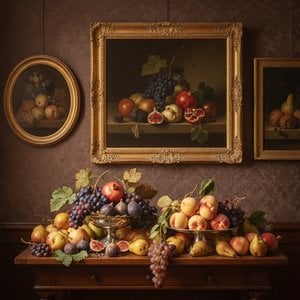
Cup and Fruit delo Pjer Ogist Renoar, ručno oslikana reprodukcija uljanog slikarstva vrhunskog umetnika
Pregledaj u prostoru AR pregled Pređi na štampu Pređi na digitalnu sliku Pošalji
Detalji o delu Vodič Dodaj u omiljene Preuzmi Slični predmeti Rendgenski snimak Automatska prezentacija Pitanja i odgovori Prezentacija Statistika

Cup and Fruit Ručno oslikana reprodukcija uljanog slikarstva

Pierre-Auguste Renoir's 'Cup and Fruit' captures Parisian beauty with vibrant colors and loose brushstrokes, showcasing still life elegance. A delicate balance of form and light – a timeless Impressionist masterpiece.

Otkrijte Pierre-Auguste Renoara, impresionističkog majstora poznatog po slikovitim portretima i prizorama pariškog života! Uživajte u njegovim radovima poput 'Plesa u Mölanu de la Galete' i otkrijte lepotu i svetlost u svakoj potezi.

Ručno rađena uljana reprodukcija

Ručno oslikano uljanim bojama na platnu u dimenzijama i okviru po vašem izboru, izrađeno po porudžbini od strane naših umetnika. ( Pređi na štampu Pređi na digitalnu sliku)

Corner sample of the P118B picture frame: oblikovani polistiren, 5 cm wide and 3 cm thick
P118B дин10
Corner sample of the P118H picture frame: oblikovani polistiren, 5 cm wide and 3 cm thick
P118H дин10
Corner sample of the P118W picture frame: oblikovani polistiren, 5 cm wide and 3 cm thick
P118W дин10
Corner sample of the P438Z picture frame: oblikovani polistiren, 5.5 cm wide and 3.5 cm thick
P438Z дин10
Corner sample of the P508JH picture frame: oblikovani polistiren, 7 cm wide and 3.5 cm thick
P508JH дин12
Corner sample of the P508YH picture frame: oblikovani polistiren, 7 cm wide and 3.5 cm thick
P508YH дин12
Corner sample of the P805H picture frame: oblikovani polistiren, 5 cm wide and 3.5 cm thick
P805H дин10
Corner sample of the P805Z picture frame: oblikovani polistiren, 5 cm wide and 3.5 cm thick
P805Z дин10
Corner sample of the P919BZ picture frame: oblikovani polistiren, 7 cm wide and 3.5 cm thick
P919BZ дин10
Corner sample of the P919G picture frame: oblikovani polistiren, 7 cm wide and 3.5 cm thick
P919G дин10
Corner sample of the P919XJ picture frame: oblikovani polistiren, 7 cm wide and 3.5 cm thick
P919XJ дин10
Corner sample of the P959ZH picture frame: oblikovani polistiren, 5 cm wide and 3 cm thick
P959ZH дин10
Corner sample of the P968JZ picture frame: oblikovani polistiren, 6 cm wide and 4 cm thick
P968JZ дин12
Corner sample of the W106C picture frame: masivno drvo, 5 cm wide and 3 cm thick
W106C дин8
Corner sample of the W218G picture frame: masivno drvo, 5 cm wide and 3 cm thick
W218G дин10
Corner sample of the W218JH picture frame: masivno drvo, 5 cm wide and 3 cm thick
W218JH дин8
Corner sample of the W218Y picture frame: masivno drvo, 5 cm wide and 3 cm thick
W218Y дин10
Corner sample of the W307PJ picture frame: masivno drvo, 6 cm wide and 3 cm thick
W307PJ дин10
Corner sample of the W316G picture frame: masivno drvo, 6 cm wide and 3 cm thick
W316G дин10
Corner sample of the W316PJ picture frame: masivno drvo, 6 cm wide and 3 cm thick
W316PJ дин8
Corner sample of the W316Y picture frame: masivno drvo, 6 cm wide and 3 cm thick
W316Y дин10
Corner sample of the W398PJ picture frame: masivno drvo, 5 cm wide and 3 cm thick
W398PJ дин8
Corner sample of the W4111J picture frame: masivno drvo, 6.5 cm wide and 3.5 cm thick
W4111J дин10
Corner sample of the W500HY picture frame: masivno drvo, 7 cm wide and 5 cm thick
W500HY дин15
Corner sample of the W500JH picture frame: masivno drvo, 7 cm wide and 5 cm thick
W500JH дин15
Corner sample of the W692G picture frame: masivno drvo, 8 cm wide and 4 cm thick
W692G дин12
Corner sample of the W849H picture frame: masivno drvo, 5 cm wide and 3 cm thick
W849H дин8
Corner sample of the W940BG picture frame: masivno drvo, 7.5 cm wide and 4.5 cm thick
W940BG дин15
Corner sample of the W953PJ picture frame: masivno drvo, 6 cm wide and 3.5 cm thick
W953PJ дин8

Standardne dimenzije
po meri
CM
INCH

Izaberite jednu od naših unapred definisanih veličina koje odgovaraju originalnim proporcijama umetničkog dela.

širina
visina

Unesite potrebnu širinu i visinu kako bi se slika uklopila u vaš ram ili zid. Pošto je ovo ručno oslikano delo, umetnik može za dimenzije drugačijeg oblika naslikati malo više prostora oko slike ili malo skratiti ivice — izbor je na vama. Pre početka rada, poslaćemo vam digitalni prikaz radi potvrde. Slika prikazana na ovoj stranici ne predstavlja konačan rezultat — samo digitalni prikaz pokazuje stvarnu sliku.

Primeri mogućih izmena: Zamena lica fotografijom kupca; Dodavanje ljubimca (npr. zamena mačke psom); Uključivanje skrivene poruke u pozadini; Promena pejzaža ili elemenata pozadine.
Nakon narudžbine, tim WahooArt.com će klijentu putem e-pošte poslati uputstva i dostaviti prikaz predloženog rešenja

Svetska isporuka () za 3/4 nedelje umesto uobičajenih 5 nedelja. (9 новембар). Bez kompromisa po pitanju kvaliteta.

Besplatna ekspresna dostava širom sveta
Visokokvalitetno laneno platno
Potpuno osiguranje transporta
Garancija povraćaja carine i uvoznih dažbina
Garancija vernosti boja
Politika povraćaja u roku od 100 dana (samo u slučaju nedostataka)
Garancija povrata 100% novca
Popust na više proizvoda

Ukupna cena

дин 28493

Cup and Fruit

Tehnika reprodukcije

Dimenzije reprodukcije

-

Ukupna cena

дин 28493

Osnovne informacije

  • Title: Cup and Fruit
  • Subject or theme: Fruit and cup still life
  • Year: c.1910
  • Artistic style: Loose brushwork, light
  • Movement: Impressionism

Kviz o umetnosti

Svako pitanje ima samo jedan tačan odgovor.

Pitanje 1:
What is the primary subject matter of Renoir’s ‘Cup and Fruit’?
Pitanje 2:
The painting ‘Cup and Fruit’ exemplifies which artistic movement?
Pitanje 3:
What is a key characteristic of Renoir's style evident in ‘Cup and Fruit’?
Pitanje 4:
Considering Renoir’s biography, what was his initial artistic training?

A Moment of Quietude: Renoir’s Still Life

Pierre-Auguste Renoir's “Cup and Fruit,” painted circa 1910, isn’t merely a depiction of objects arranged on a table; it’s a carefully constructed tableau designed to evoke a specific mood – one of serene contemplation and the fleeting beauty of everyday life. This intimate still life, rendered in Renoir’s signature Impressionistic style, invites us into a world bathed in dappled light and softened edges, a world far removed from the bustling Parisian streets he so famously captured elsewhere. The painting speaks to a desire for respite, a yearning for simple pleasures – a moment of quietude amidst the complexities of existence.

Pierre-Auguste Renoir

The composition itself is deceptively simple, yet profoundly effective. A cobalt blue and white cup, its handle gracefully curved, anchors the scene, drawing the eye immediately to its center. Flanking it are two vibrant apples – one a rich crimson, the other a sunny yellow – their surfaces rendered with loose, broken brushstrokes that capture the play of light on their skins. Beneath the cup rests a bowl, hinting at further bounty and adding depth to the arrangement. A vase, subtly placed on the left, introduces an element of decorative flourish without disrupting the overall harmony.

Impressionism’s Embrace: Light, Color, and Atmosphere

Renoir was a devoted student of light and color, and this painting is a testament to his mastery. He eschewed precise detail in favor of capturing the *impression* of light – how it dances across surfaces, transforms colors, and creates an atmosphere. Notice how he uses short, broken brushstrokes to build up layers of pigment, creating a shimmering effect that mimics the way sunlight filters through foliage or reflects off water. The color palette is restrained yet luminous; the cool blues and whites of the cup contrast beautifully with the warm tones of the fruit, while subtle greens and browns ground the scene in a sense of naturalism.

The technique employed here aligns perfectly with the tenets of Impressionism – an artistic movement that sought to capture the fleeting moments of modern life. Renoir wasn’t interested in creating photographic representations; instead, he aimed to convey his *perception* of reality, prioritizing sensory experience over strict adherence to form. This is evident in the blurred edges and soft focus, hallmarks of the Impressionist approach.

A Glimpse into Renoir's World

Born in Limoges in 1841, Pierre-Auguste Renoir’s early life was shaped by his apprenticeship as a porcelain painter. This experience instilled in him a deep appreciation for color and texture, skills that would later inform his Impressionistic style. His move to Paris provided access to the vibrant artistic community of the time, where he honed his craft and developed his unique vision. “Cup and Fruit” reflects this journey – it’s a distillation of his observations, filtered through the lens of his artistic sensibility.

Interestingly, Renoir's work often explored themes of leisure, beauty, and female sensuality—qualities subtly present in this still life. The arrangement itself suggests an invitation to pause, to savor the simple pleasures of a ripe fruit and a refreshing drink. It’s a moment captured in time, imbued with a quiet grace that resonates even today.

Bringing Renoir Home: A High-Quality Reproduction

WahooArt offers meticulously crafted hand-painted reproductions of “Cup and Fruit,” allowing you to bring this iconic masterpiece into your home or office. Our skilled artists replicate Renoir’s delicate brushwork, vibrant colors, and atmospheric effects with exceptional precision. Each reproduction is created on archival-quality canvas using traditional oil painting techniques, ensuring that it will retain its beauty and vibrancy for generations to come. Whether you're an art collector, a design enthusiast, or simply someone who appreciates the timeless elegance of Impressionism, a WahooArt reproduction of “Cup and Fruit” is a stunning addition to any space.

Pitanja i odgovori

Šta predstavlja delo "Cup and Fruit"?

Teme prisutne u delu „Cup and Fruit”, autor Pjer Ogist Renoar obuhvataju still life, fruit, cup, renoir, composition, color, harmony, što zajedno sažima suštinu ovog umetničkog dela.

Da li je "Cup and Fruit" poznato delo Impressionism pokreta?

U okviru Impressionism pokreta, delo "Cup and Fruit" ima Recognized nivo popularnosti.

Koji raspoloženje izražava „Cup and Fruit”, autor Pjer Ogist Renoar unutar Impressionism?

U okviru pokreta Impressionism, delo "Cup and Fruit" je prikazano sa Calm tonom.


Biografija umetnika

Pierre-Auguste Renoir: Svet obasjan svetlom i radosti

Rođen 1841. godine u Limogeu, malom gradu na jugu Francuske, Pierre-Auguste Renoir je krenuo put slavu iz neobičnih početaka – kao mladić koji je radio sa porcelanom. Ta skromna pozadina nije ga sprečila da postane jedan od najznačajnijih slikara impresionizma, čovek koji je proslavio jednostavne radosti života i ženske lepote svojim živopisnim kompozicijama. Preseljenje porodice u Pariz, potraga za boljim životom, otvorila su mladom Renoiru vrata sveta umetnosti. Ubrzo se našao u srcu grada koji pulsira kreativnošću, gde je upijao atmosferu i inspiraciju koja će ga definisati kao umetnika. Iako je prvobitno morao da zaradi za život oslikavajući porculan, njegova strast prema slikarstvu bila je neukaljiva. Posete Louvru postale su ritual, a studiranje majstora prošlosti – temelj njegovog budućeg stila. Učešće u radionicama Charlesa Gleyrea i susreti sa budućim impresionistima kao što su Monet, Sisley i Bazille bili su ključni za formiranje njegove umetničke vizije i pokretanja revolucionarnog talasa u slikarstvu.

Od realizma do blistavih impresija: Evolucija stila

Renoir je svoju umetničku putanju započeo pod uticajem realista, divio se iskrenosti i direktnosti Gustavea Courbeta i Édouarda Maneta. Međutim, upravo su radovi Rubensa i Watteaua, sa njihovim sjajnim paletama i senzualnim formama, ostavili najdublji trag na njegovu umetnost. Te rane uticaje sjedinio je u sopstveni jedinstveni stil, karakterističan po živopisnim bojama, razbijenim potezima kista i fokusiranju na hvatanje prolaznih efekata svetlosti. Učešće na prvoj impresionističkoj izložbi 1874. godine predstavljalo je prekretnicu – hrabar korak u odbacivanju akademskih konvencija i prihvatanje novog umetničkog izraza, koji je nastojao da uhvati ne samo ono što oko vidi, već i kako se osećamo dok doživljavamo određeni trenutak. Slike poput Ples na Moolnu de la Galete (1876) savršeno ilustruju ovaj pristup, uranjajući gledaoca u živopisnu atmosferu pariškog noćnog života sa svojim razbijenim sunčanim zracima i veselim likovima.

Hvatanje prolaznih trenutaka: Ključna dela i teme

Renoir je posvetio svoj rad slavlju jednostavnih životnih zadovoljstava – intimnim susretima, obasjanih suncem pejzažima i zagonetnoj lepoti ljudskog tela. Ručak na čamcu (1880-81) predstavlja možda jednu od njegovih najpoznatijih slika, prikazujući veselu družinu koja uživa u opuštenom popodnevnom izletu na Seni. Slike je majstorski uhvaćena igra svetlosti i pokreta, a figure su obasjane toplim sunčanim zracima, a odrazi se prelamaju na vodi. Posle kupanja (1885-87) demonstrira Renoiru izuzetan talenat u portretisanju ženskog nagog tela, naglašavajući nežne tonove kože i graciozne poze. Njegove slike nisu samo reprezentacije stvarnosti; one su prožete toplinom, intimnošću i radošću koja duboko rezonuje sa posmatračima. On nije bio zainteresovan za grandiozne istorijske priče ili dramatične alegorije; umesto toga se fokusirao na lepota koja je prisutna u svakodnevnom životu, uzvišujući obične trenutke u dela umetnosti. Ples na Bougivalu, još jedno slavno delo, pokazuje njegovu sposobnost da uhvati prolazne utiske i atmosferske efekte, stvarajući osećaj pokreta i spontanosti.

Promena prema formi i strukturi: Godine zrelosti i nasleđe

U 1890-im godinama Renoirjev stil doživeo je značajnu transformaciju. Iako nikada u potpunosti nije napustio svoje impresionističke korene, počeo je da teži ka skulpturalnijem i klasičnijem pristupu, pod uticajem putovanja u Italiju i obnovljenog interesovanja za formu i strukturu. Ta promena bila je delimično uslovljena fizičkim ograničenjima – artritis mu je postepeno smanjivao mobilnost, što ga je nateralo da prilagodi svoju tehniku. Uprkos tim izazovima, Renoir je nastavio da slika sa neumornom predanošću, stvarajući dela karakteristična za punije figure i topliju paletu boja. Njegove kasnija dela često odražavaju kontemplativnije raspoloženje, ali zadržavaju istu osnovnu proslavu lepote koja je definisala njegov raniji rad. Pored svojih umetničkih postignuća, Renoirovo nasleđe se proteže i na njegovu porodicu; njegov sin, Žan Renoir, postao je poznati filmski reditelj, nastavljajući kreativni duh kroz generacije. Pierre-Auguste Renoir preminuo je 1919. godine, ostavivši iza sebe trajno delo koje i dalje inspiriše i obraduje publiku širom sveta. Ostaje jedna od najomiljenijih figura u istoriji umetnosti, slavljen zbog svoje sposobnosti da uhvati radost života i lepotu ljudskog iskustva sa nezadržljivom osetljivošću i gracioznošću.

Trajno uticaj

  • Renoir’s influence on subsequent generations of artists is undeniable. His emphasis on light, color, and capturing fleeting moments paved the way for many modern artistic movements.
  • His celebration of beauty and sensuality continues to resonate with audiences today, making his work universally appealing.
  • He played a pivotal role in establishing Impressionism as a major force in art history, challenging traditional conventions and opening up new possibilities for artistic expression.
  • The enduring popularity of his paintings – reproduced on countless posters, calendars, and other merchandise – testifies to the timeless quality of his work.
Pjer Ogist Renoar

Pjer Ogist Renoar

1841 - 1919 , Francuska

Osnovne informacije

  • Datum Rođenja: 25. februar 1841.
  • Datum Smrti: 3. decembar 1919.
  • Mesto Rođenja: Limoges, Francuska
  • Nacionalnost: Francuski
  • Pokreti/Umetnici Pod Uticajem: ['Impresionizam']
  • Puno Ime: Pierre-Auguste Renoir
  • Umetnički Pokret: Impresionizam
  • Uticajni Umetnici:
    • Rubens
    • Watteau
    • Courbet
    • Manet
  • Značajna Dela:
    • Ples u Mölanu la Galet
    • Ručak veslača
    • Posle kupanja
    • Ples u Bugivalu
Istražite umetnička dela organizovana prema temama, stilovima i karakteristikama.