


Giclée štampa ili print na platnu muzejskog kvaliteta uz brzu izradu i raznovrsne opcije završne obrade. ( Kupite ručno oslikano delo Pređi na digitalnu sliku)





























Izaberite jednu od naših unapred definisanih veličina koje odgovaraju originalnim proporcijama umetničkog dela.

Unesite željenu širinu i visinu kako bi se štampa uklopila u vaš ram ili zid. Štampu je moguće samo iseći, ali nikada povećati iznad dimenzija originalne slike, stoga format sa drugačijim proporcijama uzrokuje gubitak dela slike. Pre početka štampe, poslaćemo vam digitalni prikaz radi potvrde. Slika prikazana na ovoj stranici ne predstavlja stvarni isrez — to pokazuje samo digitalni prikaz.
Dostava širom sveta () za 2 nedelje umesto uobičajenih 4/5 nedelja. (8 новембар)
Untitled (D2X65E)
Dimenzije reprodukcije
The image before us—Petrus Christus’s “Head of Christ (Ecce Homo),” painted circa 1445—isn't merely a portrait; it’s a profound meditation on sacrifice, suffering, and the very essence of Christian faith. Often considered a precursor to the more fully realized depictions of Christ’s Passion that would emerge later in the Renaissance, this intimate panel offers a remarkably direct and emotionally resonant experience for the viewer. It’s a work born from a specific historical context—the burgeoning influence of oil painting in Bruges, a city rapidly becoming a center for artistic innovation—and imbued with a deeply personal devotional purpose.
The genesis of this piece is fascinating. Tradition holds that it was created as a copy of a lost “Holy Face” image by Jan van Eyck, the master who had tragically died just three years before Christus began his career. This foundational image—a depiction of Christ’s face after the crucifixion—was believed to possess miraculous powers and was frequently used in private prayer. Christus's version retains the core elements of this prototype: the stark realism of Christ’s features, the visible wounds inflicted during his ordeal, and the solemnity of his gaze. However, Christus subtly transforms the image, imbuing it with a palpable sense of anguish and vulnerability that transcends mere replication.
Christus’s skill as a painter is immediately apparent in the meticulous detail he applies to every aspect of the work. The oil paint, relatively new to Northern European art at this time, allows for an unprecedented level of luminosity and depth—a far cry from the tempera paints favored by earlier artists. Notice how the light catches on Christ’s brow, highlighting the lines etched by pain, and how the folds of his garment subtly suggest texture and volume. This isn't a flat, idealized representation; it’s a remarkably lifelike portrayal of human suffering.
Crucially, Christus employs a technique known as “linear perspective,” a revolutionary approach to depicting space that he likely learned from Italian artists who were increasingly influencing the Northern Renaissance. The framing device—a meticulously rendered architectural setting—creates an illusion of depth, drawing the viewer’s eye directly to Christ's face and intensifying the emotional impact of the image. This innovative use of perspective was groundbreaking for its time, demonstrating Christus’s forward-thinking approach to artistic representation.
Beyond the technical mastery, “Head of Christ (Ecce Homo)” is rich in symbolic meaning. The crown of thorns, a potent symbol of suffering and sacrifice, dominates the composition, immediately conveying the gravity of Christ’s fate. The drops of blood streaming down his face are not merely depictions of physical wounds; they represent the shedding of his blood for humanity's sins—a central tenet of Christian theology. Christ’s furrowed brow and downward gaze communicate a profound sense of sorrow and resignation, inviting contemplation on themes of redemption and forgiveness.
The choice to depict only Christ’s head—a cropped portrait—further intensifies the emotional impact. It forces the viewer to confront the image directly, fostering a sense of intimacy and personal connection with the subject. This was likely intended for private devotion, a silent prayer offered in contemplation of Christ's sacrifice.
“Head of Christ (Ecce Homo)” is more than just a beautiful painting; it’s a powerful testament to the enduring themes of faith, suffering, and redemption. Christus’s masterful technique, combined with his profound understanding of symbolism and emotional resonance, creates an image that continues to move viewers centuries after its creation. It stands as a pivotal work in the development of Northern Renaissance art—a window into the spiritual world of 15th-century Bruges and a timeless reminder of the sacrifice at the heart of Christian belief.
„Untitled (D2X65E)”, autor Petrus Kristus prikazuje: mary and angel gabriel, religious scene artwork, medieval european art, brick wall composition, devotional painting style, renaissance religious art, angel figure depiction.
Delo „Untitled (D2X65E)”, autor Petrus Kristus možete pogledati u obliku prezentacije na stranici Galerija slika za ovo umetničko delo.
Statistika za „Untitled (D2X65E)”, autor Petrus Kristus dostupna je na stranici Statistika ovog umetničkog dela: mesečni broj poseta delu, broj poseta radovima umetnika, kao i pregled nedavnih posetilaca prema zemljama i jezicima.

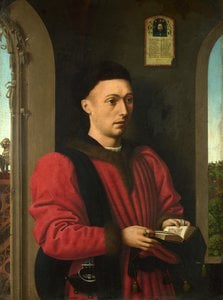
1465 - 1476 , Belgija
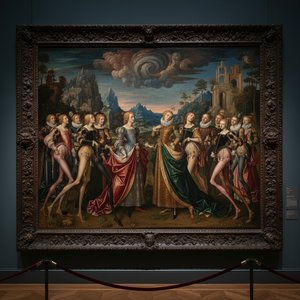
Explore the dramatic evolution of Northern Mannerism. Discover how masters like Bosch and Grünewald transitioned from Renaissance harmony to profound, elegant distortion through an expert analysis of symbolism, emotional intensity, and artistic innovation.

Explore the profound beauty of Marian iconography through an art historian's lens. Discover iconic masterpieces by Raphael and Renaissance masters, celebrating the divine grace and timeless elegance of the Virgin Mary in classical fine art.

Embark on a profound journey through art history with our exploration of the most iconic depictions of the Virgin Mary. Discover the divine grace, symbolism, and masterful techniques found in Renaissance masterpieces and sacred iconography.
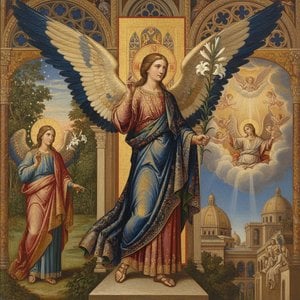
Explore the profound beauty of Angel Gabriel in art history. From Renaissance masterpieces to Baroque splendor, our expert guide delves into the sacred iconography and timeless techniques of these divine messengers for the discerning art enthusiast.

Explore the profound beauty of angelic figures in art history. From Renaissance masterpieces to celestial symbolism, our expert guide offers a sophisticated journey through the divine imagery of the Old Masters for discerning collectors and art enthusiasts.
 Pregledaj u prostoru
 Pošalji
 Podeli
 Detalji o delu
 Vodič
Vodič

 Preuzmi
 Slični predmeti
 Rendgenski snimak
 Automatska prezentacija
 Pitanja i odgovori
 Statistika


 Pročitaj više









 Opcija sa staklom dostupna je samo za dimenzije manje od 110 cm


