


Giclée štampa ili print na platnu muzejskog kvaliteta uz brzu izradu i raznovrsne opcije završne obrade. ( Kupite ručno oslikano delo Pređi na digitalnu sliku)





























Izaberite jednu od naših unapred definisanih veličina koje odgovaraju originalnim proporcijama umetničkog dela.

Unesite željenu širinu i visinu kako bi se štampa uklopila u vaš ram ili zid. Štampu je moguće samo iseći, ali nikada povećati iznad dimenzija originalne slike, stoga format sa drugačijim proporcijama uzrokuje gubitak dela slike. Pre početka štampe, poslaćemo vam digitalni prikaz radi potvrde. Slika prikazana na ovoj stranici ne predstavlja stvarni isrez — to pokazuje samo digitalni prikaz.
Dostava širom sveta () za 2 nedelje umesto uobičajenih 4/5 nedelja. (22 новембар)
The attachment
Dimenzije reprodukcije
In the quiet, flickering light of an era defined by domestic grace, Peter Fendi’s 1840 masterpiece, The Attachment, invites the viewer to step into a world of refined social connection. This large-scale group portrait serves as more than just a depiction of a gathering; it is a profound window into the heart of the Viennese Biedermeier period. The scene unfolds within a richly detailed room where at least twelve individuals are woven into a tapestry of human interaction. Some figures stand in poised conversation, while others sit or kneel, creating a rhythmic flow of movement that guides the eye across the canvas. Through Fendi’s masterful hand, we witness a moment frozen in time—a social ritual where the boundaries between the private home and public etiquette blur into a singular, harmonious event.
The composition is a triumph of narrative complexity, utilizing a variety of objects to ground the human drama in a tangible reality. A dining table sits toward the left, suggesting the shared sustenance that binds these souls together, while a clock hangs prominently on the wall, acting as a silent witness to the passing hours and the fleeting nature of such intimate gatherings. Small, evocative details—a bowl resting on a table, a bottle tucked into the upper corner—add layers of domestic texture that resonate with anyone who appreciates the beauty of everyday life. For the collector or interior designer, these elements provide a sense of lived-in luxury, making the piece an ideal focal point for spaces that celebrate warmth, heritage, and the art of conversation.
Fendi’s technique reflects his rigorous training at the prestigious St. Anna’s Academy of Fine Art, where he mastered the ability to balance meticulous detail with emotional depth. In The Attachment, the artist employs a delicate touch to render the textures of fabric, the sheen of glassware, and the subtle expressions on each face. The painting captures the essence of the Biedermeier style—a movement that prioritized simplicity, comfort, and the celebration of middle-class values. There is no grand, sweeping heroism here; instead, there is a profound dignity found in the quiet exchange of glances and the gentle leaning of a shoulder. This focus on the "small" moments allows the artwork to radiate an approachable elegance.
The emotional impact of the work lies in its ability to evoke nostalgia for a lost sense of community. As one contemplates the figures engaged in their shared feast, there is a palpable sense of belonging and peace. For those looking to adorn a home with a high-quality reproduction, this painting offers an unparalleled opportunity to introduce a sense of historical weight and soulful tranquility. It is not merely a decoration but an atmospheric anchor, capable of transforming a modern room into a sanctuary of classical charm and timeless human connection.
Boje dela „The attachment”, autor Петер Фенди odražavaju Unified Palette harmoniju. Harmonija opisuje međusobni odnos boja.
Postoji Statistika stranica za „The attachment“. Ona prikazuje mesečne posete ovom umetničkom delu i drugim delima ovog umetnika, uz detaljnu analizu po državama i jezicima.
„The attachment“ prikazuje portrait, interior, gathering, dining table, clock, composition, social event, a njegovo dočarano raspoloženje je Serene.


1796 - 1842 , Аустрија
Discover the profound beauty of indoor scene masterpieces. Explore how Dutch Golden Age realism and chiaroscuro capture timeless comfort, and learn how to bring the soul of historical interiors into your home through museum-quality, hand-painted oil reproductions.

Explore the exquisite world of Victorian Realism. Discover how 19th-century masters captured unparalleled detail and emotion through oil painting, and learn to curate these timeless masterpieces for your luxury interior collection.
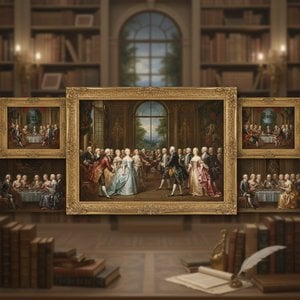
Explore the timeless elegance of formal gatherings through the lens of art history. Discover how master painters captured social grace, status, and atmosphere in iconic group portraits and ballroom scenes.

Immerse yourself in the profound emotion of Rogier van der Weyden. Explore 25 iconic Early Netherlandish masterpieces, from intricate textures to divine pathos. Find inspiration for museum-quality art reproductions and decor. Discover all masterpieces on WahooArt.com.

Discover the profound beauty of Modigliani-style art. Explore the elegance of elongated forms and soulful portraits through our expert curation of hand-painted oil reproductions and museum-quality prints designed for the sophisticated collector.
 Pregledaj u prostoru

 Pošalji
 Podeli
 Detalji o delu
 Vodič


 Preuzmi
 Slični predmeti
 Rendgenski snimak
 Automatska prezentacija
 Pitanja i odgovori

 Statistika


 Pročitaj više









 Opcija sa staklom dostupna je samo za dimenzije manje od 110 cm


