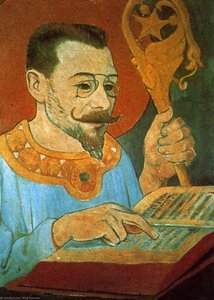
Рани живот и образовање
По́л Серизије, француски сликар, рођен је 9. новембра 1864. године у Паризу. Његов уметнички пут започео је на Академији Жулијан, где је постао монитор средином осамдесетих година деветнаестог века. Ово је био почетак његове каријере која ће га одвести до пионирских истраживања апстрактне уметности и инспирисати авангардни покрет Набиста, као и стилове Синтетизма и Клоазонизма. Серизије је био човек који је неуморно тражио нове начине изражавања, често се одмичући од утабаних стаза традиционалне сликарске школе. Његова рана дела показују интересовање за импресионизам, али га брзо надмашује жеља да пронађе сопствени, препознатљив стил.
Уметничка каријера и покрет Набиста
Лета 1888. године Серизије је отпутовао у Пон-Авен, где се придружио кругу уметника који су се окупљали око
Пола Гогена. Под строгим надзором Гогена, Серизије је насликао "Талисман", дело које представља екстреман пример Клоазонизма и приступа апстракцији. Овај комад био је манифестација његовог иновативног духа и спремности да експериментише са новим техникама, одбацујући реалистичку прецизност у корист симболичног садржаја и декоративне лепоте. Као представник постимпресионизма, Серизије је био део групе Ле Наби (Les Nabis), заједно са
Пјером Бонаром,
Едуаром Виларом и
Морисом Денијем. Иако није добио толику пажњу као неки од његових колега, Серизијев допринос развоју апстрактне уметности је неоспоран. Група Набиста тежила је да премости јаз између сликарства и других визуелних уметности, стварајући дела која су била интимна, симболична и често натприродна.
Клоазонизам и Синтетизам: Серизијева техника
Серизијев рад је био снажно обележен Клоазонизмом – стилом карактеристичним по смелим, равним облицима раздвојеним тамним контурама. Овај приступ, који подсећа на технику израде емајла, омогућио му је да се ослободи реалистичке репрезентације и фокусира се на декоративне квалитете боје и композиције. Клоазонизам није био само техника; то је била филозофија сликарства која је тежила да врати сликању њену суштинску, симболичку моћ. Уз Клоазонизам, Серизије се бавио и Синтетизмом – стилом који је настојао да комбинује различите уметничке елементе у кохерентну целину. Ово је значило одбацивање имитације природе и стварање дела која су била самостална, аутентична изражавања уметникове визије.
Позната дела и наслеђе
Нека од Серизијеових најзначајнијих радова укључују:
- L'Averse (1893), Музеј Орсе, Париз
- Портрет Пола Рансона (1890), Музеј Орсе, Париз
- Меланхолија (1890)
- Змијски ловци (1894), Музеј Народни, Варшава
Серизије је у каснијим годинама предавао на Академији Рансон и објавио своју књигу "АБЦ сликарства" 1921. године, дело које је постало важан приручник за младе уметнике. Преминуо је 7. октобра 1927. године у Морлаиксу. Серизијево наслеђе лежи у његовом пионирском раду на апстракцији и његовом утицају на развој модерне уметности. Он је био визионар који је увидео потенцијал сликарства као независног, симболичког изражаја, отварајући пут новим генерацијама уметника да експериментишу и проналазе своје сопствене гласове.
Утицај и значај
Кључни закључци: * Пол Серизије је био француски сликар који је пионирским радом у апстракцији инспирисао покрет Набиста. * Студирао је на Академији Жулијан и касније предавао на Академији Рансон. * Серизијев рад био је под утицајем Клоазонизма, стила карактеристичног по смелим, равним облицима. Његов допринос развоју апстрактне уметности и Синтетизма остао је трајан спомен на његову креативност и визионарски приступ сликарству.



 Pregledaj u prostoru
 Kupi ručno naslikanu sliku
 Pošalji
 Podeli
 Detalji o delu

 Преузми
 Slični predmeti
 Rendgenski snimak
 Slajdovi
 Statistika


 Pročitaj više






































 Opcija sa staklom dostupna je samo za dimenzije manje od 110 cm