Pregledaj u prostoru Isprobaj u AR-u Naručite ručno oslikano reprodukciju Pređi na prodaju digitalnih slika Podeli
Detalji Vodič Dodaj u omiljene Preuzmi sliku Slični predmeti Rendgenski snimak Automatska prezentacija Statistika

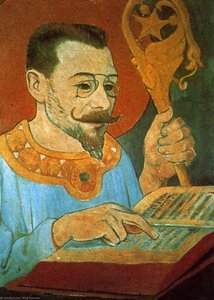
Colour Wheel

Istražite umetnost Paula Serusiera (1864-1927), francuskog postimpresioniste i pionira apstraktne umetnosti. Otkrijte njegov stil klouazonizma, uticaj na pokret Nabisi i ključna dela poput 'Talismana'.

Giclee štampa / Umetnički otisak

Giclée štampa ili print na platnu muzejskog kvaliteta uz brzu izradu i raznovrsne opcije završne obrade. ( Naručite ručno oslikano reprodukciju Pređi na prodaju digitalnih slika)

Corner sample of the P118B picture frame: kaljeni polistiren, 5 cm wide and 3 cm thick
P118B дин10
Corner sample of the P118H picture frame: kaljeni polistiren, 5 cm wide and 3 cm thick
P118H дин10
Corner sample of the P118W picture frame: kaljeni polistiren, 5 cm wide and 3 cm thick
P118W дин10
Corner sample of the P438Z picture frame: kaljeni polistiren, 5.5 cm wide and 3.5 cm thick
P438Z дин10
Corner sample of the P508JH picture frame: kaljeni polistiren, 7 cm wide and 3.5 cm thick
P508JH дин12
Corner sample of the P508YH picture frame: kaljeni polistiren, 7 cm wide and 3.5 cm thick
P508YH дин12
Corner sample of the P805H picture frame: kaljeni polistiren, 5 cm wide and 3.5 cm thick
P805H дин10
Corner sample of the P805Z picture frame: kaljeni polistiren, 5 cm wide and 3.5 cm thick
P805Z дин10
Corner sample of the P919BZ picture frame: kaljeni polistiren, 7 cm wide and 3.5 cm thick
P919BZ дин10
Corner sample of the P919G picture frame: kaljeni polistiren, 7 cm wide and 3.5 cm thick
P919G дин10
Corner sample of the P919XJ picture frame: kaljeni polistiren, 7 cm wide and 3.5 cm thick
P919XJ дин10
Corner sample of the P959ZH picture frame: kaljeni polistiren, 5 cm wide and 3 cm thick
P959ZH дин10
Corner sample of the P968JZ picture frame: kaljeni polistiren, 6 cm wide and 4 cm thick
P968JZ дин12
Corner sample of the W106C picture frame: masivno drvo, 5 cm wide and 3 cm thick
W106C дин8
Corner sample of the W218G picture frame: masivno drvo, 5 cm wide and 3 cm thick
W218G дин10
Corner sample of the W218JH picture frame: masivno drvo, 5 cm wide and 3 cm thick
W218JH дин8
Corner sample of the W218Y picture frame: masivno drvo, 5 cm wide and 3 cm thick
W218Y дин10
Corner sample of the W307PJ picture frame: masivno drvo, 6 cm wide and 3 cm thick
W307PJ дин10
Corner sample of the W316G picture frame: masivno drvo, 6 cm wide and 3 cm thick
W316G дин10
Corner sample of the W316PJ picture frame: masivno drvo, 6 cm wide and 3 cm thick
W316PJ дин8
Corner sample of the W316Y picture frame: masivno drvo, 6 cm wide and 3 cm thick
W316Y дин10
Corner sample of the W398PJ picture frame: masivno drvo, 5 cm wide and 3 cm thick
W398PJ дин8
Corner sample of the W4111J picture frame: masivno drvo, 6.5 cm wide and 3.5 cm thick
W4111J дин10
Corner sample of the W500HY picture frame: masivno drvo, 7 cm wide and 5 cm thick
W500HY дин15
Corner sample of the W500JH picture frame: masivno drvo, 7 cm wide and 5 cm thick
W500JH дин15
Corner sample of the W692G picture frame: masivno drvo, 8 cm wide and 4 cm thick
W692G дин12
Corner sample of the W849H picture frame: masivno drvo, 5 cm wide and 3 cm thick
W849H дин8
Corner sample of the W940BG picture frame: masivno drvo, 7.5 cm wide and 4.5 cm thick
W940BG дин15
Corner sample of the W953PJ picture frame: masivno drvo, 6 cm wide and 3.5 cm thick
W953PJ дин8

Standardne dimenzije
po meri
CM
INCH

Izaberite jednu od naših unapred definisanih veličina koje odgovaraju originalnim proporcijama umetničkog dela.

širina
visina

Unesite širinu i visinu koja vam je potrebna, kako bi se uklopili u vaš ram ili na vaš zid. Štampa se može samo iseći, nikada ne može biti veća od originalne slike, stoga format sa drugačijim proporcijama gubi deo slike. Poslaćemo vam digitalni prikaz radi potvrde pre nego što započnemo štampu. Slika prikazana na ovoj stranici ne pokazuje stvarni rez — to pokazuje samo digitalni prikaz.

Dostava širom sveta () za 2 nedelje umesto uobičajenih 4/5 nedelja. (21 октобар)

Besplatna ekspresna dostava širom sveta
Visokokvalitetno laneno platno
Sveobuhvatno osiguranje transporta
Garancija povraćaja carine i uvoznih dažbina
Garancija vernosti boja i autentičnosti pri reprodukciji
Politika povraćaja u roku od 100 dana (samo u slučaju nedostataka)
Garancija povrata 100% novca
Popust pri većoj količini

Ukupna cena

дин 6970

Colour Wheel

Giclee štampa / Umetnički otisak

Veličina reprodukcije

-

Ukupna cena

дин 6970

Brzi pregled

  • Location: Musée de Pont-Aven
  • Title: Colour Wheel
  • Notable elements or techniques: Cloisonnism; Color harmony exploration
  • Influences: Paul Gauguin
  • Movement: Post-Impressionism

Kviz o umetnosti

Svako pitanje ima samo jedan tačan odgovor.

Pitanje 1:
What artistic movement is Paul Sérusier primarily associated with?
Pitanje 2:
The painting utilizes a technique known as Cloisonnism, which emphasizes:
Pitanje 3:
What is the dominant color palette of 'Colour Wheel'?
Pitanje 4:
Where was Paul Sérusier painting when he created this artwork?
Pitanje 5:
What role did Maurice Denis play in influencing Sérusier's artistic style?

Paul Sérusier’s Colour Wheel: A Pioneer of Abstract Impressionism

The shimmering hues of autumn – crimson, ochre, amber, russet – served as the catalyst for Paul Sérusier's groundbreaking exploration into colour harmony. Born in Paris in 1864 and steeped in the burgeoning artistic fervor of his time, Sérusier embarked on a journey to transcend representational art, driven by an unwavering belief in the expressive potential of pure pigment. This quest culminated in “Colour Wheel,” a deceptively simple composition that nonetheless encapsulates the essence of his revolutionary approach to painting – a cornerstone of the Nabi movement and arguably one of the earliest examples of abstract art.

The Nabi Influence: Seeking Harmony Beyond Reality

Sérusier’s artistic trajectory was profoundly shaped by his association with Pierre Bonnard, Maurice Denis, and Édouard Vuillard—the core members of Les Nabis (“The Prophets”), a group dedicated to rejecting academic conventions and embracing spiritual contemplation. Influenced by Japanese prints and Cézanne's geometric explorations, the Nabis sought inspiration in the intangible realm of emotion and intuition, prioritizing color over meticulous detail. “Colour Wheel” embodies this ethos perfectly; it abandons photographic accuracy in favor of conveying an atmosphere of serene contemplation—a deliberate departure from the prevailing artistic trends of the late nineteenth century.

Cloisonnism: A Technique Rooted in Byzantine Iconography

Sérusier’s distinctive style, known as cloisonnism, owes its origins to Byzantine iconographic tradition. This technique involves dividing a canvas into rectangular panels delineated by thin black lines—a method that dramatically simplifies form and enhances color saturation. As Sérusier himself eloquently described, “The aim is to make the colours shine.” The resulting effect is akin to peering through stained glass windows, capturing not merely what is seen but also how it feels – an immersive experience designed to evoke a profound emotional response. This meticulous process demanded considerable patience and precision, reflecting the artist’s unwavering commitment to achieving artistic excellence.

Symbolism: Capturing Inner Landscapes

Beyond its technical prowess, “Colour Wheel” resonates with symbolic significance. The circular arrangement of colors—red, yellow, blue, green, purple, orange, pink—represents a visual distillation of cosmological concepts prevalent in medieval thought. Each hue embodies specific qualities – passion, intellect, serenity – inviting viewers to contemplate the interconnectedness of existence and the beauty inherent in simplicity. Sérusier’s intention was not merely to depict a landscape but to translate its essence into an internalized experience, mirroring the Nabis' broader preoccupation with spiritual illumination.

A Legacy of Innovation: Inspiring Future Generations

“Colour Wheel” stands as a testament to Sérusier’s visionary audacity—a bold assertion that art could transcend representation and communicate directly with the human soul. Its influence extends far beyond the Nabi movement, inspiring subsequent artists who sought to liberate painting from the constraints of realism. Today, reproductions of this iconic artwork continue to captivate audiences worldwide, serving as a poignant reminder of Sérusier’s enduring contribution to the history of art and his unwavering belief in the transformative power of color.
  • Artist: Paul Sérusier
  • Birth Year: 1864
  • Death Year: 1927
  • Medium: Oil on Wood Panel
  • Size: 41 x 32 cm
Provenance: Donation from Mr Dominique Denis. Former Maurice Denis collection. Musée de Pont-Aven

Pitanja i odgovori

Da li je „Colour Wheel”, Пол Серизије portret, pejzaž ili kvadratna kompozicija?

Format dela "Colour Wheel" je Portrait. Ovo je korisno prilikom planiranja mesta na kojem će reprodukcija biti postavljena.

Odakle dolaze posetioci dela „Colour Wheel”, Пол Серизије?

Postoji Statistika stranica za „Colour Wheel“. Ona prikazuje mesečne posete ovom umetničkom delu i drugim delima ovog umetnika, uz detaljnu analizu po državama i jezicima.

Gde mogu pronaći vodič za "Colour Wheel"?

Dostupna je Vodič stranica za „Colour Wheel”, Пол Серизије: štampani informativni list o umetničkom delu, dizajniran za učenike i upotrebu u učionici.


Biografija umetnika

Рани живот и образовање

По́л Серизије, француски сликар, рођен је 9. новембра 1864. године у Паризу. Његов уметнички пут започео је на Академији Жулијан, где је постао монитор средином осамдесетих година деветнаестог века. Ово је био почетак његове каријере која ће га одвести до пионирских истраживања апстрактне уметности и инспирисати авангардни покрет Набиста, као и стилове Синтетизма и Клоазонизма. Серизије је био човек који је неуморно тражио нове начине изражавања, често се одмичући од утабаних стаза традиционалне сликарске школе. Његова рана дела показују интересовање за импресионизам, али га брзо надмашује жеља да пронађе сопствени, препознатљив стил.

Уметничка каријера и покрет Набиста

Лета 1888. године Серизије је отпутовао у Пон-Авен, где се придружио кругу уметника који су се окупљали око Пола Гогена. Под строгим надзором Гогена, Серизије је насликао "Талисман", дело које представља екстреман пример Клоазонизма и приступа апстракцији. Овај комад био је манифестација његовог иновативног духа и спремности да експериментише са новим техникама, одбацујући реалистичку прецизност у корист симболичног садржаја и декоративне лепоте. Као представник постимпресионизма, Серизије је био део групе Ле Наби (Les Nabis), заједно са Пјером Бонаром, Едуаром Виларом и Морисом Денијем. Иако није добио толику пажњу као неки од његових колега, Серизијев допринос развоју апстрактне уметности је неоспоран. Група Набиста тежила је да премости јаз између сликарства и других визуелних уметности, стварајући дела која су била интимна, симболична и често натприродна.

Клоазонизам и Синтетизам: Серизијева техника

Серизијев рад је био снажно обележен Клоазонизмом – стилом карактеристичним по смелим, равним облицима раздвојеним тамним контурама. Овај приступ, који подсећа на технику израде емајла, омогућио му је да се ослободи реалистичке репрезентације и фокусира се на декоративне квалитете боје и композиције. Клоазонизам није био само техника; то је била филозофија сликарства која је тежила да врати сликању њену суштинску, симболичку моћ. Уз Клоазонизам, Серизије се бавио и Синтетизмом – стилом који је настојао да комбинује различите уметничке елементе у кохерентну целину. Ово је значило одбацивање имитације природе и стварање дела која су била самостална, аутентична изражавања уметникове визије.

Позната дела и наслеђе

Нека од Серизијеових најзначајнијих радова укључују:
  • L'Averse (1893), Музеј Орсе, Париз
  • Портрет Пола Рансона (1890), Музеј Орсе, Париз
  • Меланхолија (1890)
  • Змијски ловци (1894), Музеј Народни, Варшава
Серизије је у каснијим годинама предавао на Академији Рансон и објавио своју књигу "АБЦ сликарства" 1921. године, дело које је постало важан приручник за младе уметнике. Преминуо је 7. октобра 1927. године у Морлаиксу. Серизијево наслеђе лежи у његовом пионирском раду на апстракцији и његовом утицају на развој модерне уметности. Он је био визионар који је увидео потенцијал сликарства као независног, симболичког изражаја, отварајући пут новим генерацијама уметника да експериментишу и проналазе своје сопствене гласове.

Утицај и значај

Кључни закључци: * Пол Серизије је био француски сликар који је пионирским радом у апстракцији инспирисао покрет Набиста. * Студирао је на Академији Жулијан и касније предавао на Академији Рансон. * Серизијев рад био је под утицајем Клоазонизма, стила карактеристичног по смелим, равним облицима. Његов допринос развоју апстрактне уметности и Синтетизма остао је трајан спомен на његову креативност и визионарски приступ сликарству.
Пол Серизије

Пол Серизије

1864 - 1927 , Француска

Brzi pregled

  • Artistic Movement Or Style: Postimpresionizam
  • Artists Or Movements Influenced By This Artist: ['Nabis']
  • Artists Who Influenced This Artist: ['Paul Gauguin']
  • Date Of Birth: 9. novembar 1864.
  • Date Of Death: 7. oktobar 1927.
  • Full Name: Louis-Paul-Henri Sérusier
  • Nationality: Francuz
  • Notable Artworks:
    • Talisman
    • L'averse
    • Portret Paula Ransona
  • Place Of Birth: Pariz, Francuska