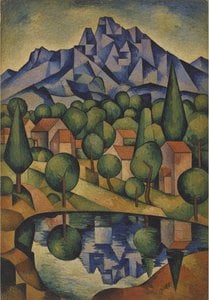
The Allure of "The Robbers and the Donkey" by Paul Cézanne
- Artist: Paul Cézanne
- Year: 1870
- Style: Romanticism, transitioning towards Post-Impressionism
- Medium: Oil on Canvas
- Dimensions: Unknown
- Location: Civica Galleria d'Arte Moderna, Milan, Italy
A Narrative of Encounter and Intrigue
Paul Cézanne’s "The Robbers and the Donkey," painted in 1870, is a captivating glimpse into the artist's early explorations of narrative and form. The painting depicts a scene brimming with tension and ambiguity: a group of figures seemingly engaged in conflict on a beach near the water. At least ten individuals populate the canvas, some holding umbrellas, others gesturing dramatically, creating a sense of bustling activity. A solitary donkey stands amidst this human drama, its presence adding an element of unexpected stillness to the dynamic scene. The setting, bathed in sunlight and marked by shadows, suggests a warm day at the coast.
The painting’s narrative remains open to interpretation. Are these truly robbers? What is the nature of their conflict? Cézanne deliberately avoids providing easy answers, inviting viewers to construct their own stories around the scene. The donkey, seemingly oblivious to the turmoil surrounding it, becomes a symbol of quiet endurance and perhaps even a touch of irony.
Technique and Artistic Influences
"The Robbers and the Donkey" showcases Cézanne's developing artistic style during his early career. While rooted in Romanticism—evident in the dramatic composition and emotional intensity—the painting also hints at the artist’s future explorations of form and structure that would define his later Post-Impressionist work.
Cézanne employs a loose, expressive brushstroke, characteristic of the Romantic period. The use of color is deliberate, with warm tones contrasting against cooler shades to create depth and atmosphere. Notice how he uses light and shadow not just to depict form but also to guide the viewer's eye through the composition. This early work demonstrates Cézanne’s growing interest in breaking away from traditional academic conventions and forging his own unique visual language.
Historical Context and Symbolism
Painted during a period of significant social and political change, "The Robbers and the Donkey" reflects a broader cultural fascination with themes of conflict, morality, and the human condition. The Romantic movement emphasized emotion and individualism, and Cézanne’s painting captures this spirit through its dramatic subject matter and expressive style.
Beyond the immediate narrative, the painting can be interpreted as a commentary on social inequality or the precariousness of life. The presence of the donkey—a symbol of labor and humility—adds another layer of meaning to the scene. It could represent the marginalized members of society, observing the struggles of those in power.
Emotional Impact and Lasting Legacy
"The Robbers and the Donkey" evokes a range of emotions in the viewer: curiosity, suspense, perhaps even a touch of unease. The painting’s ambiguity allows for multiple interpretations, making it a deeply engaging and thought-provoking work of art.
This early masterpiece foreshadowed Cézanne's groundbreaking contributions to modern art. His exploration of form, color, and perspective paved the way for future generations of artists, solidifying his place as one of the most influential figures in Western art history. Owning a reproduction of "The Robbers and the Donkey" is not just acquiring a beautiful image; it’s embracing a piece of artistic heritage that continues to inspire and challenge us today.



 Pregledaj u prostoru
 Pređi na prodaju štampanih primeraka
 Podeli
 Podeli
 Detalji
 Vodič
Vodič

 Preuzmi sliku
 Slični predmeti
 Rendgenski snimak
 Automatska prezentacija
 Statistika


 Pročitaj više






































 Opcija sa staklom dostupna je samo za dimenzije manje od 110 cm