Pregledaj u prostoru Isprobaj u AR-u Naručite ručno oslikano reprodukciju Pređi na prodaju digitalnih slika Podeli
Detalji Vodič Dodaj u omiljene Preuzmi sliku Slični predmeti Rendgenski snimak Automatska prezentacija Statistika

Four Bathers

Paul Cezan (1839-1906): Pionerski postimpresionista koji je spajao impresionizam i kubizam! Istražite geometrijske oblike, mrtve prirode i njegov uticaj na modernu umetnost. Otkrijte 'Kupateljke' i slike Mont Sainte-Victoire.

Giclee štampa / Umetnički otisak

Giclée štampa ili print na platnu muzejskog kvaliteta uz brzu izradu i raznovrsne opcije završne obrade. ( Naručite ručno oslikano reprodukciju Pređi na prodaju digitalnih slika)

Corner sample of the P118B picture frame: kaljeni polistiren, 5 cm wide and 3 cm thick
P118B дин10
Corner sample of the P118H picture frame: kaljeni polistiren, 5 cm wide and 3 cm thick
P118H дин10
Corner sample of the P118W picture frame: kaljeni polistiren, 5 cm wide and 3 cm thick
P118W дин10
Corner sample of the P438Z picture frame: kaljeni polistiren, 5.5 cm wide and 3.5 cm thick
P438Z дин10
Corner sample of the P508JH picture frame: kaljeni polistiren, 7 cm wide and 3.5 cm thick
P508JH дин12
Corner sample of the P508YH picture frame: kaljeni polistiren, 7 cm wide and 3.5 cm thick
P508YH дин12
Corner sample of the P805H picture frame: kaljeni polistiren, 5 cm wide and 3.5 cm thick
P805H дин10
Corner sample of the P805Z picture frame: kaljeni polistiren, 5 cm wide and 3.5 cm thick
P805Z дин10
Corner sample of the P919BZ picture frame: kaljeni polistiren, 7 cm wide and 3.5 cm thick
P919BZ дин10
Corner sample of the P919G picture frame: kaljeni polistiren, 7 cm wide and 3.5 cm thick
P919G дин10
Corner sample of the P919XJ picture frame: kaljeni polistiren, 7 cm wide and 3.5 cm thick
P919XJ дин10
Corner sample of the P959ZH picture frame: kaljeni polistiren, 5 cm wide and 3 cm thick
P959ZH дин10
Corner sample of the P968JZ picture frame: kaljeni polistiren, 6 cm wide and 4 cm thick
P968JZ дин12
Corner sample of the W106C picture frame: masivno drvo, 5 cm wide and 3 cm thick
W106C дин8
Corner sample of the W218G picture frame: masivno drvo, 5 cm wide and 3 cm thick
W218G дин10
Corner sample of the W218JH picture frame: masivno drvo, 5 cm wide and 3 cm thick
W218JH дин8
Corner sample of the W218Y picture frame: masivno drvo, 5 cm wide and 3 cm thick
W218Y дин10
Corner sample of the W307PJ picture frame: masivno drvo, 6 cm wide and 3 cm thick
W307PJ дин10
Corner sample of the W316G picture frame: masivno drvo, 6 cm wide and 3 cm thick
W316G дин10
Corner sample of the W316PJ picture frame: masivno drvo, 6 cm wide and 3 cm thick
W316PJ дин8
Corner sample of the W316Y picture frame: masivno drvo, 6 cm wide and 3 cm thick
W316Y дин10
Corner sample of the W398PJ picture frame: masivno drvo, 5 cm wide and 3 cm thick
W398PJ дин8
Corner sample of the W4111J picture frame: masivno drvo, 6.5 cm wide and 3.5 cm thick
W4111J дин10
Corner sample of the W500HY picture frame: masivno drvo, 7 cm wide and 5 cm thick
W500HY дин15
Corner sample of the W500JH picture frame: masivno drvo, 7 cm wide and 5 cm thick
W500JH дин15
Corner sample of the W692G picture frame: masivno drvo, 8 cm wide and 4 cm thick
W692G дин12
Corner sample of the W849H picture frame: masivno drvo, 5 cm wide and 3 cm thick
W849H дин8
Corner sample of the W940BG picture frame: masivno drvo, 7.5 cm wide and 4.5 cm thick
W940BG дин15
Corner sample of the W953PJ picture frame: masivno drvo, 6 cm wide and 3.5 cm thick
W953PJ дин8

Standardne dimenzije
po meri
CM
INCH

Izaberite jednu od naših unapred definisanih veličina koje odgovaraju originalnim proporcijama umetničkog dela.

širina
visina

Možete uneti sopstvene dimenzije kako biste umetničko delo prilagodili specifičnom okviru ili prostoru. Ako odabrani format ne odgovara proporcijama originalne slike, mi ćemo ili iscrtati deo dela ili proširiti sliku pomoću ogledane ivice ili jednobojnog popunjavanja. Digitalni prikaz će vam biti poslat na odobrenje pre početka proizvodnje.
Imajte na umu da pregled na ekranu ne odražava stvarno iscrtavanje ili proširivanje. Samo će prikaz (mockup) precizno pokazati finalnu kompoziciju.
Iako su prilagođene dimenzije dostupne, preporučujemo da odaberete dimenziju sa unapred definisane liste kako biste očuvali originalne proporcije.

Dostava širom sveta () za 2 nedelje umesto uobičajenih 4/5 nedelja. (12 октобар)

Besplatna ekspresna dostava širom sveta
Visokokvalitetno laneno platno
Sveobuhvatno osiguranje transporta
Garancija povraćaja carine i uvoznih dažbina
Garancija vernosti boja i autentičnosti pri reprodukciji
Politika povraćaja u roku od 100 dana (samo u slučaju nedostataka)
Garancija povrata 100% novca
Popust pri većoj količini

Ukupna cena

дин 6880

Four Bathers

Giclee štampa / Umetnički otisak

Veličina reprodukcije

-

Ukupna cena

дин 6880

Brzi pregled

  • Medium: Oil on Canvas
  • Dimensions: 38 x 46 cm
  • Year: 1878
  • Artistic style: Geometric, Naturalist
  • Notable elements: Planes of color
  • Title: Four Bathers

Kviz o umetnosti

Svako pitanje ima samo jedan tačan odgovor.

Pitanje 1:
What artistic movement is Paul Cézanne most closely associated with?
Pitanje 2:
In 'Four Bathers,' what is a key technique Cézanne employs to build up the forms of his subjects?
Pitanje 3:
Which artist recognized Cézanne's genius early on and championed his work?
Pitanje 4:
The painting 'Four Bathers' primarily depicts:
Pitanje 5:
What does the use of 'planes of color' in 'Four Bathers' suggest about Cézanne’s approach to representation?

Paul Cézanne’s “Four Bathers”: A Bridge Between Impressionism and Modernity

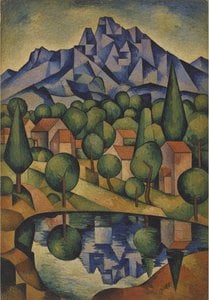
Paul Cézanne's "Four Bathers," painted in 1878, isn’t merely a depiction of nude figures enjoying the sun; it’s a pivotal moment in art history—a deliberate dismantling of established conventions and a bold assertion of a new visual language. This oil on canvas, measuring a modest 38 x 46 cm, embodies Cézanne's revolutionary approach to capturing the essence of nature and human connection, marking a crucial transition from the fleeting impressions of Impressionism towards the structured explorations of Cubism. The painting invites us into a world where form and color are not simply observed but actively constructed by the artist’s hand, revealing a profound shift in how we perceive and represent reality.

Cézanne's artistic journey began with an initial flirtation with Impressionist techniques – capturing the ephemeral effects of light and atmosphere. However, he quickly recognized the limitations of this approach, feeling that it lacked the underlying structure necessary to convey a sense of permanence and solidity. “Four Bathers” represents his decisive move away from mere representation towards a more conceptual understanding of form. The figures aren’t rendered with photographic accuracy; instead, they are fragmented into geometric planes of color, suggesting volume and mass through their arrangement within the composition. Notice how Cézanne uses overlapping forms to create depth—the bodies seem to emerge from and recede into the surrounding landscape, blurring the boundaries between subject and environment.

Composition and Technique: Building a New Language

The painting’s composition is remarkably deliberate. Cézanne employs a technique he termed “alla prima,” working directly on the canvas with loose, expressive brushstrokes—a stark contrast to the meticulous layering of Impressionist paint. These strokes aren't blended; they retain their individual character, creating a textured surface that vibrates with energy. The figures are positioned at varying angles, some partially obscured by foliage, others emerging from the shadows. This dynamic arrangement creates a sense of movement and spontaneity, as if capturing a fleeting moment in time. Crucially, Cézanne isn’t interested in depicting a specific scene; he's exploring the fundamental building blocks of form—lines, planes, and volumes—that constitute the world around us.

The color palette is equally significant. Cézanne utilizes muted earth tones – ochres, browns, greens – to create a harmonious yet subtly unsettling atmosphere. He avoids bright, saturated hues, favoring instead subtle gradations of color that suggest light and shadow. The use of complementary colors—such as the blues and oranges—creates visual tension and adds depth to the composition. It’s important to note that Cézanne was deeply interested in the scientific study of color, believing that it could be used to create a more accurate representation of reality than traditional methods allowed.

Historical Context: A Rejection of Tradition

“Four Bathers” emerged during a period of intense artistic ferment. The Impressionist movement, with its focus on capturing fleeting moments and atmospheric effects, was beginning to face criticism for its lack of structure and permanence. Cézanne’s work represented a direct response to this critique—a deliberate attempt to reintroduce order and form into the art world. Initially, his paintings were met with incomprehension and ridicule by contemporary critics who found them unsettling and unconventional. However, figures like Camille Pissarro and Ambroise Vollard recognized Cézanne's genius early on, championing his work and providing him with crucial support.

Vollard’s decision to organize the first solo exhibition of Cézanne’s work in 1895 proved transformative. This event brought Cézanne’s art to a wider audience and helped to establish his reputation as a major innovator. Remarkably, artists like Henri Matisse and Pablo Picasso later acknowledged Cézanne's profound influence on their own work, famously declaring him “the father of us all.” His emphasis on geometric form and the exploration of underlying structure paved the way for the development of Cubism—a revolutionary movement that shattered traditional notions of perspective and representation.

Legacy and Relevance Today

“Four Bathers” stands as a testament to Cézanne’s pioneering spirit and his enduring legacy. It's more than just a beautiful painting; it’s a foundational work in the history of modern art, bridging the gap between Impressionism and Cubism. Its influence can be seen in countless works by artists who followed in his footsteps—from Matisse to Picasso to Braque. Today, the painting is celebrated not only for its artistic merit but also for its historical significance as a pivotal moment in the evolution of Western art. It reminds us that art isn't simply about imitating reality; it’s about interpreting and transforming it according to the artist’s vision.

Experience the beauty of handmade oil painting reproductions at WahooArt.com.

Pitanja i odgovori

Kolika je zasićenost boja u delu „Four Bathers”, Pol Sezan?

Paleta dela "Four Bathers" ima Subtle Color zasićenost.

Kako "Four Bathers" balansira svetlo i tamno?

Za delo „Four Bathers”, Pol Sezan zabeležena je osvetljenost od shadow, uz luminancu od Soft Shadow.

Kako se kontrast i harmonija spajaju u delu "Four Bathers"?

Analiza boja dela „Four Bathers”, Pol Sezan beleži Statement kontrast i Discordant Palette harmoniju.

Koji su datum nastanka i stil dela „Four Bathers”, Pol Sezan?

Delo "Four Bathers" nastalo je 1878. godine u okviru Post-Impressionism pravca. Datum i umetnički pravac čine temelj ovog dela u istoriji umetnosti.

Koliko je popularno delo "Four Bathers" unutar pokreta Post-Impressionism?

Four Bathers”, Pol Sezan je klasifikovan kao Iconic i pripada pokretu Post-Impressionism.

Ko je autor i koja je godina nastanka dela "Four Bathers"?

Delo "Four Bathers" delo je umetnika Pol Sezan iz 1878. godine.

Koja veličina i orijentacija se preporučuju za štampu dela „Four Bathers”, Pol Sezan?

Za "Four Bathers", preporučena postavka štampe je dimenzija Large i Landscape orijentacija.

Iz kog istorijskog perioda potiče „Four Bathers”, Pol Sezan?

Istorijska epoha dela „Four Bathers”, Pol Sezan je 19th Century. Ova klasifikacija smešta delo u okvir istorije umetnosti.


Biografija umetnika

Револуционарна Визија: Живот и Дело Паула Сезана

Паул Сезан, рођен у Екс-ан-Провансу 1839. године, представља монументалну фигуру која спаја мимотретне импресије импресионизма и фрагментиране форме кубизма. Пут његовог стваралаштва није био обележен одмах признањем; већ је био постепени процес уметничког истраживања, испуњен периодима сумње у себе и критичких одбацивања, који се завршава кулминацијом наслеђа које ће незадрживо променити ток модерне уметности. Рођен у добростојећој породици – његов отац је прво био произвођач шешира, а касније банкар – Сезан је уживао финансијску сигурност неуобичавену за аспиранте уметнике, што му је дало слободу да се посвети својој страсти без непосредног притиска комерцијалног успеха. Иако га је отац првобитно усмеравао ка правној каријери, снага уметничког изражавања била је пресилнија, и он је на крају напустио право да се посвети сликарству, одлука која ће дефинисати његов живот. Утицаји у раним годинама укључивали су романтизам који је био распрострањен у то време и посвећеност школе Барбизон сликарству пејзажа, али је кроз сусрете са уметницима као што су Пол Гоген и Жорж Серат, и њиховим иновативним приступима боји и облику, Сезан почео да кује свој посебан пут.

Од Тамних Тона до Структуре: Еволуција Стилова

Сезанов рани рад често је одражавао драматичне, емотивно наежгујуће теме карактеристичне за романтичко сликарство – тамне палете и изражајна техника сликања доминирале су његовим платнома. Међутим, ова почетна фаза била је само прелазна степеница ка далеко аналитичкијем и напреднијем приступу. Неудовлетворен чињеницом да једноставно забиљежи мимотретне импресије светлости, као што су то волели импресионисти, Сезан се упустио у потрагу да разуме и представи саме основе објекта. Он није тражио само *шта* види, већ и *како* доживљава фундаменталне форме које чине стварност. Ово га је навело да разбија природне облике на њихове геометријске еквиваленте – конусе, цилиндре, сфере – предвиђајући кубистичку револуцију деценијама пре него што се она догодила. Његова техника постала је карактеристична за мале, понављајуће покрете четком, пажљиво наслагане да би се изградила сложена поља боја и текстура, стварајући осећај чврстине и дубине до тада непознат у сликарству. Није био заинтересован за илузионистички простор; уместо тога, често је представљао предмете из више перспектива истовремено, изазивајући традиционалне појмове перспективе и принуђујући посматрача да активно учествује у конструисаној природи његових композиција. Ово намерно изобличење није било произвољно, већ покушај да се пренесе комплетније разумевање форме, представљајући не само један тренутак у времену, већ синтезу перцепције.

Пејзажи, Натдреда и Људско Тело: Кључна Дјела и Повратне Теме

Сезаново дело изузетно је разноврсно, обухвата пејзаже, натдреде, портрете и приказе купача, али су све уједињене његовим посебним приступом форми и боји. Поточић у Жа де Буфану, сликан 1880. године, представља његов рад на пејзажу, демонстрирајући способност да се ухвати суштина природе кроз пажљиву аранжману облика и тонова. Портрет Емила Зола, настао 1866. године, открива његов развијајући стил и нуди убедљив увид у интелектуалну интензивност његовог блиског пријатеља и колеге писца. Његове натдреде, као што су оне које приказују јабуке и друго воће, нису само репрезентације објекта, већ истраживања обима, светлости и просторних односа. Серија Мон Сенте-Виктоар постала је опсесија за Сезана, повратна тема која му је омогућила да беспрекорно испитује форму и перспективу током деценија. Ови сликани нису само прикази планине; они су студије како ми перципирамо дубину, обим и интеракцију светлости и сенке. На крају, његова серија Купача, која приказује гола тела у идиличном пејзажу, представља продубно испитивање људског тела и његове везе са природом, често надахнута осећајем безвременске тишине и размишљања.

Наслеђе Ковано Иновацијама: Сезанов Утицај на Модерну Уметност

Утицај Паула Сезана на касније генерације уметника неизмерив је. Широко се сматра „оцем модерне уметности“ због његових револуционарних доприноса пикторијском језику, отварајући пут многим од главних уметничких покрета 20. века. Пабло Пикасо и Жорж Брак дубоко су били задужени за Сезанов наглашак на геометријским формама и множењу перспектива, што је постало централна догма кубизма. Његова смела употреба боје такође је инспирисала покрет Фависта, предвођен уметницима као што су Анри Матис, који је прихватио живе, нереалистичне нијансе. Чак су и срцедални уметници нашли резонанцу у Сезановом испитивању субјективне перцепције и психолошке дубине. Изван специфичних покрета, Сезанова инсистенција на личном визији уметника и његово одбацивање традиционалних академских ограничења ослободила су генерације сликара да истражују нове облике изражавања. Он је изазвао сам дефиницију репрезентације, померајући фокус са омањивања стварности на конструисање визуелног искуства заснованог на основним структурама и субјективној перцепцији. Његова смрт 1906. године обележила је не крај, већ почетак – зору нове ере у историји уметности, дубоко обликовану његовом револуционарном визијом.
Pol Sezan

Pol Sezan

1839 - 1906 , Француска

Brzi pregled

  • Datum Rođenja: 1839-01-19
  • Datum Smrti: 1906-10-22
  • Mesto Rođenja: Aiks-en-Provans, Francuska
  • Nacionalnost: Francuski
  • Pokreti/Umetnici Pod Uticajem:
    • Kubizam
    • Fovizam
    • Surentizam
  • Puno Ime: Pol Sezan
  • Umetnički Pokret: Postimpresionizam
  • Uticajni Umetnici:
    • Romantizam
    • Barbizon škola
    • Pol Gogen
    • Žorž Seurat
  • Značajna Dela:
    • Slika ribnjaka u Jas de Bufan
    • Portret Emila Zole
    • Šuma
    • Serija Mont Sen-Viktor
    • Kupači
Istražite umetnička dela organizovana prema temama, stilovima i karakteristikama.