Giclée štampa ili print na platnu muzejskog kvaliteta uz brzu izradu i raznovrsne opcije završne obrade. ( Kupite ručno oslikano delo Pređi na digitalnu sliku)





























Izaberite jednu od naših unapred definisanih veličina koje odgovaraju originalnim proporcijama umetničkog dela.

Unesite željenu širinu i visinu kako bi se štampa uklopila u vaš ram ili zid. Štampu je moguće samo iseći, ali nikada povećati iznad dimenzija originalne slike, stoga format sa drugačijim proporcijama uzrokuje gubitak dela slike. Pre početka štampe, poslaćemo vam digitalni prikaz radi potvrde. Slika prikazana na ovoj stranici ne predstavlja stvarni isrez — to pokazuje samo digitalni prikaz.
Dostava širom sveta () za 2 nedelje umesto uobičajenih 4/5 nedelja. (10 новембар)
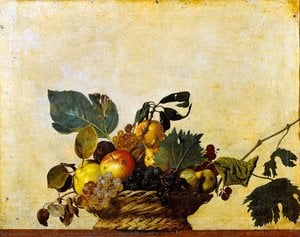
Corbeille de fruits
Dimenzije reprodukcije
Paul Cézanne (1839–1906), arguably the most influential artist of the late nineteenth century, stands as a pivotal figure bridging the gap between Impressionism's fleeting sensations and Cubism's fractured perspectives. His artistic journey wasn’t one of immediate acclaim; instead, it was marked by periods of self-doubt and critical dismissal—a narrative that ultimately yielded a legacy reshaping modern art.
Born in Aix-en-Provence to a prosperous family – his father initially a hatmaker who later became a banker – Cézanne enjoyed an unusual level of financial security, affording him the freedom to dedicate himself wholly to his passion without the pressures of commercial success. Though initially steered toward legal studies by his father’s ambitions, Cézanne’s innate inclination towards artistic expression proved irresistible, leading him to abandon law and embrace painting.
Early influences included Émile Bernard and Camille Pissarro, who championed Impressionistic principles of capturing light and atmosphere. However, Cézanne swiftly moved beyond mere optical representation, embarking on a profound exploration of form and structure—a quest that would define his distinctive style.
Cézanne’s artistic vision rejected the Impressionists' preoccupation with capturing transient moments; instead, he sought to distill nature into its essential geometric forms. He famously declared, “I do not paint what I see but what I remember,” reflecting his commitment to reconstructing visual experience through abstracted shapes and planes.
This approach is vividly evident in *Corbeille de Fruits*, where Cézanne dismantles the illusion of three-dimensionality, presenting a flattened composition that prioritizes underlying structure. The basket itself isn’t depicted as a solid object but rather as a series of interlocking planes—a technique anticipating Cubism's radical fragmentation.
Cézanne employed a distinctive brushstroke technique characterized by thick, impasto strokes that build up texture on the canvas surface. These bold marks aren’t intended to mimic natural contours but rather to convey solidity and volume—creating an illusion of depth through color and tonal variation.
The palette is dominated by earthy hues—ochres, browns, and greens—harmoniously blended to evoke a sense of stillness and contemplation. Cézanne meticulously observed the interplay of light and shadow, capturing subtle nuances that contribute to the painting’s overall atmosphere. The luminous oranges and yellows of the fruit create striking contrasts against the darker tones of the basket and tablecloth.
*Corbeille de Fruits*, painted circa 1893, exemplifies Cézanne's engagement with Post-Impressionist ideas—particularly those championed by Georges Seurat and Paul Gauguin. It represents a decisive break from Impressionistic conventions, signaling the emergence of a new artistic language focused on formal exploration.
Beyond its stylistic innovations, the basket itself carries symbolic weight. Fruit has long been associated with abundance, fertility, and nourishment—themes that resonate throughout Cézanne’s oeuvre. The carefully arranged composition suggests an attempt to capture not just the visual appearance of the fruit but also its essence—a reflection of Cézanne's belief in art as a conduit for conveying deeper truths about the natural world.
Despite its bold technique, *Corbeille de Fruits* exudes an aura of serene contemplation. Cézanne’s masterful handling of color and form invites viewers to pause and consider the painting's underlying harmony—a testament to his unwavering dedication to capturing not merely what is seen but what is felt.
The painting’s stillness contrasts sharply with the dynamism of Impressionism, offering a profound meditation on the beauty and permanence inherent in simple forms. It remains an enduring symbol of Cézanne's artistic genius—a cornerstone of modern art history.
Preporučuje se štampa dela „Corbeille de fruits”, autor Паул Сезан u veličini Large i Landscape orijentaciji.
"Corbeille de fruits", nastalo 1890. godine, pripada Mature Period u karijeri umetnika Паул Сезан.
„Corbeille de fruits”, autor Паул Сезан se preporučuje za Accent, idealno u Living Room. Upotreba i prostor zajedno ukazuju na to gde reprodukcija najbolje pristaje.


1839 - 1906 , Франска
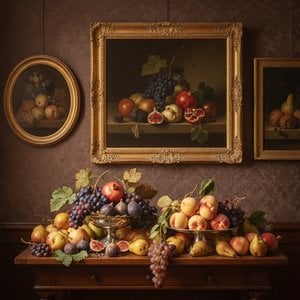
Discover the profound beauty of fruit still life paintings. Explore the rich symbolism, Baroque mastery, and timeless allure of nature's bounty through an art-historical lens, perfect for collectors and enthusiasts of classical fine art.
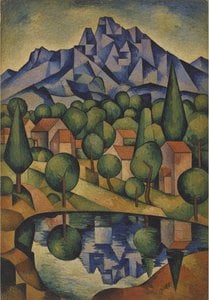
Explore the profound legacy of Paul Cézanne. Discover how his mastery of geometric forms and vibrant color bridged Impressionism and Cubism, offering timeless inspiration for fine art collectors and enthusiasts seeking to understand the foundations of modern art.

Explore the profound evolution of Cubist still life, from Cézanne's structural foundations to the fragmented brilliance of Braque and Léger. Discover how geometric abstraction redefined reality through a sophisticated lens of form, color, and modern artistic mastery.

Explore the structural genius of Paul Cézanne. Discover how his mastery of geometric form and color bridged Impressionism and Cubism in this definitive guide for art enthusiasts and collectors.

Explore the profound beauty of fruit arrangement masterpieces. From Dutch Golden Age opulence to Baroque chiaroscuro, discover the art history, symbolism, and timeless elegance of classical still life paintings for the discerning collector.
 Pregledaj u prostoru
 Pošalji
 Podeli
 Detalji o delu
 Vodič
Vodič

 Preuzmi
 Slični predmeti
 Rendgenski snimak
 Automatska prezentacija
 Pitanja i odgovori
 Statistika


 Pročitaj više









 Opcija sa staklom dostupna je samo za dimenzije manje od 110 cm