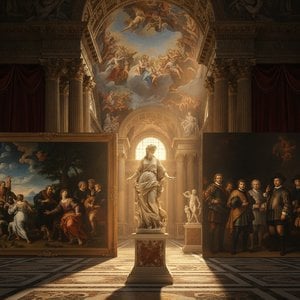
A Lively Tableau of Deception and Destiny
In the dim, amber-hued atmosphere of a seventeenth-century tavern, Nicolas Régnier captures a moment suspended between leisure and treachery. Cardsharps and Fortune Teller is not merely a depiction of a social gathering; it is a theatrical stage where every glance and gesture tells a story of hidden motives. The scene unfolds around a central table, where the clatter of cards and the low murmur of conversation seem almost audible to the viewer. A group of figures, draped in the rich, textured fabrics characteristic of the Baroque era, are caught in a delicate dance of interaction. Some lean in with intense focus, while others stand on the periphery, observing the unfolding drama with varying degrees of suspicion and curiosity.
The composition is masterfully orchestrated to draw the eye through a labyrinth of human connection. At the heart of the work, the tension of the card game serves as the narrative anchor, yet Régnier subtly weaves in elements of fate and chance. The presence of a fortune teller introduces a layer of mysticism, suggesting that while the players may attempt to manipulate their luck with hidden cards, an unseen destiny is already being read in the palms of the unsuspecting. This interplay between the tangible—the physical act of cheating—and the intangible—the prophecy of the future—creates a profound psychological depth that resonates long after one has looked away.
The Mastery of Light and Caravaggesque Shadow
Technically, this masterpiece stands as a testament to Régnier’s profound engagement with the Caravaggesque movement. Having trained in the shadow of masters who championed dramatic chiaroscuro, Régnier employs light not just to illuminate, but to sculpt. Deep, velvety shadows swallow the corners of the room, pushing the brightly lit figures toward the foreground and creating an intimate, almost claustrophobic sense of immediacy. This high-contrast lighting technique serves a dual purpose: it highlights the exquisite textures of silk, lace, and weathered skin, while simultaneously casting much of the characters' true intentions into darkness.
The artist’s brushwork is both precise and expressive, capturing the glint of light on a glass or the subtle tension in a finger poised over a deck. For the discerning collector or interior designer, this painting offers an unparalleled sense of drama and prestige. The rich, warm palette—dominated by ochres, deep reds, and earthy browns—provides a sophisticated anchor for any grand room, offering a sense of historical weight and classical elegance. It is a piece that does not merely decorate a wall; it commands the space, inviting conversation and evoking the opulent, complex spirit of the Flemish Baroque.
A Timeless Reflection on Human Nature
Beyond its aesthetic splendor, Cardsharps and Fortune Teller serves as a poignant meditation on the human condition. The inclusion of a clock hanging prominently on the wall acts as a memento mori, a subtle reminder that time is fleeting and that the games we play—whether for gold or for love—are subject to the inevitable passage of hours. This layer of symbolism elevates the work from a simple genre scene to a sophisticated allegory regarding the volatility of fortune and the deceptive nature of appearances.
For those seeking to infuse their surroundings with intellectual depth and emotional resonance, this reproduction offers more than just visual beauty. It provides a window into an era where art was used to explore the very essence of morality and fate. Whether placed in a curated gallery setting or as a focal point in a luxurious study, Régnier’s work continues to captivate, reminding us that beneath the surface of our social interactions, there is always a deeper, more mysterious story waiting to be uncovered.



 Pregledaj u prostoru
 Pređi na štampu
 Pošalji
 Podeli
 Detalji o delu

 Преузми
 Slični predmeti
 Rendgenski snimak
 Slajdovi
 Statistika


 Pročitaj više






































 Opcija sa staklom dostupna je samo za dimenzije manje od 110 cm