A Tempestuous Vision: Nicolas Poussin’s “Winter (The Flood)”
Nikola Pusen, ime sinonimno za veličanstvo francuskog baroknog slikarstva, ipak je bio duša duboko ukorenjena u italijanskom tlu tokom većeživotnog dela svoje umetničke karijere. Rođen u Le Havoru, Normandiji, juna 1594. godine, njegovi rani dani ostaju delimično obavijeni misterijom, a ipak su nesumnjivo postavili temelje za karijeru koja će postati ključna u oblikovanju klasicne tradicije unutar francuske umetnosti. Iako je kratko studirao u Pariz
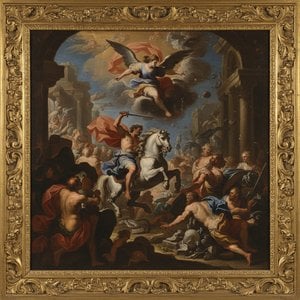
The scene immediately commands attention with its dramatic chiaroscuro—the stark contrast between light and shadow that Poussin masterfully employs. A bruised, storm-wracked sky dominates the upper portion of the canvas, pregnant with impending doom. Lightning flashes illuminate fleeting glimpses of a turbulent river, swollen to dangerous proportions by relentless rain. Below this chaotic expanse unfolds a landscape dominated by imposing mountains, their peaks shrouded in mist and snow – symbols of enduring strength and impassivity against the forces unleashed below. At the heart of the composition lies a small boat, precariously navigating the raging waters, carrying at least twelve souls and a loyal dog—a microcosm of humanity struggling against overwhelming odds.
The Classical Foundation & Poussin’s Technique
Poussin's artistic identity is firmly rooted in the principles of Classicism. This wasn’t merely an aesthetic choice; it represented a conscious rejection of the exuberant, often theatrical style prevalent during the Baroque period. Instead, he sought order, harmony, and balance—qualities deeply admired by Renaissance artists like Raphael. His meticulous attention to detail, evident in the precise rendering of textures – from the rough bark of the trees to the glistening surface of the water – speaks volumes about his rigorous training and unwavering commitment to accuracy. The composition itself adheres to strict geometric principles, creating a sense of stability within the turbulent scene. Notice how the diagonal lines of the boat’s trajectory are counterbalanced by the verticality of the mountains, contributing to a visual equilibrium that belies the chaos depicted.
Poussin's technique is characterized by his use of *sfumato*—a subtle blurring of edges and contours—to create an atmospheric depth. He skillfully employs layering techniques, building up color gradually to achieve a luminous quality. The colors are predominantly cool – blues, grays, and whites – reflecting the bleakness of the winter landscape and the despair of the situation. However, flashes of warmer tones—the red of a garment clinging to a struggling figure—add dramatic emphasis and heighten the emotional impact.
A Biblical Echo & Philosophical Undertones
“Winter (The Flood)” is part of “The Four Seasons” series, commissioned by the son of Cardinal Richelieu. Interestingly, Poussin’s work transcends a simple depiction of a flood; it carries profound philosophical and potentially biblical undertones. The scene echoes the story of Noah's Ark, albeit with a distinctly more pessimistic interpretation. While the biblical narrative emphasizes divine judgment and the cleansing of humanity, Poussin presents a far less comforting vision. The figures in the boat are not heroes embarking on a righteous mission; they are simply struggling to survive, their fate uncertain. The inclusion of the serpent adds an element of foreboding, hinting at the destructive forces that lie dormant beneath the surface.
Furthermore, Poussin’s personal struggles during this period—he suffered from debilitating hand tremors—are believed to have influenced the painting's slow and painstaking creation. This physical difficulty likely deepened his contemplation on themes of mortality, vulnerability, and the limitations of human control. The painting can be interpreted as a reflection on the fragility of existence in the face of overwhelming natural forces – a poignant reminder that even the most enduring structures are ultimately subject to destruction.
Symbolism & Emotional Resonance
Beyond its narrative elements, “Winter (The Flood)” is rich in symbolism. The boat itself represents humanity—a small, vulnerable vessel tossed about on the vast and indifferent ocean of nature. The figures within it embody a range of emotions – fear, desperation, hope, and resilience. The dog, often interpreted as a symbol of loyalty and fidelity, offers a glimmer of comfort amidst the chaos. The mountains, steadfast and unyielding, represent the enduring power of the natural world—a force that is both beautiful and terrifying. The overall effect is one of profound melancholy and unsettling beauty – a visual poem on the human condition.
Reproductions of “Winter (The Flood)” capture only a fraction of the painting’s original impact, but they offer a valuable opportunity to engage with Poussin's masterful artistry and contemplate his enduring message. Consider commissioning a high-quality hand-painted reproduction from WahooArt.com to bring this iconic work into your home or office – a timeless reminder of humanity’s place within the grand scheme of nature.
Pitanja i odgovori
Kakav osećaj prenosi „Зима (Потоп)”, Никола Пусен?
„Зима (Потоп)”, Никола Пусен prenosi Melanholičan osećaj unutar opšte Dramatično atmosfere.
Ko je kreirao "Зима (Потоп)"?
Umetnik koji stoji iza dela "Зима (Потоп)" je Никола Пусен. Delo je katalogizovano pod imenom umetnika Никола Пусен.
Kako mogu da pregledam reprodukciju dela „Зима (Потоп)”, Никола Пусен?
Da biste pregledali reprodukciju dela „Зима (Потоп)”, Никола Пусен, otvorite stranicu Pregled za to umetničko delo.



 Pregledaj u prostoru
 Naručite ručno oslikano reprodukciju
 Podeli
 Podeli
 Detalji
 Vodič
Vodič

 Preuzmi sliku
 Slični predmeti
 Rendgenski snimak
 Automatska prezentacija
 Statistika


 Pročitaj više






































 Opcija sa staklom dostupna je samo za dimenzije manje od 110 cm