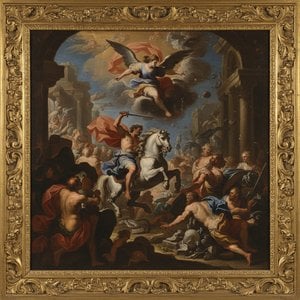
Nikola Pusen: Život Uroñen u Klasicnu Revnost
Nikola Pusen, ime sinonimno za veličanstvo francuskog baroknog slikarstva, ipak je bio duša duboko ukorenjena u italijanskom tlu tokom većeživotnog dela svoje umetničke karijere. Rođen u Le Havoru, Normandiji, juna 1594. godine, njegovi rani dani ostaju delimično obavijeni misterijom, a ipak su nesumnjivo postavili temelje za karijeru koja će postati ključna u oblikovanju klasicne tradicije unutar francuske umetnosti. Iako je kratko studirao u Parizu tokom ranih 1610-ih, upijajući uticaje manje poznatih umetnika tog vremena, njegovaicija u Rim 1624. godine zaista je zapalila njegovu umetničku sudbinu. Nije reč samo o geografskom preseljenju; bila je to imerzija u srce antičke ere, hodočašće do samog izvora inspiracije koji će definisati njegov estetski vid. Pusenove prve probe slikanja bile su obeležene senzualnim kvalitetom koji podseća na venecijanske majstore poput Titijana, ali čak i u tim ranim delima počinje da se nazire urođena osećajnost reda i intelektualne rigoroznosti—predviđanje stila koji će tako vešto izraditi.
Rimske Godine: Kovanje Klasicnog Ideala
Rim je bio više od obične radionice za Pusena; postao je njegov intelektualni eksperimentalni prostor. Pronašao se u živahnom krugu učenjaka, arheologa i kolega umetnika, posebno Kasijana dal Pozza, čije je duboko razumevanje klasicne antike snažno uticalo na pristup umetnika. Posvećenost dala Pozzu detaljnoj dokumentaciji drevnih ostataka usađivala je u Pusena veliko poštovanje prema istorijskoj preciznosti i želju da njegove slike ispunjava osećajem večnosti. Tokom ovog perioda, Pusen se odmakao od burnog sjaja nekih svojih savremenika, umesto toga prihvata stil karakterisan jasnocom, ravnotežom i naglašenim linearnim kompozicijama. On je pažljivo proučavao dela Rafaela, upijajući njihove skladne aranžmane i graciozne oblike, a istovremeno crpeći inspiraciju iz drevnih skulptura. Pusenovo se delo počelo ispunjavati likovima iz klasicne istorije i mitologije, prikazanim ne samo kao dekorativni elementi, već kao utelešenja moralnih vrline i filozofskih ideala.
Teme Istorije, Mita i Svetog
Pusenovo umetničko stvaralaštvo bilo je izuzetno raznoliko, a ipak dosledno ujedinjeno njegovom posvećenošću ovim jezgrenim principima. On je često prikazivao scene iz drevne istorije—tragičnu sudbinu Germanika, na primer—prožetu osećajem stoičke dostojanstvenosti i moralne težine. Njegove mitološke slike nisu bila samo prepričavanja poznatih priča; bile su to istraživanja ljudske prirode, često opterećena alegorijskim značenjem. Serija *Arcadije*, posebno kultni *Et in Arcadia ego*, postala je simbolična za njegovu filozofsku dubinu, podstakavajući razmišljanja o smrtnosti i trajnoj snazi sećanja. Osim istorije i mita, Pusen se okrenuo i religijskim temama, pre svega u *Sedam Sakramenata*—monumentalnom poduhvatu koji je pokazao kako njegovu teološku razumnost tako i kompozicionu veštinu. Čak i unutar ovih svetih scena, ipak je održavao klasicnu uzdržanost, izbegavajući preteranu emotivnost u korist smirenog i dostojanstvenog predstavljanja. Prema kraju svoje karijere, prostrani pejzaži su sve više dobijali na značaju, mešajući realizam sa idealiziranim oblicima kako bi se stvorile vizure koje su evocirale osećaj harmonije i smirenosti.
Trajno Nasleđe: Oblikovanje Francuske Umetnosti
Uprkos tome što je veći deo svoje karijere proveo u inostranstvu, uticaj Nikolasa Pusena na francusku umetnost bio je ogroman. On se nakratko vratio u Pariz 1640. godine na molbu kardinala Riheljea, imenovan za Prvog slikara kralja, ali je ubrzo bio ugušen zahtevima i spletkama dvorne života. Ubrzo se vratio u Rim, gde je nastavio da slika do svoje smrti 1665. godine. Njegova posvećenost klasicnim principima pomogla je da se uspostavi standard za umetničko školovanje i praksu unutar Francuske, utičući na generacije umetnika koji su ga sledili. Postao je vodeća figura u Académie Royale de Peinture et de Sculpture, čime je učvrstio svoju poziciju kao temeljnog kamena francuskog klasicizma. Umetnici poput Žaka-Luja Davida i Pola Sezana otvoreno su priznali svoj dug umetniku Pusenu zbog njegovog rigoroznog pristupa i intelektualne dubine. Njegovo nasleđe se proteže daleko izvan pukog stilskog imitiranja; ono predstavlja posvećenost redu, jasnoći i trajne snage klasicnih ideala—svedočenstvo umetnika koji je nastojao ne samo da prikaže svet, već ga uzvisiti kroz prizmu razuma i lepote.
- Poznata dela: *Smrt Germanika*, *Serija Sedam Sakramenata*, *Rimski put*, *Orijan zaslepljen u potrazi za suncem*, *Sezone*.
- Ključne karakteristike: Klasicna kompozicija, linearnost, teme iz istorije i mitologije, smireni pejzaži.



 Pregledaj u prostoru
 Pređi na prodaju štampanih primeraka
 Podeli
 Podeli
 Detalji
 Vodič
Vodič

 Preuzmi sliku
 Slični predmeti
 Rendgenski snimak
 Automatska prezentacija
 Statistika

 Pročitaj više






































 Opcija sa staklom dostupna je samo za dimenzije manje od 110 cm