Nicolas Poussin: A Titan of Classical Baroque
Nicolas Poussin (1594 – 1665) stands as one of the most influential figures in French Baroque painting, yet his artistic soul remained deeply rooted in the traditions of Italian Renaissance art. Born in Le Havre, Normandy, his early life remains shrouded in mystery, but it undeniably laid the foundation for a career that would reshape the landscape of European art history.
His formative years were marked by an intense fascination with classical sculpture and humanist philosophy—influences that would permeate his entire oeuvre. Unlike many contemporaries who embraced flamboyant ornamentation and dramatic theatricality, Poussin championed clarity, order, and intellectual rigor, prioritizing line over color and striving for a harmonious balance between form and content.
The Poet’s Inspiration: Decoding Mythological Narrative
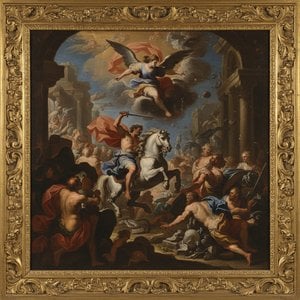
“The Poet’s Inspiration,” painted in 1630, exemplifies Poussin's signature style—a masterful blend of classical idealism and Baroque dynamism. This monumental canvas depicts Apollo, the Greek god of poetry and music, presiding over a gathering of Muses and poets, symbolizing the divine impetus behind artistic creativity.
The composition is meticulously structured around a triangular framework, drawing the viewer’s eye towards Apollo’s central figure—a deliberate choice that reflects Poussin's unwavering commitment to classical principles. Notice how the figures are arranged with graceful precision, conveying both stability and intellectual contemplation.
Technique & Color Palette: Mastering Light and Shadow
Poussin’s technique is characterized by painstaking layering of oil paint—a hallmark of Baroque artistry—allowing for subtle gradations of tone and texture that imbue the painting with remarkable realism. He skillfully manipulated light and shadow (chiaroscuro), creating dramatic contrasts that heighten emotional impact and emphasizing key elements within the scene.
His color palette is restrained yet luminous, dominated by earthy hues—deep reds, golden ochres, soft whites, and muted browns—which evoke a sense of warmth and serenity. These colors harmonize seamlessly to create an atmosphere of contemplative beauty, reflecting Poussin’s profound admiration for the grandeur of antiquity.
Symbolism & Emotional Resonance: A Vision of Divine Inspiration
"The Poet’s Inspiration" transcends mere visual representation; it operates as a complex allegory—a symbolic narrative designed to convey profound philosophical ideas. The laurel wreath presented by the Muse signifies poetic honor and triumph, while Apollo's gaze embodies divine approval and the source of artistic inspiration.
Ultimately, Poussin’s masterpiece captures the essence of classical Baroque art—a fusion of intellectual rigor and emotional depth that continues to inspire artists and captivate audiences centuries later. It stands as a testament to his unparalleled mastery of technique and his unwavering devotion to the ideals of beauty and harmony.



 Pregledaj u prostoru
 Naručite ručno oslikano reprodukciju
 Podeli
 Podeli
 Detalji
 Vodič
Vodič

 Preuzmi sliku
 Slični predmeti
 Rendgenski snimak
 Automatska prezentacija
 Statistika


 Pročitaj više






































 Opcija sa staklom dostupna je samo za dimenzije manje od 110 cm