

Umetničko delo prikazano na ovoj stranici zaštićeno je autorskim pravima, što znači da zakonski nismo u mogućnosti da kreiramo niti prodajemo identičnu reprodukciju. Ova zaštita se sprovodi u skladu sa međunarodnim sporazumima kao što su Bernska konvencija i nacionalnim zakonima, uključujući i one koji su definisani u Američki zakon o autorskom pravu – Naslov 17.
Ovaj metod je u potpunosti usklađen sa regulativama o autorskim pravima jer ne podrazumeva kopiranje ili dupliranje zaštićenih umetničkih dela. Umesto toga, reč je o kreativnoj reinterpretaciji – novom slikarskom delu koje je inspirisano originalom, ali nije identično njemu.
Giclée štampa ili print na platnu muzejskog kvaliteta uz brzu izradu i raznovrsne opcije završne obrade. ( Kupite ručno oslikano delo Pređi na digitalnu sliku)





























Izaberite jednu od naših unapred definisanih veličina koje odgovaraju originalnim proporcijama umetničkog dela.

Unesite željenu širinu i visinu kako bi se štampa uklopila u vaš ram ili zid. Štampu je moguće samo iseći, ali nikada povećati iznad dimenzija originalne slike, stoga format sa drugačijim proporcijama uzrokuje gubitak dela slike. Pre početka štampe, poslaćemo vam digitalni prikaz radi potvrde. Slika prikazana na ovoj stranici ne predstavlja stvarni isrez — to pokazuje samo digitalni prikaz.
Dostava širom sveta () za 2 nedelje umesto uobičajenih 4/5 nedelja. (8 новембар)
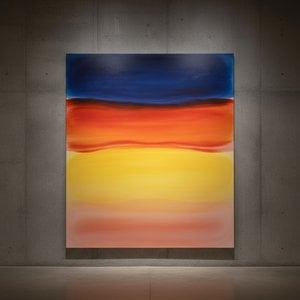
Untitled (18)
Dimenzije reprodukcije
Mark Rothko’s “Untitled (18),” a painting shrouded in mystery yet profoundly resonant, stands as a cornerstone of Abstract Expressionism and a testament to the power of color to evoke complex emotional states. Created around 1948, this work embodies Rothko's signature style – vast fields of luminous color stacked vertically, creating an almost architectural presence on the canvas. It’s not merely a painting; it’s an invitation to contemplate the depths of human experience, a journey into realms of anxiety, introspection, and ultimately, a fragile sense of peace.
The photograph reveals a scene both unsettling and strangely compelling. A solitary figure, seemingly male, kneels on the ground, his hands clasped tightly over his head – an immediate gesture of distress or perhaps profound contemplation. Around him swirl other figures: one brandishing a knife, another bearing a bowl upon their head, elements that immediately introduce layers of symbolic interpretation. These aren’t simply decorative additions; they contribute to a narrative of disruption and the struggle for meaning within a chaotic world. The inclusion of trees, cacti, and a bird – rendered with a muted, almost dreamlike quality – anchors the scene in a naturalistic setting while simultaneously highlighting its surreal and emotionally charged atmosphere.
Rothko's technique was deliberately reductive. He eschewed traditional brushwork, opting instead for layers of thin paint applied with meticulous care to create the illusion of depth and luminosity. The colors – predominantly deep blues, greens, and reds – are not blended but rather juxtaposed, allowing them to bleed into one another subtly. This creates a vibrating effect, as if the canvas itself is alive with energy. He famously described his process as “making a stain,” emphasizing the importance of the material qualities of paint and its ability to evoke feeling directly. The scale of the painting – an unknown size but undeniably imposing – further intensifies this immersive experience, enveloping the viewer in a sea of color.
Crucially, Rothko wasn’t interested in depicting recognizable forms or narratives. Instead, he sought to create what he called “feeling” – pure emotional expression communicated through the interaction of color and shape. His work is deeply rooted in his belief that art should transcend representation and tap directly into the viewer's subconscious. The absence of a clear subject allows for individual interpretation; each observer brings their own experiences and emotions to bear on the painting, forging a unique connection with the artwork.
Born in Latvia in 1903, Mark Rothko's early life was marked by displacement and upheaval – experiences that profoundly shaped his artistic vision. His family’s journey to America, followed by the tragic loss of his father, instilled within him a deep sensitivity to themes of mortality, trauma, and the search for meaning. This existential angst permeates much of his work, particularly during the post-World War II era. “Untitled (18)” can be viewed as an embodiment of this struggle – a visual representation of the anxieties and uncertainties that characterized the period.
Rothko’s work gained prominence within the Abstract Expressionist movement, alongside artists like Jackson Pollock and Willem de Kooning. However, he deliberately distanced himself from the more overtly gestural styles of his contemporaries, focusing instead on creating a meditative space for contemplation. His later years were marked by a growing disillusionment with the commercialization of art, culminating in his decision to donate his paintings to museums rather than sell them for profit. “Untitled (18)” stands as a poignant reminder of this commitment to artistic integrity and the profound emotional depth that fueled Rothko’s extraordinary career.
“Untitled (18)” continues to captivate viewers with its enigmatic beauty and unsettling power. It's a painting that demands attention, inviting us to slow down, breathe deeply, and confront our own emotions. Reproductions offer a remarkable opportunity to experience this work’s immersive quality in one’s own space, bringing Rothko’s profound vision into the heart of the home. WahooArt offers meticulously crafted hand-painted reproductions that faithfully capture the luminosity, depth, and emotional resonance of this iconic masterpiece – allowing you to connect with its timeless message.
„Untitled (18)”, autor Марк Ротко je u i dalje je zaštićeno autorskim pravima. Autorska prava traju od smrti umetnika, koja se dogodila 1970.
„Untitled (18)“ prikazuje man, distress, figures, trees, cacti, bird, clock, symbolism, a njegovo dočarano raspoloženje je Calm.
Autor dela "Untitled (18)" je Марк Ротко. Delo je katalogizovano pod imenom Марк Ротко.

1903 - 1970 , Latvija

Explore the profound emotional depth of Color Field painting. Discover the history of mid-century abstraction, from Rothko to Newman, and learn how pure color transforms the viewer's experience through our expert art history guide.

Explore the profound history and emotional depth of Color Field painting. From Mark Rothko to Barnett Newman, discover how pure color redefined modern art through our expert-led guide for students and collectors alike.
Explore the profound emotional depth of Mark Rothko's abstract expressionism. Discover the history, techniques & lasting impact of this pivotal Color Field painter. Expert insights for collectors and art enthusiasts.

Istražite 25 remek-dela Marka Rothka – ikona apstraktne ekspresije. Otkrijte priče, tehnike i emocije iza ovih veličanstvenih slika. Reprodukcije vrhunskog kvaliteta za vaš dom na WahooArt.com!

Otkrijte 10 remek dela koja su definisala apstraktni ekspresionizam! Istražite dela Pola Krausa, Džejson Poloka i drugih. Saznajte priče iza umetnosti i inspirisanje za dekoraciju doma. Eksplorirajte kolekciju na WahooArt.com!
 Pregledaj u prostoru
 Pošalji
 Podeli
 Detalji o delu
 Vodič
Vodič

 Preuzmi
 Slični predmeti
 Rendgenski snimak
 Automatska prezentacija
 Pitanja i odgovori
 Statistika
 Pročitaj više









 Opcija sa staklom dostupna je samo za dimenzije manje od 110 cm


