x
Pregledaj u prostoruPregledaj u prostoru AR pregledAR pregled Kupi print Kupi printKupi digitalnu sliku Kupi digitalnu sliku PošaljiPošalji
Detalji o deluDetalji o delu Dodaj u omiljene Dodaj u omiljene ПреузмиПреузми Slični predmetiSlični predmeti Rendgenski snimakRendgenski snimak SlajdoviSlajdovi

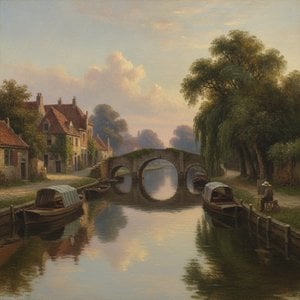
By The Canal, Venice -

Experience the charm of Victorian Venice with Marcus Stone's 'By The Canal.' This nostalgic scene captures daily life & tranquility – now available as a hand-painted reproduction.

Marcus Stone RA (1840-1921) was a celebrated English painter known for his Victorian genre scenes, literary illustrations (Dickens & Trollope), and sentimental historical works. Discover his charming style & refined skill.

Ručno rađena uljana reprodukcija

Ručno oslikano uljanim bojama na platnu u dimenzijama i okviru po vašem izboru, izrađeno po porudžbini od strane naših umetnika. (Kupi print Kupi printKupi digitalnu sliku Kupi digitalnu sliku)

Standardne dimenzije
po meri
CM
INCH

Izaberite jednu od naših unapred definisanih veličina koje odgovaraju originalnim proporcijama umetničkog dela.

širina
visina

Можете унети сопствене димензије како бисте прилагодили дело одређеном оквиру или простору. Ако одабрана величина не одговара пропорцијама оригинала, слика ће бити исечена или проширена додатним елементима који се ручно насликавају. Дигитални prikaz ће вам бити послат на одобрење пре почетка производње.
Имајте на уму да преглед на екрану не одражава стварно исецање или проширење. Само приказ (mockup) ће тачно приказати коначну композицију.
Иако су доступне прилагођене величине, препоручујемо да одаберете димензију из дефинисане листе како бисте сачували оригиналне пропорције.

Primeri onoga što se može promeniti: Zamena lica fotografijom kupca; Dodavanje ljubimca (npr. zamena mačke psom); Uključivanje skrivene poruke u pozadini; Promena pejzaža ili elemenata pozadine.
Nakon narudžbine, tim WahooArt.com će klijentu putem e-pošte poslati uputstva i dostaviti prikaz predloženog rešenja

Isporuka širom sveta () za 3/4 nedelje umesto uobičajenih 5 nedelja. (6 септембар). Bez kompromisa po pitanju kvaliteta.

why_choose_icon
Besplatna ekspresna dostava širom sveta
why_choose_icon
Visokokvalitetno laneno platno
why_choose_icon
Kompletno osiguranje transporta
why_choose_icon
Garancija povraćaja carine i uvoznih dažbina
why_choose_icon
Garancija vernosti boja
why_choose_icon
Politika povrata u roku od 60 dana (samo u slučaju nedostataka)
why_choose_icon
Garancija povrata novca od 100%
why_choose_icon
Popust pri grupnoj kupovini

Ukupna cena

$ 272

reproduction

By The Canal, Venice -

Tehnika reprodukcije

Dimenzije reprodukcije

-

Konačna cena

$ 272

Osnovne informacije

  • Notable elements or techniques:
    • Soft blending lines
    • Linear perspective
    • Atmospheric perspective
  • Title: By The Canal, Venice
  • Artist: Marcus C Stone
  • Medium: Oil paints on canvas
  • Subject or theme: Venetian daily life, nostalgia

Kviz o umetnosti

Svako pitanje ima samo jedan tačan odgovor.

Pitanje 1:
What is the primary subject matter depicted in 'By The Canal, Venice'?
Pitanje 2:
The color palette used in the painting is best described as:
Pitanje 3:
Which artistic style does 'By The Canal, Venice' most closely resemble?
Pitanje 4:
What is a notable characteristic of the lines used in this artwork?
Pitanje 5:
What does the open doorway in the painting potentially symbolize?

A Glimpse of Venetian Life: "By The Canal, Venice" by Marcus C. Stone

  • Artist: Marcus C. Stone
  • Birth Year: 1840
  • Death Year: 1921
  • Nationality: English

“By The Canal, Venice,” painted by Marcus C. Stone, offers a captivating window into the serene rhythms of daily life in 19th-century Venice. This evocative scene, likely created between the late 1800s and early 1900s, showcases Stone’s mastery of genre painting – a popular style during that era focused on depicting scenes from everyday life.

Composition and Visual Elements

The artwork's composition is thoughtfully arranged to draw the viewer into the tranquil Venetian setting. A woman, elegantly dressed with a striking red hat, sits gracefully on stone steps leading down to the canal. She is accompanied by a small child and a loyal dog, creating an intimate tableau of companionship and domesticity. A partially open doorway, adorned with ornate architectural details, provides a charming backdrop, hinting at the hidden stories within Venetian homes. Two seagulls soar overhead, their flight paths adding dynamism and a touch of freedom to the otherwise peaceful scene.

  • Color Palette: Dominated by muted earth tones – ochres, creams, browns, and grays – with subtle accents of red in the woman's hat and child’s clothing. Touches of blue appear in the doorway and canal reflections.
  • Lines: Horizontal lines define the water surface, steps, and building facades, creating a sense of stability. Vertical lines are present in architectural elements and wooden posts. Diagonal lines from the seagulls introduce movement. Soft, blended lines contribute to a hazy atmosphere.
  • Shapes: Geometric shapes (rectangles, squares) characterize the architecture, while organic shapes define figures, animals, and water. Reflections distort and fragment these shapes, adding visual interest.
  • Textures: Varied textures are achieved through brushwork – rough stone steps, smooth water surface, soft fabric clothing, feathered seagulls.

Style, Technique, and Historical Context

Stone’s style aligns with the traditions of 19th-century academic painting, emphasizing realism, meticulous detail, and narrative storytelling. His work reflects a Victorian sensibility – a fascination with domestic scenes and a desire to capture moments of quiet beauty. The technique employed is oil painting on canvas, utilizing layering and blending techniques to achieve soft transitions and realistic textures. Brushstrokes are generally subtle, contributing to the overall atmospheric quality.

Marcus Stone (1840-1921) was a celebrated English painter known for his genre scenes, literary illustrations for authors like Charles Dickens and Anthony Trollope, and sentimental historical works. He was elected an Associate of the Royal Academy in 1877 and an Academician in 1887, demonstrating his recognition within the art world.

Symbolism and Emotional Resonance

"By The Canal, Venice" evokes a sense of tranquility, nostalgia, and perhaps a touch of melancholy. The presence of the child and dog symbolizes innocence and companionship, while the open doorway could represent opportunity or transition – a glimpse into another world beyond the canal’s edge. The diffused lighting and soft color palette contribute to an overall feeling of faded elegance and timeless beauty.

This artwork is more than just a depiction of a Venetian scene; it's a poignant reflection on everyday life, capturing a fleeting moment in time with remarkable sensitivity and skill. It invites viewers to step back into the past and experience the charm and serenity of 19th-century Venice.


Biografija umetnika

A Legacy of Victorian Sentiment: The Life and Art of Marcus Stone

In the heart of the Victorian era, a period defined by its intricate social codes and deep-seated emotional narratives, Marcus Clayton Stone emerged as a master of the human spirit. Born in London in 1840, Stone was destined for a life immersed in the aesthetics of his time. As the son of the accomplished painter Frank Stone ARA, his artistic education began within the very walls of his childhood home. Under his father’s meticulous tutelage, he developed a foundational command of technique that allowed him to debut at the Royal Academy before he had even reached eighteen years of age. This early precocity set the stage for a career marked by both technical brilliance and an uncanny ability to capture the fleeting nuances of Victorian sentiment.

Stone’s artistic evolution is a fascinating study in the transition from historical grandeur to intimate, delicate storytelling. In his formative years, he sought to document significant historical incidents with a rigorous attention to detail, reflecting the era's fascination with monumental events and classical narratives. However, as his mastery grew, so too did his interest in the quiet, often overlooked moments of daily life. He moved away from the sweeping drama of history toward what critics often described as a dainty sentiment—a style characterized by charm, refinement, and an exquisite execution of light and color. This shift allowed him to explore themes of romantic longing, familial affection, and peaceful contemplation, making his work deeply resonant with the sensibilities of the late 19th-century public.

Literary Symbiosis and Illustrative Mastery

One cannot discuss the significance of Marcus Stone without acknowledging his profound connection to the literary giants of his age. His talent for visual storytelling found a perfect partner in the prose of Charles Dickens and Anthony Trollope. Through his celebrated illustrations, Stone did more than merely decorate pages; he breathed visual life into the characters and atmospheres of these iconic narratives. His ability to translate complex literary themes into evocative imagery helped cement his reputation as one of the premier illustrators of his generation. This symbiotic relationship between word and image allowed him to reach a vast audience, bridging the gap between fine art galleries and the widely circulated periodicals of the day.

Beyond his illustrations, Stone’s oil paintings stand as enduring monuments to Victorian romanticism. His works often feature:

  • Intimate Genre Scenes: Capturing quiet moments of connection, such as in In Love (1888), where the soft interplay of light and shadow enhances a sense of private affection.
  • Pastoral Beauty: Utilizing muted tones and idyllic settings to evoke a sense of timelessness, seen clearly in works like Honeymoon.
  • Atmospheric Landscapes: Demonstrating an almost Impressionistic sensitivity to nature, as evidenced in A Pleasant Spot on the Thames (1863).

Recognition and Historical Significance

The trajectory of Stone’s career was marked by consistent institutional recognition. His election as an Associate of the Royal Academy in 1877, followed by his ascent to full Academician in 1887, solidified his status within the highest echelons of the British art establishment. His influence extended far beyond the borders of England; his works were frequently engraved, allowing his imagery to circulate globally, and he was honored with medals from exhibitions across the world. Living in the prestigious Melbury Road alongside fellow painter Luke Fildes, Stone was part of a vibrant artistic community that shaped the visual identity of late Victorian London.

Today, the works of Marcus Stone serve as a poignant window into a vanished era. Whether through the profound symbolism found in his monochrome engravings or the luminous detail of his oil canvases, his art continues to invite viewers into a world of refined emotion and technical perfection. His legacy remains etched in the annals of art history, not merely as a chronicler of his time, but as an artist who possessed the rare gift of making the ephemeral moments of human connection feel eternal.

marcus c stone

marcus c stone

1840 - 1921 , United Kingdom

Osnovne informacije

  • Artistic Movement Or Style: Victorian genre painting
  • Artists Or Movements Influenced By This Artist: ['Romanticism']
  • Artists Who Influenced This Artist: ['Luke Fildes']
  • Date Of Birth: 1840
  • Full Name: Marcus Stone RA
  • Nationality: English
  • Notable Artworks:
    • Napoleon Seeks Rest
    • By The Canal, Venice
  • Place Of Birth: United Kingdom
Istražite umetnička dela organizovana prema temama, stilovima i karakteristikama.