Pregledaj u prostoru Isprobaj u AR-u Naručite ručno oslikano reprodukciju Pređi na prodaju digitalnih slika Podeli
Detalji Vodič Dodaj u omiljene Preuzmi sliku Slični predmeti Rendgenski snimak Automatska prezentacija Statistika

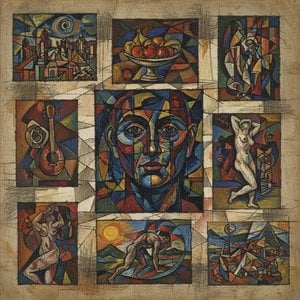
About Young Sister

Explore Marcel Duchamp’s "About Young Sister" (1911). An abstract Expressionist piece featuring muted tones & layered textures, embodying early 20th-century art's innovative spirit.

Marcel Dušan je revolucionarni umetnik koji je postavio temelje konceptualne umetnosti sa radovima poput 'Fountains' i 'L.H.O.O.Q.'. Istražite njegov inovativni stil i uticaj na modernu umetnost!

Umetničko delo prikazano na ovoj stranici zaštićeno je autorskim pravima, što znači da zakonski nismo u mogućnosti da kreiramo niti prodajemo identičnu reprodukciju. Ova zaštita se sprovodi u skladu sa međunarodnim sporazumima kao što su Bernska konvencija i nacionalnim zakonima, uključujući i one koji su definisani u Američki zakon o autorskom pravu – Naslov 17.

Ovaj metod je u potpunosti usklađen sa regulativama o autorskim pravima jer ne podrazumeva kopiranje ili dupliranje zaštićenih umetničkih dela. Umesto toga, reč je o kreativnoj reinterpretaciji – novom slikarskom delu koje je inspirisano originalom, ali nije identično njemu.

Giclee štampa / Umetnički otisak

Giclée štampa ili print na platnu muzejskog kvaliteta uz brzu izradu i raznovrsne opcije završne obrade. ( Naručite ručno oslikano reprodukciju Pređi na prodaju digitalnih slika)

Corner sample of the P118B picture frame: kaljeni polistiren, 5 cm wide and 3 cm thick
P118B дин10
Corner sample of the P118H picture frame: kaljeni polistiren, 5 cm wide and 3 cm thick
P118H дин10
Corner sample of the P118W picture frame: kaljeni polistiren, 5 cm wide and 3 cm thick
P118W дин10
Corner sample of the P438Z picture frame: kaljeni polistiren, 5.5 cm wide and 3.5 cm thick
P438Z дин10
Corner sample of the P508JH picture frame: kaljeni polistiren, 7 cm wide and 3.5 cm thick
P508JH дин12
Corner sample of the P508YH picture frame: kaljeni polistiren, 7 cm wide and 3.5 cm thick
P508YH дин12
Corner sample of the P805H picture frame: kaljeni polistiren, 5 cm wide and 3.5 cm thick
P805H дин10
Corner sample of the P805Z picture frame: kaljeni polistiren, 5 cm wide and 3.5 cm thick
P805Z дин10
Corner sample of the P919BZ picture frame: kaljeni polistiren, 7 cm wide and 3.5 cm thick
P919BZ дин10
Corner sample of the P919G picture frame: kaljeni polistiren, 7 cm wide and 3.5 cm thick
P919G дин10
Corner sample of the P919XJ picture frame: kaljeni polistiren, 7 cm wide and 3.5 cm thick
P919XJ дин10
Corner sample of the P959ZH picture frame: kaljeni polistiren, 5 cm wide and 3 cm thick
P959ZH дин10
Corner sample of the P968JZ picture frame: kaljeni polistiren, 6 cm wide and 4 cm thick
P968JZ дин12
Corner sample of the W106C picture frame: masivno drvo, 5 cm wide and 3 cm thick
W106C дин8
Corner sample of the W218G picture frame: masivno drvo, 5 cm wide and 3 cm thick
W218G дин10
Corner sample of the W218JH picture frame: masivno drvo, 5 cm wide and 3 cm thick
W218JH дин8
Corner sample of the W218Y picture frame: masivno drvo, 5 cm wide and 3 cm thick
W218Y дин10
Corner sample of the W307PJ picture frame: masivno drvo, 6 cm wide and 3 cm thick
W307PJ дин10
Corner sample of the W316G picture frame: masivno drvo, 6 cm wide and 3 cm thick
W316G дин10
Corner sample of the W316PJ picture frame: masivno drvo, 6 cm wide and 3 cm thick
W316PJ дин8
Corner sample of the W316Y picture frame: masivno drvo, 6 cm wide and 3 cm thick
W316Y дин10
Corner sample of the W398PJ picture frame: masivno drvo, 5 cm wide and 3 cm thick
W398PJ дин8
Corner sample of the W4111J picture frame: masivno drvo, 6.5 cm wide and 3.5 cm thick
W4111J дин10
Corner sample of the W500HY picture frame: masivno drvo, 7 cm wide and 5 cm thick
W500HY дин15
Corner sample of the W500JH picture frame: masivno drvo, 7 cm wide and 5 cm thick
W500JH дин15
Corner sample of the W692G picture frame: masivno drvo, 8 cm wide and 4 cm thick
W692G дин12
Corner sample of the W849H picture frame: masivno drvo, 5 cm wide and 3 cm thick
W849H дин8
Corner sample of the W940BG picture frame: masivno drvo, 7.5 cm wide and 4.5 cm thick
W940BG дин15
Corner sample of the W953PJ picture frame: masivno drvo, 6 cm wide and 3.5 cm thick
W953PJ дин8

Standardne dimenzije
po meri
CM
INCH

Izaberite jednu od naših unapred definisanih veličina koje odgovaraju originalnim proporcijama umetničkog dela.

širina
visina

Unesite širinu i visinu koja vam je potrebna, kako bi se uklopili u vaš ram ili na vaš zid. Štampa se može samo iseći, nikada ne može biti veća od originalne slike, stoga format sa drugačijim proporcijama gubi deo slike. Poslaćemo vam digitalni prikaz radi potvrde pre nego što započnemo štampu. Slika prikazana na ovoj stranici ne pokazuje stvarni rez — to pokazuje samo digitalni prikaz.

Dostava širom sveta () za 2 nedelje umesto uobičajenih 4/5 nedelja. (24 октобар)

Besplatna ekspresna dostava širom sveta
Visokokvalitetno laneno platno
Sveobuhvatno osiguranje transporta
Garancija povraćaja carine i uvoznih dažbina
Garancija vernosti boja i autentičnosti pri reprodukciji
Politika povraćaja u roku od 100 dana (samo u slučaju nedostataka)
Garancija povrata 100% novca
Popust pri većoj količini

Ukupna cena

дин 7011

About Young Sister

Giclee štampa / Umetnički otisak

Veličina reprodukcije

-

Ukupna cena

дин 7011

Brzi pregled

  • year: 1911
  • movement:
    • Early Expressionism
    • Cubism
  • notable elements:
    • Muted color palette
    • Loose brushwork
    • Amorphous shapes
    • Abstraction
  • style: Abstract, Painterly
  • subject: Seated figure playing a musical instrument (possibly violin)

Kviz o umetnosti

Svako pitanje ima samo jedan tačan odgovor.

Pitanje 1:
In what year was Marcel Duchamp's 'About Young Sister' created?
Pitanje 2:
Which artistic movements are most closely associated with the style of 'About Young Sister'?
Pitanje 3:
What is the approximate size of 'About Young Sister'?
Pitanje 4:
The color palette of 'About Young Sister' is best described as:
Pitanje 5:
What technique is prominently used in 'About Young Sister' to create texture?

About “About Young Sister” – A Glimpse into Duchamp’s Early Style

Marcel Duchamp's *About Young Sister*, painted in 1911, offers a fascinating window into the artist’s formative period—a time of stylistic exploration before his radical departures into Conceptual Art. This 73 x 60 cm canvas isn’t a straightforward portrait; rather, it’s an evocative study of form and atmosphere, hinting at a figure engaged with music while simultaneously dissolving into abstraction.

Subject & Composition

The artwork centers on a seated individual, strongly suggested to be playing a stringed instrument – likely a violin – though the depiction is far from literal. The figure isn’t sharply defined; instead, it emerges from and blends with large, amorphous shapes that surround it. Duchamp deliberately positions the subject slightly off-center, creating a dynamic tension within the composition. These surrounding forms aren't merely background elements but active participants in defining space and mood.

Style & Technique

*About Young Sister* showcases Duchamp’s early leanings towards both Expressionism and Cubism. Visible brushstrokes and a loose, painterly style dominate the surface, prioritizing emotional expression over precise representation. The color palette is deliberately muted – primarily beige, brown, and gray – contributing to a somber yet contemplative atmosphere. Duchamp employs expressive lines to delineate forms, favoring soft transitions over harsh edges. Layering of paint creates texture and depth, while the diffused lighting minimizes strong contrasts, flattening the image plane. The lack of traditional perspective further emphasizes this flatness, relying instead on spatial relationships between shapes.

Historical Context & Artistic Evolution

Created in 1911, *About Young Sister* predates Duchamp’s most famous and provocative works like *Fountain*. It represents a crucial stage in his artistic development, demonstrating his engagement with the avant-garde movements of the time. While still rooted in representational painting, the work foreshadows his later rejection of traditional artistic conventions. Duchamp was beginning to question the very definition of art, moving away from purely “retinal” experiences (pleasing the eye) towards works that engaged the intellect.

Symbolism & Emotional Impact

The piece evokes a sense of introspection and perhaps melancholy. The abstracted form of the figure and the muted color scheme contribute to this mood. The musical instrument suggests themes of creativity, expression, and possibly longing. The ambiguity inherent in the work invites viewers to project their own interpretations onto it, fostering a personal connection with the artwork. It’s not simply *about* a young sister; it's about memory, emotion, and the elusive nature of perception.

For Collectors & Designers

*About Young Sister* is an exceptional example of Duchamp’s early work, offering collectors a rare opportunity to acquire a piece that demonstrates his artistic transition. Its subdued palette and abstract forms make it incredibly versatile for interior design. It would complement modern or minimalist spaces, adding depth and sophistication without overwhelming the room.
  • Ideal for living rooms, studies, or bedrooms.
  • Pairs well with neutral color schemes and natural materials.
  • A conversation starter that showcases discerning taste.
This artwork is a testament to Duchamp’s genius – even in his early explorations, he was challenging conventions and paving the way for a new era of artistic expression.

Pitanja i odgovori

Kolika je zasićenost boja u delu „About Young Sister”, Марсел Дјушан?

Boje dela „About Young Sister”, Марсел Дјушан imaju Balanced Soft zasićenost. Zasićenost opisuje koliko su boje jarke ili prigušene.

Šta "About Young Sister" deli sa ostatkom stvaralaštva umetnika Марсел Дјушан?

U okviru celokupnog stvaralaštva umetnika Марсел Дјушан, delo "About Young Sister" pripada stilu Expressionism, uz prisustvo tema kao što su cubist & expressionist blend, rejection of realism's gaze, challenging artistic norms, dada's spirit, subtle shift, exploring inner perception, sisterhood and introspection, early experimentation".

Kakav je emocionalni ton dela „About Young Sister”, Марсел Дјушан?

Emocionalni ton zabeležen za „About Young Sister”, Марсел Дјушан je Melancholic. On sažima osećaj koji ovo delo izražava.


Biografija umetnika

Марсел Дјушан: Револуционар уметности који је поставио нова питања

Марсел Дјушан, рођено име Анри-Робер-Марсел Дјушан, рођен 1887. године у близини Руана, Француска, био је више од уметника; био је филозофски провокатор који је дубински изменио ток модерне уметности. Иако је потекао из породице која цени уметност – са браћом који су били успешни уметници – Дјушан је рано показао тенденцију да изазива, да руши усталене норме. Није био задовољан само приказом света; желео је да изазове како га посматрамо и шта чини уметничку вредност. Та немилосрдна интелектуална љубопитљивост дефинисала је његову плодну каријеру.

Од кубизма до дадаизма: Одбацивање конвенција

Уметничко путовање Дјушана било је обележено сталном еволуцијом, свесним одбацивањем устаљених норми. Његов рани ангажман са кубизмом, видљив у делима као што је *Портрет играча шаха* (1911), показао је интересовање за фрагментиране облике и више перспектива – одступање од традиционалног представљања. Међутим, брзо је прешао даље од чисто естетских брига, препознајући да једноставно преуређивање визуелних елемената није довољно да се решавају дубинска питања која су га занимала. Ужаси Првог светског рата наговелили су тај немир, што је Дјушана довело до прихватања дадаизма, покрета који је настао из разочарања и одбацивања логике, разума и традиционалних уметничких вредности. У оквиру дадаизма Дјушан је заиста почео да руши конвенционалне идеје о уметности. Није био заинтересован за стварање лепих објекта; желео је да провоцира размишљања, изазове претпоставке и разоткрије произвољност естетског суђења.

Реади-мејди и подривање уметности

Увођење реади-меја – обичних производа који се бирају и представљају као уметност – било је Дјушанова најзначајнија доприноса 20. веку. То нису били само пронађени објекти; то су била свесне чинове уметничког подривања. Узимањем свакодневног предмета, као што је увез (*Фонтана*, 1917), потписивањем га „Р. Мут“ и слањем на изложбу уметности, Дјушан је поставио питање саме дефиниције уметничке вештине и ауторства. Да ли је рука уметника створила дело или је идеја уметника? Ово питање постало је централно за његову праксу и положило основу за Концептуалну уметност. Други познати реади-меји као што је *L.H.O.O.Q.* (1919), постерна репродукција Моне Лизе коју је исцртао мустаћем и брадом, били су шаљиви али проницни критике уметности и утврђених културних икона. Ова дела нису била намењена да се цене по естетским квалитетима; била су намењена да провоцирају дебату и натерају гледаоце да преиспитају своја предрасуду о томе шта чини уметност. Дјушан је веровао да уметност треба да борави у уму, а не само у оку.

Наслеђе и трајни утицај

Утицај Марсела Дјушана на касније генерације уметника неизмерив је. Он је фундаментално променио наше разумевање уметности, отварајући пут за покрете као што су Концептуална уметност, Минимализам, Поп арт и безброј других. Његов нагласак на идеји иза дела – концепту иза рада – уместо његових естетских квалитета наставља да инспирише уметнике данас.
  • Кубизам: Раније истраживање фрагментираних облика и просторне репрезентације.
  • Дадаизм: Одбацивање логике, разума и традиционалних уметничких вредности као одговор на Први светски рат.
  • Концептуална уметност: Нагласак на идеји иза дела уметности, а не на његовим естетским квалитетима.
Његово дело наставља да провоцира дебате и изазива гледаоце да преиспитају своје претпоставке о креативности и уметничком изразу. Дјушан није био само уметник; био је филозоф, провокатор и револуционар који се усудио да постави питање свега. Остаје централна фигура у дискусијама о природи уметности и њену месту у друштву, његово наслеђе снажно резонује у савременом свету уметности. *The Large Glass* (1915-1923), са својом сложеном симболиком и енигматском сликовношћу, стоји као сведочанство његове интелектуалне строгости и трајног утицаја. Дело Дјушана не говори о пружању одговора; то је о постављању питања – питањима која настављају да нас изазивају и инспиришу данас.
Марсел Дјушан

Марсел Дјушан

1887 - 1968 , Francuska

Brzi pregled

  • Datum Rođenja: 28. jul 1887.
  • Datum Smrti: 2. oktobar 1968.
  • Istaknuta Dela:
    • Fontana
    • L.H.O.O.Q.
    • Veliko staklo
    • Boîte-en-valise
  • Mesto Rođenja: Blanvil-sur-Mer, Francuska
  • Nacionalnost: Francusko-Američki
  • Puno Ime: Marsel Dšoampa
  • Umetnici Ili Pokreti Pod Uticajem Ovog Umetnika:
    • Konceptualna umetnost
    • Pop Art
    • Minimalizam
  • Umetnički Pokret Ili Stil:
    • Kubizam
    • Dadaizam
    • Konceptualna umetnost
Istražite umetnička dela organizovana prema temama, stilovima i karakteristikama.