Pregledaj u prostoru AR pregled Pređi na štampu Kupite ručno oslikano delo Pošalji
Detalji o delu Vodič Dodaj u omiljene Preuzmi Slični predmeti Rendgenski snimak Automatska prezentacija Statistika

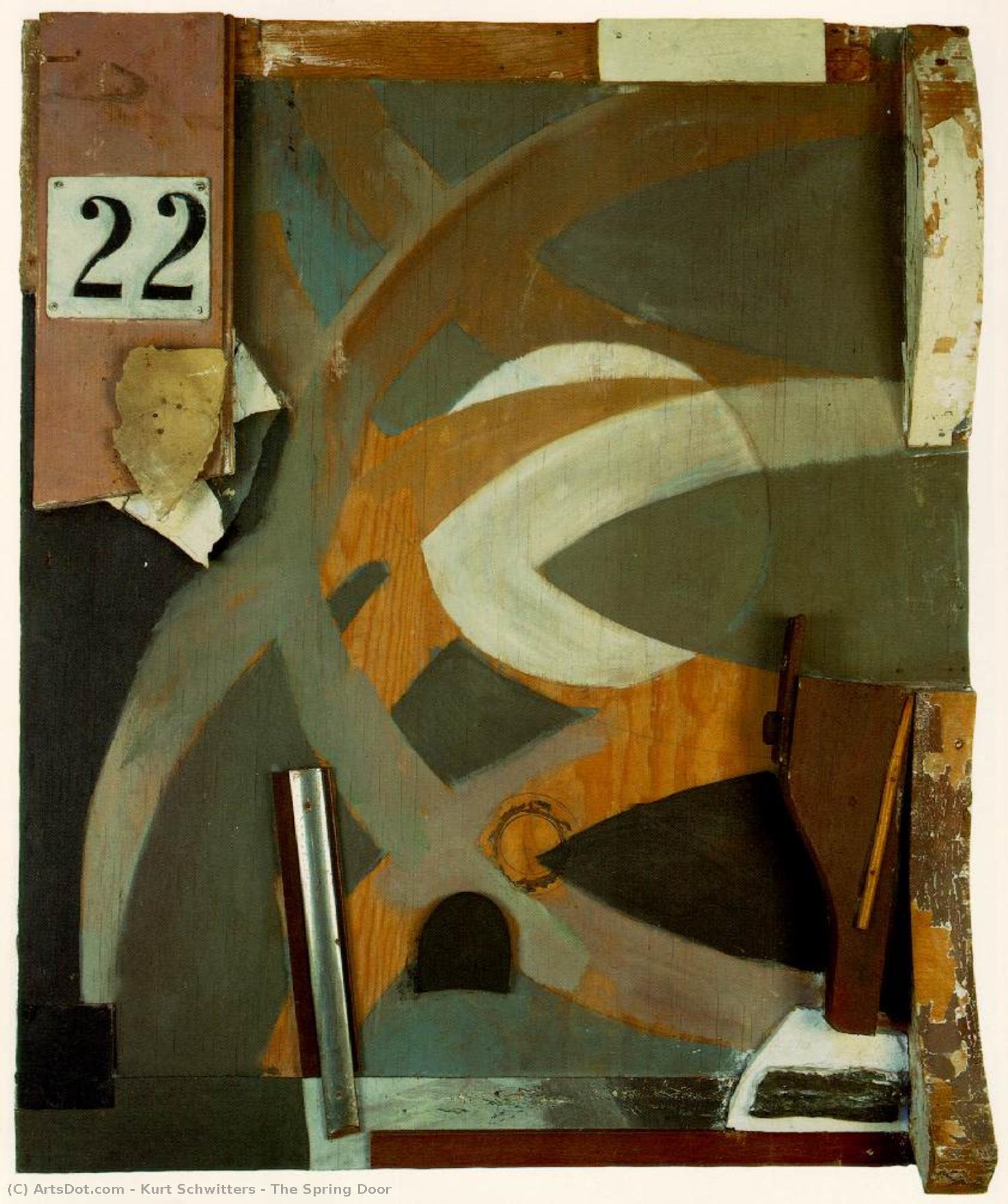
The Spring Door

Explore Kurt Schwitters’ ‘The Spring Door’ (1938), a dynamic assemblage painting of fragmented forms & industrial remnants. Discover Dada, Merz collage & its melancholic beauty.

Explore Kurt Schwitters' (1887-1948) innovative art: Dada, Merz collage & installations. Discover his use of found objects & impact on modern art.

Nabavite datoteku spremnu za štampu koja prevazilazi kvalitet onlajn pregleda. Svaka digitalna slika koju prodajemo potiče iz visokorezolucičnog master fajla iz naše baze — obično širine od 5.000 do 15.000 piksela — tako da možete štampati u velikom formatu, tesno kadrirati ili sa sigurnošću reprodukovati najfinije detalje.

Nijedan fajl ne napušta naš studio netaknut. Digitalni stručnjak proverava boje u odnosu na originalno delo i ispravlja ih po potrebi, a zatim unapređuje jasnoću i detalje pomoću profesionalnih alata za retuširanje — uvek ostajući veran umetnikovim potezima četkice i stilu. Rezultat je slika koja izgleda kao pravo delo, a ne kao sken sa filterom.

Odobravate pre završetka: naš stručnjak vam šalje sliku putem e-pošte u roku od 72 sata na pregled. Niste zadovoljni? Zatražite poboljšanja ili ispravke, ili tražite povraćaj novca ako kvalitet ne ispunjava vaša očekivanja.

Ovo je kvalitet kojem veruju izdavači, dizajnerski studiji, galerije i štamparije.

Digitalna slika

Preuzmite datoteku visoke rezolucije za ličnu upotrebu, štampanje i kreativne projekte. ( Pređi na štampu Kupite ručno oslikano delo)

Ukupna cena

дин 2572,81

Uključeno uz svaku porudžbinu digitalne slike

Profesionalna digitalna isporuka, zagarantovana

Kada odaberete WahooArt.com, ne dobijate samo sliku – vi primate profesionalno unapređeno digitalno umetničko delo, izrađeno sa najvećom preciznošću i uz garanciju zadovoljstva. Evo svega što automatski dolazi uz vašu porudžbinu:

Brza dostava putem e-pošte

Vaša digitalna slika visoke rezolucije biće vam poslata putem e-pošte u roku od 72 sata od poručivanja – spremna za trenutnu upotrebu.

Digitalna datoteka unapređena veštačkom inteligencijom

Vaše umetničko delo je profesionalno optimizovano primenom naprednih AI alata i ručne obrade, čime se osiguravaju maksimalni detalji, oštrina i preciznost boja.

Besplatna doživotna ponovna isporuka

Slučajno ste obrisali ili izgubili svoju datoteku? Ne brinite – poslaćemo vam je ponovo u bilo kom trenutku, potpuno besplatno.

Bez troškova uvoza – zauvek

Uživajte u svojim umetničkim delima trenutno, bez carine, akciza ili troškova dostave – digitalni download je uvek bez poreza.

Garancija preciznosti boja

Uz pomoć profesionalnih alata i upravljanja bojama, osiguravamo da vaša digitalna slika što vernije odražava originalne boje.

Garancija zadovoljstva u roku od 100 dana

Ako niste zadovoljni svojom digitalnom slikom, izvršićemo reviziju ili ćemo vam vratiti 100% novca u roku od 100 dana – bez ikakvih pitanja.

100% garancija povrata novca

Niste zadovoljni? Dobijte puni povraćaj novca u roku od 100 dana od prijema digitalne datoteke – bez suvišnih pitanja.

Popusti na velike porudžbine

Kupite 3 slike, uštedite 10% - Kupite 5 slika, uštedite 15% - Kupite 10+ slika, uštedite 20%. Odlično za kreativne projekte, galerije i agencije.


Biografija umetnika

Kurt Schwitters: A Life in Merz

Early Life and Education

  • Born: June 20, 1887, in Hanover, Germany.
  • Schwitters was the only child of Eduard and Henriette Schwitters. His father co-owned a ladies' clothing shop.
  • The family’s financial situation improved after selling the business in 1898, allowing them to live off rental income from properties they acquired.
  • He studied art at the Dresden Academy from 1909-1915 alongside artists like Otto Dix and George Grosz, though he seemingly remained unaware of their work at the time.
  • Schwitters suffered his first epileptic seizure in 1901, which later exempted him from military service for a period during World War I.

Artistic Development and the Birth of Merz

  • Initially, Schwitters worked in a post-impressionist style. His early work reflected this influence.
  • The devastation of World War I profoundly impacted his artistic direction. He felt traditional academic training was irrelevant in the face of societal collapse.
  • “In the war, things were in terrible turmoil…everything had broken down and new things had to be made out of the fragments; and this is Merz.”
  • Around 1918, he began creating abstract collages using found objects – scraps of paper, tickets, and other discarded materials.
  • The term “Merz” itself came from a fragment of text (“Commerz und Privatbank”) cut from an advertisement and incorporated into one of his early works, *Das Merzbild* (1918-19).

Key Works and Artistic Styles

  • Merz Pictures: These collages are arguably Schwitters’ most famous contribution. They represent a radical departure from traditional art, embracing chance and the aesthetics of everyday life.
  • Merzbau: A monumental architectural construction within his home in Hanover, continuously evolving over decades. It was a three-dimensional embodiment of Merz principles – a labyrinthine space filled with niches, grottoes, and found objects.
  • Assemblage & Installation Art: Schwitters pioneered these forms, blurring the boundaries between painting, sculpture, and architecture.
  • He also worked in poetry, sound, graphic design, and typography, exploring a wide range of artistic media.

Influences and Connections

  • Early influences included post-impressionism, but he quickly moved beyond these conventions.
  • He came into contact with members of the Berlin avant-garde – Raoul Hausmann, Hannah Höch, and Hans Arp – through Herwarth Walden’s *Der Sturm* gallery.
  • While associated with Dadaism, Schwitters maintained a distinct artistic identity. He was initially rejected by some Dadaists for his ties to expressionism.

Later Life and Legacy

  • Facing increasing persecution under the Nazi regime due to his “degenerate art,” Schwitters fled Germany in 1937.
  • He spent time in Norway and England, continuing to create Merz works despite challenging circumstances. He was briefly interned as an enemy alien during World War II.
  • Died: January 8, 1948, in Ambleside, England.
  • Kurt Schwitters’ work profoundly influenced subsequent generations of artists, particularly those involved in Pop Art, Minimalism, and Conceptual Art.
  • His innovative use of found objects and his exploration of the relationship between art and everyday life continue to resonate with contemporary audiences.

Historical Significance

  • Schwitters’ Merz aesthetic challenged traditional notions of artistic beauty and authorship.
  • He expanded the definition of art by incorporating non-art materials and blurring the lines between different disciplines.
  • His work remains a powerful testament to the creative potential of fragmentation, reconstruction, and the embrace of chance.
Kurt Schwitters

Kurt Schwitters

1887 - 1948

Kratke informacije

  • Name: Kurt Schwitters
  • Movement:
    • Dadaism
    • Constructivism
    • Surrealism
    • Merz
  • Birth Date: June 20, 1887
  • Death Date: 1948
  • Birth Place: Hanover, Germany
  • Nationality: German
  • Date Of Birth: 1887
  • Date Of Death: 1948
  • Notable Works:
    • Merz pictures
    • Merzbau