BESPLATNA KONSULTACIJA SA STRUČNJAKOM ZA UMETNOST

x
Kupi štampu Kupi štampuKupi digitalnu sliku Kupi digitalnu sliku PošaljiPošalji
DetaljiDetalji Dodaj u omiljene Dodaj u omiljene ПреузмиПреузми Slični predmetiSlični predmeti Rendgenski snimakRendgenski snimak SlajdoviSlajdovi

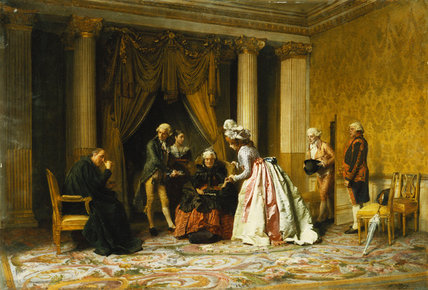
The Rich Widow

Jules Worms (1832-1924) was a French academic painter renowned for vibrant, detailed genre scenes of Spanish life & culture. Explore his Salon debut works, illustrations, and legacy in museums worldwide.

Ručno rađena uljana reprodukcija

Ručno oslikano uljanim bojama na platnu u dimenzijama i okviru po vašem izboru, izrađeno po porudžbini od strane naših umetnika.

Standard
custom
CM
INCH

Izaberite jednu od naših unapred definisanih veličina koje odgovaraju originalnim proporcijama umetničkog dela.

širina
visina

Можете унети сопствене димензије како бисте прилагодили дело одређеном оквиру или простору. Ако одабрана величина не одговара пропорцијама оригинала, слика ће бити исечена или проширена додатним елементима који се ручно насликавају. Дигитални prikaz ће вам бити послат на одобрење пре почетка производње.
Имајте на уму да преглед на екрану не одражава стварно исецање или проширење. Само приказ (mockup) ће тачно приказати коначну композицију.
Иако су доступне прилагођене величине, препоручујемо да одаберете димензију из дефинисане листе како бисте сачували оригиналне пропорције.

Primeri onoga što se može promeniti: Zamena lica fotografijom kupca; Dodavanje ljubimca (npr. zamena mačke psom); Uključivanje skrivene poruke u pozadini; Promena pejzaža ili elemenata pozadine.
Nakon narudžbine, tim WahooArt.com će klijentu putem e-pošte poslati uputstva i dostaviti prikaz predloženog rešenja

Isporuka širom sveta () za 3/4 nedelje umesto uobičajenih 5 nedelja. (3 јул). Bez kompromisa po pitanju kvaliteta.

why_choose_icon
Besplatna ekspresna dostava širom sveta
why_choose_icon
Visokokvalitetno laneno platno
why_choose_icon
Kompletno osiguranje transporta
why_choose_icon
Garancija povraćaja carine i uvoznih dažbina
why_choose_icon
Garancija vernosti boja
why_choose_icon
Politika povrata u roku od 60 dana (samo u slučaju nedostataka)
why_choose_icon
Garancija povrata novca od 100%
why_choose_icon
Popust pri grupnoj kupovini

Ukupna cena

-

reproduction

The Rich Widow

Tehnika reprodukcije

Dimenzije reprodukcije

-

Konačna cena

-


Biografija umetnika

Jules Worms: A Capturer of Spanish Charm

Jules Worms (1832-1924) stands as a significant, yet often overlooked, figure in 19th-century French painting. Born into a family of Parisian shopkeepers, his artistic journey began unexpectedly, propelled by a fascination with the vibrant culture and spirited characters of Spain. Unlike many artists of his time who sought grand historical or mythological subjects, Worms dedicated himself to depicting everyday life – specifically, the charming and often humorous scenes of Spanish society. His work offers a unique window into a bygone era, brimming with meticulous detail, bright colors, and a distinctly romantic sensibility. He wasn’t merely painting *of* Spain; he seemed to be capturing its very essence, imbuing his canvases with a palpable sense of warmth and intrigue.

Early Life and Artistic Training

Worms's formal artistic training commenced in 1849 at the École des Beaux-Arts in Paris. He initially studied under Jean-Adolphe Lafosse, a respected academic painter known for his meticulous realism. However, it was Worms’s own burgeoning passion that truly shaped his development. His early career saw him establishing himself as an illustrator for satirical newspapers – a role that honed his observational skills and developed his ability to capture fleeting moments of human interaction with remarkable accuracy. This experience proved invaluable when he embarked on his transformative journey to Spain, beginning in 1860. The influence of this period is undeniably evident throughout his oeuvre; the lively costumes, bustling marketplaces, and spirited conversations found in his paintings are a direct reflection of his immersive experiences.

The Spanish Years: Inspiration and Technique

Worms’s six extended trips to Spain between 1860-61 and 1882 proved pivotal to his artistic development. He wasn't simply documenting the landscape; he was utterly captivated by the culture, customs, and people of the Iberian Peninsula. He meticulously sketched and studied local attire, social rituals, and regional variations in dialect and mannerisms. Returning to Paris with a wealth of visual material, Worms began to translate his observations onto canvas. His technique is characterized by an extraordinary level of detail – from the intricate embroidery on a woman’s dress to the worn leather of a craftsman's tools, every element is rendered with painstaking precision. He employed a vibrant color palette, often utilizing rich reds, blues, and yellows to evoke the warmth and intensity of the Spanish sun. Notably, his paintings frequently feature elements that hint at stories left untold – a discarded cap, a partially obscured face, or an empty doorway—inviting viewers to actively participate in interpreting the narrative.

Key Works and Notable Paintings

Several of Worms’s works stand out as particularly compelling examples of his artistic vision. “The Golden Necklace” (1868), a vibrant depiction of Spanish social dynamics, showcases his ability to capture the nuances of conversation and interaction within a luxurious setting. “A Proposal of Marriage” (1870) offers a charming glimpse into courtship rituals, with its carefully arranged figures and suggestive details. His 1871 painting, created during his time in Granada with Marià Fortuny, exemplifies his fascination with theatricality and the blending of reality and fantasy. The work’s title itself—"La romance à la mode"—suggests a staged performance, mirroring the elaborate costumes and gestures prevalent in Spanish society at the time. These paintings, along with numerous illustrations for books like *Don Quixote*, demonstrate Worms' versatility as both a painter and an artist of visual storytelling.

Legacy and Influence

Jules Worms’s work represents a significant contribution to the development of genre painting in France during the 19th century. While he drew inspiration from the academic tradition, his focus on everyday life and his distinctive style—characterized by meticulous detail, vibrant colors, and a touch of romanticism—set him apart. His depictions of Spanish culture were particularly influential, shaping perceptions of Spain within French society. His paintings continue to be exhibited in museums worldwide, offering viewers a captivating glimpse into a bygone era and the artist’s remarkable ability to capture the charm and spirit of a distant land. Worms's legacy lies not only in his individual works but also in his pioneering approach to genre painting—a testament to the power of observation, imagination, and artistic skill.
Jules Worms

Jules Worms

1832 - 1924 , France

Osnovne informacije

  • Artistic Movement Or Style: Academic painting
  • Artists Or Movements Influenced By This Artist: ['gallant painting']
  • Artists Who Influenced This Artist: ['Fortuny']
  • Date Of Birth: 1832-12-16
  • Date Of Death: 1924-11-25
  • Full Name: Jules Worms
  • Nationality: French
  • Notable Artworks:
    • The Golden Necklace
    • A Proposal of Marriage
  • Place Of Birth: Paris, France