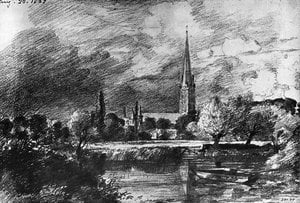
A Symphony of Light and Faith: John Constable’s Salisbury Cathedral from the Meadows
Salisbury Cathedral from the Meadows, painted in 1831 by the celebrated English Romantic artist John Constable, is more than just a landscape; it's an emotional testament to faith, hope, and the sublime power of nature. This large-scale oil painting captures the iconic Salisbury Cathedral rising majestically above the lush meadows and tranquil riverbanks of Wiltshire, England. Currently housed at Tate Britain, this work represents a culmination of Constable’s artistic vision and remains one of his most beloved masterpieces.
Subject & Composition
The scene unfolds with a masterful balance between architectural grandeur and pastoral serenity. The cathedral spire dominates the right side of the canvas, drawing the eye upwards towards the heavens. Below, a vibrant landscape teeming with life – grazing livestock, figures crossing a river, and quaint village structures – grounds the composition and provides depth. Constable’s careful arrangement creates a harmonious interplay between man-made structure and natural beauty, emphasizing their interconnectedness. The dramatic sky, punctuated by a radiant rainbow, serves as a powerful backdrop, enveloping the scene in an atmosphere of both awe and tranquility.
Style & Technique
Constable was a pivotal figure in Romantic landscape painting, and this work exemplifies his signature style. He rejected the highly finished, idealized landscapes prevalent at the time, opting instead for a more naturalistic and emotionally resonant approach. His technique is characterized by loose, expressive brushstrokes and a somewhat blurred effect, conveying movement, atmosphere, and the fleeting qualities of light.
Impasto – the thick application of paint – is particularly evident in the sky and foliage, adding texture and dimensionality to the canvas. Constable’s use of atmospheric perspective—rendering distant elements paler and less distinct—further enhances the sense of depth and realism.
Historical Context & Symbolism
Painted three years after the death of his wife, Maria,
Salisbury Cathedral from the Meadows is deeply personal work imbued with symbolic meaning. Constable himself added nine lines from James Thomson’s poem *The Seasons* to the painting, revealing its underlying narrative: the rainbow represents hope and divine intervention following a storm—a metaphor for finding solace after loss. The cathedral itself symbolizes faith and spiritual resilience, while the surrounding landscape evokes themes of nature's restorative power. Some scholars also suggest political undertones, interpreting the scene as a commentary on the clash between industrialization and the enduring beauty of the natural world.
Emotional Impact & Legacy
This painting is not merely a visual representation of a place; it’s an evocation of feeling. The dramatic lighting, vibrant colors, and dynamic composition create a powerful emotional response in the viewer. It inspires feelings of awe, tranquility, and hope—a testament to Constable's ability to capture the sublime beauty of nature and its profound impact on the human spirit.
Constable’s influence extended far beyond England, profoundly impacting French artists like those of the Barbizon School who embraced his naturalistic approach and emotional depth.
For Collectors & Designers
- A timeless piece that brings a sense of serenity and grandeur to any space.
- Its rich color palette complements both traditional and contemporary interiors.
- High-quality reproductions capture the texture and luminosity of Constable’s original brushwork, making it an accessible masterpiece for art enthusiasts.
- The painting's symbolic depth adds layers of meaning and intellectual engagement to any collection.
Salisbury Cathedral from the Meadows remains a powerful and enduring work of art—a celebration of faith, nature, and the human spirit.



 Pregledaj u prostoru
 Naručite ručno oslikano reprodukciju
 Podeli
 Podeli
 Detalji
 Vodič
Vodič

 Preuzmi sliku
 Slični predmeti
 Rendgenski snimak
 Automatska prezentacija
 Statistika

 Pročitaj više






































 Opcija sa staklom dostupna je samo za dimenzije manje od 110 cm