


Giclée štampa ili print na platnu muzejskog kvaliteta uz brzu izradu i raznovrsne opcije završne obrade. ( Kupite ručno oslikano delo Pređi na digitalnu sliku)





























Izaberite jednu od naših unapred definisanih veličina koje odgovaraju originalnim proporcijama umetničkog dela.

Unesite željenu širinu i visinu kako bi se štampa uklopila u vaš ram ili zid. Štampu je moguće samo iseći, ali nikada povećati iznad dimenzija originalne slike, stoga format sa drugačijim proporcijama uzrokuje gubitak dela slike. Pre početka štampe, poslaćemo vam digitalni prikaz radi potvrde. Slika prikazana na ovoj stranici ne predstavlja stvarni isrez — to pokazuje samo digitalni prikaz.
Dostava širom sveta () za 2 nedelje umesto uobičajenih 4/5 nedelja. (18 новембар)
Rainstorm over the Sea
Dimenzije reprodukcije
John Constable's "Rainstorm over the Sea," painted in 1824-28, isn’t merely a depiction of a seascape; it’s a visceral embodiment of Romanticism’s fascination with nature’s power and the human condition’s vulnerability within its grand sweep. This oil on canvas captures a moment of intense drama – a furious rainstorm rolling in over the English Channel – yet it transcends simple observation, offering instead a profound meditation on light, atmosphere, and the sublime. The painting immediately draws the viewer into a world saturated with movement and emotion, a testament to Constable’s ability to translate fleeting weather conditions onto a durable surface.
The scene unfolds against a backdrop of brooding grey skies, dominated by towering cumulonimbus clouds that seem poised to unleash their full fury. The sea itself is rendered in shades of turbulent blue and brown, reflecting the storm's energy with restless waves and swirling foam. Scattered amongst this chaos are small boats – tiny specks battling the elements – and two figures, dwarfed by the scale of the tempest, adding a poignant element of human insignificance. These figures, often interpreted as representing Constable himself and his family, serve as anchors for our own contemplation, inviting us to consider our place within such overwhelming natural forces.
Constable’s technique is characterized by a remarkable immediacy and spontaneity. He employed loose, expressive brushstrokes – visible in the dynamic sweeps across the sky and the textured application of paint on the water – to capture the fleeting effects of light and weather. This approach, deeply rooted in his observation of nature, rejects the rigid formality of academic painting in favor of a more intuitive and emotionally driven style. The artist’s use of color is equally masterful; muted earth tones dominate, punctuated by flashes of brighter hues where sunlight manages to break through the storm clouds, creating a dramatic interplay of light and shadow.
Notice particularly how Constable builds up layers of paint to create depth and texture. He doesn't meticulously render every detail but instead focuses on capturing the *essence* of the scene – the feeling of being enveloped by the rain, the sense of awe inspired by the storm’s power. The horizon line is relatively straight, providing a grounding element amidst the turbulent sky, while the boats recede into the distance, subtly suggesting atmospheric perspective and adding to the painting's overall depth.
"Rainstorm over the Sea" firmly situates itself within the broader context of Romantic art. The movement’s core tenets – an emphasis on emotion, imagination, and the beauty of nature – are powerfully evident in Constable’s work. He wasn't simply painting a storm; he was exploring the concept of the “sublime” – that feeling of awe and terror inspired by encountering something vast, powerful, and beyond human comprehension. The sheer scale of the storm, combined with the vulnerability of the figures within it, evokes this profound emotional response.
Furthermore, Constable’s work reflects a shift away from classical ideals of beauty towards a more subjective and personal vision. He prioritized his own feelings and experiences over idealized representations, aligning with the Romantic emphasis on individual expression. The painting's raw energy and emotional intensity resonate deeply, reminding us of nature's untamed spirit and our own smallness within its grandeur.
“Rainstorm over the Sea” is more than just a beautiful landscape; it’s a pivotal work in the development of atmospheric impressionism. Constable’s innovative use of light, color, and brushstroke paved the way for later artists like Turner, who further explored the fleeting effects of weather and atmosphere in their own paintings. The painting's enduring appeal lies not only in its aesthetic qualities but also in its ability to evoke a powerful emotional response – a sense of wonder, vulnerability, and connection to the natural world.
Preporučena kombinacija za „Rainstorm over the Sea”, autor Џон Констабл: štampa dimenzija Medium u prostoriji tipa Living Room.
Ne – umetničko delo se nalazi u inostranstvu. Delo „Rainstorm over the Sea“ se čuva u državi Ujedinjeno Kraljevstvo, dok je Џон Констабл rođen/a u državi Уједињено Краљевство.
S obzirom na svoju Earthy paletu boja, predlaže se da "Rainstorm over the Sea" stoji u Living Room.

Džon Konstel je rođen 1776. godine u selu Ist Berholt, u hrastovom okrugu Safolku. Bio je drugi sin Goldinga i En (Vats) Konstel. Njegov otac bio je uspešan trgovac žitom i ugljem koji je posedovao Flatford Mill. Ova povezanost sa rekom i lokalnom trgovinom značila je da su ritmovi vode i kretanje robe bili sastavni deo svakodnevnog života njegovog domaćinstva. Oko 1792. godine, počeo je da radi u porodičnom poslu, upoznavši praktične aspekte trgovine žitom, pre nego što mu je životni put skrenuo ka platnu.
Njegov temeljit početak obuke dogodio se kada je 1799. godine ušao u škole Kraljevske akademije kao pripravnik. Svoje rane godine proveo je studirajući anatomiju i kopirajući dela starih majstora kako bi razumio samu strukturu sveta. Ovo formalno obrazovanje pružilo je temelj za njegova kasnija zapažanja o pejzažu. Kretao se između mirnog života sina trgovca i disciplinovanog proučavanja crteža i slikarstva, da bi na kraju pronašao put u London, gde je umetnost postala njegova sudbina i poziv.
Pejzaž njegovog detinjstva ostao je njegova nepromenljiva prisutnost. Rođen u Ist Berholtu, u Ujedinjenom Kraljevstvu, Džon Konstel je odrastao tamo gde je reka oblikovala svakodnevni ritam života. Njegov otac, uspešni trgovac žitom, držao je zakupe mlinova duž reke Stour i posedovao zemljište u okviru Dedham Vale. Ova povezanost sa vodom i zemljom nije bila samo pitanje posla; bila je to doživotna privrženost. U njemu je tinjao duboki sentimentalni özapoznavanje prema sufokskim selima – Ist Berholtu, Dedhamu, Stratford St Maryu i Langhamu. Čak i kada se odmakao od njih, prizor specifičnog livada ili način na koji svetlost pada na određenu obalu Stoura ostao bi mu urezan u sećanju.
Život ga je, na kraju, privukao ka užurbanom gradu. Živeo je u Bloomsbury delu Londona, preselivši se u Keppel Street 1817. godine, a kasnije u Charlotte Street 1822. Ove urbane ulice bile su toliko udaljene od mirnih obala reke da su delovale kao potpuno drugi svetovi. Putovao je kroz Stafforshire, Derbyshire, Lake District i Brighton, ali uprkos tim putovanjima, poznati konturi doline Stour ostali su njegova primarna referentna tačka. On je svet posmatrao kroz prizmu mesta koja je poznavao najbolje, pronalazeći osećaj pripadnosti u vlažnoj zemlji i stalno promenljivim oblacima svoje rodne regije.
Put ka profesionalnoj karijeri često zavisi od pravih preporuka i ključnih susreta. Za Džona Konstela, taj preokret je došao kroz George Beaumonta, kolekcionara koji mu je otvorio vrata novog načina posmatranja sveta. Preko Beaumonta, on je upoznao dela Kloda Lorana, čiji je uticaj pomogao da oblikuje sopstveno razumevanje pejzaža. Ove rane veze pružile su mu temelj dok je prelazio iz porodičnog biznisa trgovine žitom ka formalnom proučavanju umetnosti. Godine 1805. primio je specifičnu narudžbinu da naslika oltar za crkvu u Branthamu.
Njegov položaj u akademskoj zajednici steadily je rastao tokom decenija. Izabran je za člana Asocijacije Kraljevske akademije 1819. godine, što je bio korak koji je označio njegovo sve veće priznanje među vršnjacima. Do 1929. godine, sa 52 godine, dostigao je čin člana Kraljevske akademije. Ovaj progres bio je odraz karijere izgrađene na upornom, tihom posmatranju sveta koji ga okružuje, krećući se od lokalnih narudžbina ka priznatom mestu unutar institucionalne strukture britanske umetnosti.
Džon Konstel se nije oslanjao na teatralnost i preteranu virtuoznost kako bi izrazio svoju umetničku poruku. Umesto toga, on je težio istinskom prikazu prirodnog sveta, što je zahtevalo spor, metodan proces posmatranja. Često je stvarao na otvorenom, koristeći plein air skiciranje kako bi uhvatio suptilnu interakciju svetlosti i pejzaža. Da bi izgradio svoje velike kompozicije, oslanjao se na temelj koji su činili uljane skice, crteži grafitom i akvarelne studije. Ovi preliminarni slojevi omogućavali su mu da pažljivo razradi složenost svake scene pre nego što se posveti finalnom platnu.
Njegovi potezi četkicom nose specifičnu fizičku težinu. Koristio je gust impasto kako bi stvorio teksturu, metod koji površini pruža osećaj pokreta i vitalnosti. Ovaj taktilni pristup pomogao mu je da zabeleži jedinstven način na koji se svetlost i atmosfera menjaju iznad polja ili reke. On je ovo proučavanje svetlosti i senke nazivao „čiaroskurom prirode“. To je bio način da zabeleži stvarne, promenljive uslove neba i vode, umesto da prikazuje njihove idealizovane verzije.
Reka i nebo zauzimaju centralno mesto u njegovom umetničkom fokusu. Godine 1821. stvorio je The Hay Wain, scenu na reci Stour koja je postala njegovo najprepoznatljivije delo. Često je radio na velikim formatima kako bi uspešno uhvatio pokret vazduha i vode. To je dovelo do serije platana dimenzija od šest stopa, kao što je The Leaping Horse (1825), gde je koristio pripremnih uljanih skica u prirodnoj veličini kako bi uskladio svetlost i kompoziciju. Ova velika dela omogućila mu je da detaljno razradi pejzaž pre nego što je pristupio finalnom slikanju.
Njegovo interesovanje za lokalni pejzaž proteže se i na imanja i objekte koji se u njima nalaze. Godine 1816. naslikao je Wivenhoe Park, hvatajući ruralnu harmonijuerskog polja. Takođe, okrenuo je pažnju na interakciju svetlosti i arhitekture, što se vidi u delu Salisbury Cathedral from the Bishop's Grounds, nastalom 1823. godine. Njegova sposobnost da prenese atmosferu specifičnog mesta često se ogledala u načinu na koji je obrađivao težinu oblaka i teksturu zemlje.
Neka od njegovih slika dostigla su ogromnu vrednost dugo nakon što su završena. Delo The Lock (1824) prodat je u aukcijskoj kući Christie's 2012. godine za 22.441.250 funti. Njegov opsežan rad obuhvata i razne druge studije i završena dela:
Pečat poteza četkicom koji su oblikovali pejzaže doline reke Stour, ostao je duboko prožet tihim prisustvom nekoliko velikana. Radovi Kloda Lorana i Jakoba van Ruisdaela nudili su mu način posmatranja koji se udaljavao od teatarske veštačke izvedenosti. Džon Konstel je, takođe, pronalazio inspiraciju u kompozicijama koje je stvarao Tomas Gajnšboro, kao i u bogatim teksturama koje je ostavio Piter Paul Rubens. Ovi uticaji pomogli su mu da prevaziđe kruta, akademska pravila Kraljevske akademije. Umesto grandioznih, mitoloških scena koje su preferisali njegovi savremenici, on je tražio istinu skrivenu u vlažnosti vazduha i onom specifičnom načinu na koji svetlost preliva preko površine reke.
Njegov umetnički put često se preplitao sa putem JMW Turnera. Iako su bili savremenici, njihovo rivalstvo se jasno osetilo tokom izložbi u Kraljevskoj akademiji. Dok je jedan težio ka dramatičnom i uzvišenom, drugi je ostao vezan za poznate, lokalne pejzaže svog mladalačkog doba. Taj fokus na direktno posmatranje prirode na kraju je prešao preko kanala; njegov pristup svetlosti i atmosferi ostavio je neizbrisiv trag Barbizonskoj školi u Francuskoj, gde su umetnici težili sličnoj povezanosti sa prirodnim svetom.
Lične veze su takođe vodile njegove korake. Bio je blizak sa Džonom Fišerom, nećom biskupa od Salcburija, koji ga je pozvao da boravi u tom kraju. Ova prijatelstva nisu bila samo društvene veze; ona su mu otvorila vrata specifičnim pejzažima koje će decenijama proučavati i slikati. Kroz te ljude i ta mesta, njegovo delo je postalo autentični zapis jedne specifične, proživljene stvarnosti.
Godine koje su usledile nakon njegovog braka sa Mariom Biknel 1816. godine, bile su obeležene promenljivim osećajem pripadnosti. Dok je njegov rad ostao neraskidivo povezan sa rekom i poljima njegovog mladalačkog doba, njegov stvarni život počeo je da teži ka užurbanom gradu. Do 1827. godine, Džon Konstel se trajno nastanio u Hampstedu, u Londonu. Ovaj period bio je u senci Marijinog opadajućeg zdravlja. Ona je preminula od tuberkuloze 1828. godine, što je bio događaj koji je ostavio dubok i teži trag na njegovom životu. Ipak, on je nastavio da slika, često tražeći utehu u onoj istoj, stalno promenljivoj svetlosti pejzaža koje je proučavao decenijama.
Svoje poslednje godine proveo je u Blumsberiju, u Londonu. Ostao je posvećen svom umetničkom pozivu, prožimajući kroz platna složenosti svog privatnog života i fizičke zahtevnosti medija koji je koristio. Dana 31. marta 1837. godine, Džon Konstel je preminuo u Blumsberiju. Sahranjen je na groblju crkve Svetog Džona u Hampstedu, mestu koje je u njegovim kasnim godinama postalo njegov pravi dom.
Okrenuvši svoj pogled ka svakodnevici engleskog ruralnog krajolika, Džon Konstel je iz temelja promenio način na koji se pejzaž doživljava. Odmaknuo se od teatralnih, idealizovanih scena koje su preferisale akademije, birajući umesto toga da težinu i značaj prideli onome što je obično. Kola za seno ili jednostavna poljoprivredna zgrada postali su subjekti vredni pažljivog proučavanja. Ovaj preokret pomogao je da se fokus slikarstva pomeri sa grandioznih mitoloških narativa ka istinitom prikazu prirodnog sveta. On je pokazao da pejzaž može nositi duboki osećaj ličnog duygaja, pretvarajući pogled na reku ili livadu u način izražavanja unutrašnjih raspoloženja.
Njegova navika rada na otvorenom, kako bi uhvatio način na koji svetlost prodire kroz oblake i vlagu u vazduhu, ostavila je neizbrisiv trag na umetnike koji su došli posle njega. Ova posvećenost direktnom posmatranju i proučavanju atmosferskih efekata anticipirala je mnoga interesovanja kasnijih impresionista. Njegov uticaj prešao je preko kanala u Francusku, gde je njegov pristup pronašao odjek u Barbizonskoj školi. Ti umetnici delili su njegovo interesovanje za slikanje iz prirode i posmatranje trenutnih, promenljivih kvaliteta prirode. Njegovo delo ostaje vitalna karika sa načinom gledanja koji daje prioritet stvarnoj teksturi zemlje i nestojnoj svetlosti neba.
Prateći tragove njegovog umetničkog nasleđa kroz različite kolekcije, otkriva se kako su se njegove vizije engleskog ruralnog pejzaža vremenom prikupljale na različitim mestima. Yale Center for British Art u Nju Hedenu čuva čak 25 njegovih dela, uključujući i studiju pejzaža u blizini Dedema iz oko 1802. godine. U Londonu, prisustvo Džona Konstela oseća se u nekoliko prestižnih institucija. Victoria and Albert Museum poseduje 6 radova, kao što je scena gradnje čamaca u blizini Flatford Mills. National Gallery čuva 5 dela, među kojima je i veličanstveno platno „The Hay Wain“ iz 1821. godine. Tate Gallery održava 4 dela, uključujući detalj Flatford Mills iz 1817. godine.
Njegov uticaj proteže se daleko izvan Britanskih ostrva, sve do evropskog kontinenta. Pariski Luvr poseduje 2 dela, uključujući prikaz Helmingham Dell. Ova dela svedoče o različitim načinima na koje je umetnik hvatao svetlost i atmosferu, od teških oblaka koji se nadvijaju nad rekom Stour, do najtiših kutaka sela. Posmatranje ovih radova u različitim svetskim okruženjima omogućava nam da izbliza uočimo njegovu majstorsku upotrebu gustih slojeva boje kako bi stvorio bogatu teksturu na platnu.
The Hay Wain (1821)
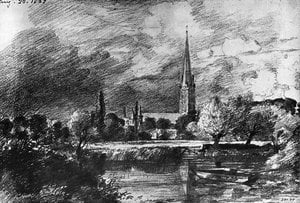
Salisbury Cathedral from the Meadows (1831)
The Lock (1824)
Stonehenge at Sunset (1836)
Wivenhoe Park, Essex (1816)

1776 - 1837 , Уједињено Краљевство

Explore 25 iconic works from Turner to Hogarth at Yale Center for British Art. Discover every masterpiece on WahooArt.com.

Immerse yourself in the soulful landscapes of John Constable. Explore our curated list of 25 iconic masterpieces, from atmospheric skies to the beauty of Dedham Vale. Find inspiration for museum-quality art reproductions and decor. Discover all masterpieces on WahooArt.com.

Explore the profound legacy of John Constable. Discover how his mastery of light, atmosphere, and the English landscape redefined Romanticism through timeless, museum-quality oil reproductions for discerning collectors.
 Pregledaj u prostoru
 Pošalji
 Podeli
 Detalji o delu
 Vodič
Vodič

 Preuzmi
 Slični predmeti
 Rendgenski snimak
 Automatska prezentacija
 Pitanja i odgovori
 Statistika


 Pročitaj više









 Opcija sa staklom dostupna je samo za dimenzije manje od 110 cm




 Cathedral iz livada](/media/artworks/images-thumb/38/67/3867546ff2620a7794f65fa168856d70.jpg)

