The Vision of Constable: Capturing the Essence of a Seaside Moment
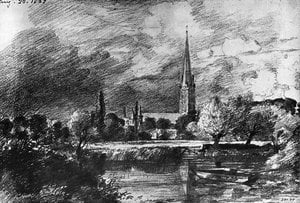
John Constable’s “Coal Brigs on Brighton Beach,” painted in 1824, isn't merely a depiction of a coastal scene; it’s a profound meditation on light, atmosphere, and the relationship between humanity and nature. Born into a family deeply rooted in the Suffolk landscape – his father owned mills along the River Stour – Constable developed an unparalleled sensitivity to the subtle shifts of color and texture that define the English countryside. This early immersion instilled within him a desire to translate the natural world onto canvas with breathtaking accuracy and, crucially, with an emotional resonance. “Coal Brigs on Brighton Beach” represents a pivotal moment in his artistic journey, showcasing his burgeoning mastery of capturing not just what he saw, but also how it *felt*.
The painting immediately draws the eye to the tranquil scene unfolding at Brighton beach. Three coal brigs – sturdy vessels laden with fuel for London’s burgeoning industrial heart – are anchored in the foreground, their dark silhouettes contrasting beautifully against the shimmering expanse of the English Channel. The artist skillfully employs a loose, expressive brushstroke, characteristic of Constable's style, to convey the movement of the water and the play of light upon its surface. Notice how he doesn’t meticulously render every detail; instead, he focuses on capturing the *impression* of the scene – the hazy atmosphere, the diffused sunlight, and the overall sense of serenity.
Romanticism in Motion: Light, Color, and Emotion
“Coal Brigs on Brighton Beach” is a quintessential example of English Romantic painting. The movement rejected the rigid formality of Neoclassicism, prioritizing subjective experience and emotional response over strict adherence to classical rules. Constable achieves this through his masterful use of color and light. He employs a delicate palette – predominantly blues, greens, and greys – to evoke the cool, misty atmosphere of the coastal scene. The subtle gradations of tone create a sense of depth and distance, drawing the viewer into the painting’s world. The warm highlights on the water and the brigs suggest a fleeting moment of brilliance amidst the prevailing gloom, hinting at both beauty and melancholy.
Furthermore, the inclusion of figures – likely local fishermen or beachgoers – adds a layer of human interest to the scene without disrupting its overall tranquility. They are rendered with minimal detail, almost as if they were merely part of the landscape itself, further emphasizing the painting’s focus on nature's grandeur. The composition is carefully balanced, creating a harmonious and visually pleasing arrangement that invites contemplation.
A Legacy of Naturalism: Symbolism and Interpretation
Beyond its technical brilliance, “Coal Brigs on Brighton Beach” carries symbolic weight. The coal brigs themselves represent the growing industrialization of England – a force that was transforming the landscape and challenging traditional ways of life. Constable’s choice to depict these vessels in such a peaceful setting suggests a subtle critique of this progress, hinting at the potential for beauty and harmony even amidst rapid change. The painting's title itself is significant; it’s not simply a description of the scene but an invitation to consider the relationship between industry and nature.
Today, “Coal Brigs on Brighton Beach” remains one of Constable’s most beloved works, celebrated for its atmospheric beauty and emotional depth. A high-quality reproduction allows you to bring this masterpiece into your home or office, transforming any space into a sanctuary of tranquility and artistic inspiration. WahooArt offers meticulously crafted reproductions that faithfully capture the artist's vision, ensuring an authentic representation of this iconic painting.
Pitanja i odgovori
U koji pokret i u koje doba je smešteno delo „Coal Brigs on Brighton Beach”, Джон Констабл?
U delu „Coal Brigs on Brighton Beach”, Джон Констабл, umetnički pravac Romanticism susreće eru 19. vek.
Mogu li da vidim „Coal Brigs on Brighton Beach”, Джон Констабл na svom zidu pre kupovine?
Delo "Coal Brigs on Brighton Beach" ima pregled proširene stvarnosti: stranica AR pregled prikazuje umetničko delo u vašem sopstvenom prostoru pomoću kompatibilnog uređaja.
Kako mogu da nabavim print dela „Coal Brigs on Brighton Beach”, Джон Констабл?
„Coal Brigs on Brighton Beach“ je dostupno kao umetnička štampa na pamučnom platnu ili arhivskom kanvas papiru. Porudžbine se vrše na stranici Umetski print, u dimenziji po vašem izboru.



 Pregledaj u prostoru
 Naručite ručno oslikano reprodukciju
 Podeli
 Podeli
 Detalji
 Vodič
Vodič

 Preuzmi sliku
 Slični predmeti
 Rendgenski snimak
 Automatska prezentacija
 Statistika

 Pročitaj više






































 Opcija sa staklom dostupna je samo za dimenzije manje od 110 cm