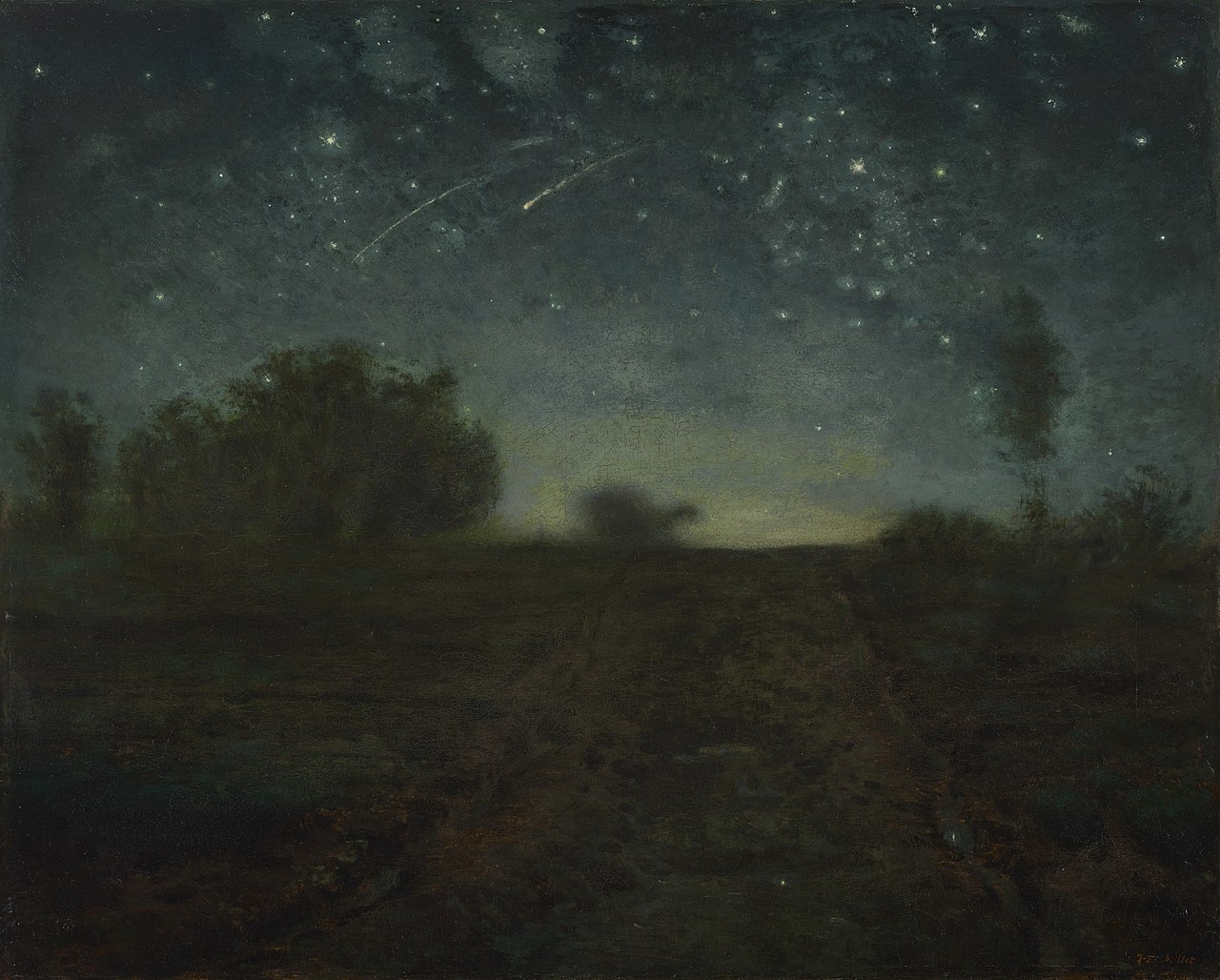
Život ukorenjen u zemlji: Svet Žana Fransoa Mijea
Žan Fransoa Mije, čije se ime nerazdvojno veže za dostojanstvo ruralnog života i procvat pokreta realizma u 19. veku, rođen je ne u umetničkom luksuzu, već u svetu koji će kasnije s ljubavlju i vernošću večno zabeležiti na platnu. Četvrtog oktobra 1814. godine dočekan je u Gruši, malom normandijskom selu urasnutom u tradiciji poljoprivrede. Ta sredina nije bila samo pozadina njegovog života; ona *je* bila njegov život, oblikujući njegov pogled i prožimajući njegovu umetnost autentičnošću koja je duboko odjeknula u društvu koje se ubrzano menjalo. Njegovi roditelji, Žan-Lujs-Nikola i Aime-Enrijet-Adelaid Enri Mije, bili su sami poljoprivrednici, uvodeći mladog Žana Fransoa u duboku povezanost sa zemljom i njenim radnicima. Rano obrazovanje nije dolazilo samo iz formalnog školovanja – olakšanog od strane lokalnih sveštenika koji su prepoznali njegov intelektualni potencijal – već i iz ritma poljskih radova: setve, žetve, mlacenja, zadaci koji će kasnije postati središnji motivi u njegovim slikama. To intimo znanje nije bilo samo posmatračko; ono je bilo iskustveno, visceralno razumevanje poteškoća i otpornosti.
Od akademskih ambicija do ruralnog otkrića
Mijeova umetnička priča počela je formalnim obrazovanjem, prvo pod mentorstvom portretiste Bona Dimuela u Šerburgu, a zatim sa Toflom Lanjlo de Ševrevilom, učenikom Barona Groa. Godine 1837. uputio se u Pariz i upisao prestižnu školu le Bel arts, gde je učio pod Paulom Delarošem. Međutim, akademska očekivanja Salona su ga ugušila. Prvi uspesi bili su praćeni odbijanjima, a Mije se suočio sa umetničkim razočarenjem. Prethodnica je nastupila u 1840-im godinama, obeležena ličnom tragedijom – gubitkom supruge Polin Viržini Ono – i rastućom nezadovoljnošću prema preovlađujućim romantiziranim prikazima seoskog života. Počeo je da odbacuje idealizovane pastoralne scene, nastojeći umesto toga da portretira ruralni egzistenciju sa nepopravljivom iskrenošću. Ta promena je dodatno učvršćena njegovom povezanošću sa umetnicima poput Konstanta Trojona, Narsisa Diaza, Šarla Žaka i Teodora Rusoa, koji su činili jezgro škole Barbizon. Ovi slikari delili su posvećenost slikanju na otvorenom – radeći direktno iz prirode – i odbacivanje akademske lažnosti. Mijeova preseljenje u Barbizon 1849. godine označila je odlučan prekid sa pariških konvencija i prihvaćanje njegove umetničke sudbine, duboko ukorenjene u pejzaže i živote koji ga okružuju.
Poetika rada: Tematika i tehnike
Mijeovo stvaralaštvo karakteriše duboka empatija prema radničkoj klasi, posebno seljačkim farmerima. On nije samo prikazivao njihov trud; on ga je podigao na nivo dostojanstva i duhovne važnosti koji se ranije retko viđao u umetnosti. Njegove slike nisu sentimentali idealizacije, već iskreni portreti poteškoća, otpornosti i tihe posvećenosti.
Gleaners (1857), možda jedna od njegovih najpoznatijih dela, oličuje ovaj pristup. Tri žene prikazane kako skupljaju preostale zitarice nakon žetve nisu romantične figure; one su radnice, savijene pod teretom rada, ali poseduju tiho dostojanstvo koje zahteva poštovanje.
The Angelus (1850-1861), još jedno remek-delo, hvata trenutak duboke duhovnosti – bračni par seljaka koji se zaustavlja na molitvi u zalasku sunca – pretvarajući svakodnevnu radnju u nešto sveto.
The Sower (1850) je svesrdno prepoznatljiva slika, koja predstavlja cikličku prirodu poljoprivrednog rada i čovekovu vezu sa zemljom. Tehnički, Mije se inspirisao holandskim majstorima, posebno njihovom maestralnom upotrebom svetla i senke, kao i klasičnom skulpturom, što je vidljivo u monumentalnosti njegovih figura. Koristio je ograničenu paletu boja, fokusirajući se na zemljanim tonovima koji su odražavali boje polja, i gradio slojeve boje kako bi stvorio osećaj teksture i dubine.
Trajno nasleđe: Mijeov uticaj i istorijski značaj
Žan Fransoa Mije umro je u Barbizonu 20. januara 1875. godine, ostavivši iza sebe delo koje je duboko uticalo na tok moderne umetnosti. On je igrao ključnu ulogu u uspostavljanju realizma kao dominantne sile u slikarstvu, izazivajući konvencije akademske umetnosti i otvarajući put budućim pokretima poput impresionizma i socijalnog realizma. Njegova posvećenost svakodnevnom životu i društvenim pitanjima rezonirala je sa umetnicima koji su težili da portretuju svet oko sebe iskreno i autentično. Njegov uticaj se protezao izvan slikarstva; njegove slike postale su simboli ruralne vrline i radničke solidarnosti, inspirisajući pisce, pesnike i političke mislioce. Umetnici poput Koree Benita Rebolleda nastavili su da istražuju teme ruralnog života i socijalne pravde, direktno pod uticajem Mijeovog primera. Danas, Mijeove slike nastavljaju da fasciniraju publiku svojom večnom lepotom, emotivnom dubinom i trajnim porukom ljudskog dostojanstva. Njegovo delo služi kao snažna opomena da se čak i u suočavanju sa poteškom može naći milost, otpornost i duboko duhovno značenje u najjednostavnijim životima.
Glavna dela
- Gleaners (1857): Pojan prikaz žena koje skupljaju preostale zitarice.
- The Angelus (1850-1861): Simbol ruralne pobožnosti i trenutak tihe posvećenosti.
- The Sower (1850): Ikonična slika koja predstavlja ciklus poljoprivrednog rada.
- Man with a Hoe: Snažna reprezentacija fizičkog truda i ljudske izdržljivosti.
- Harvesters Resting: Prikaz trenutka odmora usred napornog rada.
- Woman Baking Bread: Prikaz kućnog rada prožetog dostojanstvom.



 Pregledaj u prostoru
 Kupi ručno naslikanu sliku
 Pošalji
 Podeli
 Detalji o delu

 Преузми
 Slični predmeti
 Rendgenski snimak
 Slajdovi
 Statistika


 Pročitaj više






































 Opcija sa staklom dostupna je samo za dimenzije manje od 110 cm