Giclée štampa ili print na platnu muzejskog kvaliteta uz brzu izradu i raznovrsne opcije završne obrade. ( Kupite ručno oslikano delo Pređi na digitalnu sliku)
Izaberite jednu od naših unapred definisanih veličina koje odgovaraju originalnim proporcijama umetničkog dela.

Unesite željenu širinu i visinu kako bi se štampa uklopila u vaš ram ili zid. Štampu je moguće samo iseći, ali nikada povećati iznad dimenzija originalne slike, stoga format sa drugačijim proporcijama uzrokuje gubitak dela slike. Pre početka štampe, poslaćemo vam digitalni prikaz radi potvrde. Slika prikazana na ovoj stranici ne predstavlja stvarni isrez — to pokazuje samo digitalni prikaz.
Dostava širom sveta () za 2 nedelje umesto uobičajenih 4/5 nedelja. (10 новембар)
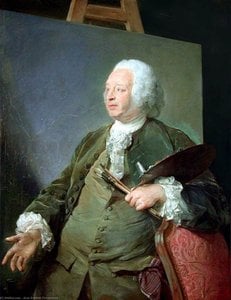
Self-Portrait
Dimenzije reprodukcije
The Self-Portrait by Jean-Baptiste Greuze, a renowned French painter, offers an intimate and compelling view of the artist himself. Created in 1785, this oil on canvas painting (measuring 73 x 59 cm) resides within the esteemed Musée du Louvre in Paris, France. More than just a likeness, it's a study of character and introspection, reflecting the artistic sensibilities of its time.
Jean-Baptiste Greuze was a pivotal figure in French painting during the late 18th century. His style is characterized by a delicate balance between Rococo elegance and emerging Neoclassical ideals. While he initially gained recognition for his genre scenes depicting everyday life, this self-portrait showcases a more formal approach, influenced by the clarity and precision of Neoclassicism. You can see echoes of artists like Jacques-Louis David in the composition's structure and attention to detail. Greuze’s mastery lies in his ability to render textures with remarkable realism, using soft, golden light to create a sense of warmth and intimacy while maintaining a dignified composure.
The self-portrait depicts Greuze dressed in a dark coat with a high collar, paired with a crisp white shirt and a neatly tied cravat. His expression is serious, almost contemplative, conveying an air of quiet confidence and perhaps a touch of melancholy. The background is deliberately muted – a soft brown hue that doesn't distract from the subject but rather serves to highlight Greuze’s figure. The painting demonstrates a skillful use of chiaroscuro, the dramatic interplay of light and shadow, which adds depth and volume to his face and clothing. Notice the meticulous attention paid to the texture of the fabric – the subtle sheen of the shirt, the rich weave of the coat – all rendered with impressive accuracy. The artist’s hand is evident in the smooth blending of colors and the careful modeling of forms.
Beyond a simple portrait, Greuze's self-portrait offers insights into the artistic climate of late 18th-century France. The formal attire suggests a desire to be recognized as a serious artist, aligning himself with the established traditions of portraiture while subtly hinting at his evolving style. The era was one of significant social and political change, leading up to the French Revolution. While this painting doesn't explicitly depict revolutionary themes, it reflects a sense of introspection and quiet dignity that characterized many artists during this period. The choice to portray himself in a moment of contemplation suggests an artist deeply engaged with his craft and aware of his place within art history. The influence of other portraitists like George Romney is also apparent in the focus on capturing the essence and character of the sitter.
Greuze’s Self-Portrait remains a compelling testament to his skill as an artist and provides a fascinating glimpse into the life of one of France's most important painters. It is a work that continues to resonate with viewers today, offering a moment of quiet reflection on artistry, identity, and the passage of time. For those interested in exploring more of Greuze’s works or learning about other artists, Jean-Baptiste Greuze's Self-Portrait is an excellent starting point. The Musée du Louvre also houses an impressive collection of artworks, including pieces by Peter Paul Rubens.
Ne – umetničko delo se nalazi u inostranstvu. Rodna zemlja umetnika Жан Батист Грез je Француска, dok se muzej u kojem se čuva original dela „Self-Portrait” nalazi u državi France.
Umetnotorijališka klasifikacija dela „Self-Portrait”, autor Жан Батист Грез pripada pravcu Neoclassical, iz perioda Early Modern.
Da biste pregledali reprodukciju dela „Self-Portrait”, autor Жан Батист Грез, otvorite stranicu Pregled u prostoru za to umetničko delo.


1725 - 1805 , Француска

Explore the refined world of Neoclassical portraiture. Discover the mastery of line, light, and order through an expert exploration of academic art history, from Jacques-Louis David to Jean-Antoine Houdon. Immerse yourself in the timeless elegance of classical realism.

Discover the ethereal beauty of Jean-Baptiste-Camille Corot. Explore how this master of light bridged Neoclassicism and Impressionism through his atmospheric landscapes, capturing the timeless essence of the French countryside with unparalleled poetic brilliance.
 Pregledaj u prostoru
 Pošalji
 Podeli
 Detalji o delu
 Vodič
Vodič

 Preuzmi
 Slični predmeti
 Rendgenski snimak
 Automatska prezentacija
 Pitanja i odgovori
 Statistika


 Pročitaj više






































 Opcija sa staklom dostupna je samo za dimenzije manje od 110 cm