BESPLATNA KONSULTACIJA SA STRUČNJAKOM ZA UMETNOST
x
Ručno oslikano uljanim bojama na platnu u dimenzijama i okviru po vašem izboru, izrađeno po porudžbini od strane naših umetnika.
Izaberite jednu od naših unapred definisanih veličina koje odgovaraju originalnim proporcijama umetničkog dela.
Можете унети сопствене димензије како бисте прилагодили дело одређеном оквиру или простору. Ако одабрана величина не одговара пропорцијама оригинала, слика ће бити исечена или проширена додатним елементима који се ручно насликавају. Дигитални prikaz ће вам бити послат на одобрење пре почетка производње.
Имајте на уму да преглед на екрану не одражава стварно исецање или проширење. Само приказ (mockup) ће тачно приказати коначну композицију.
Иако су доступне прилагођене величине, препоручујемо да одаберете димензију из дефинисане листе како бисте сачували оригиналне пропорције.
Isporuka širom sveta () za 3/4 nedelje umesto uobičajenih 5 nedelja. (1 јул). Bez kompromisa po pitanju kvaliteta.
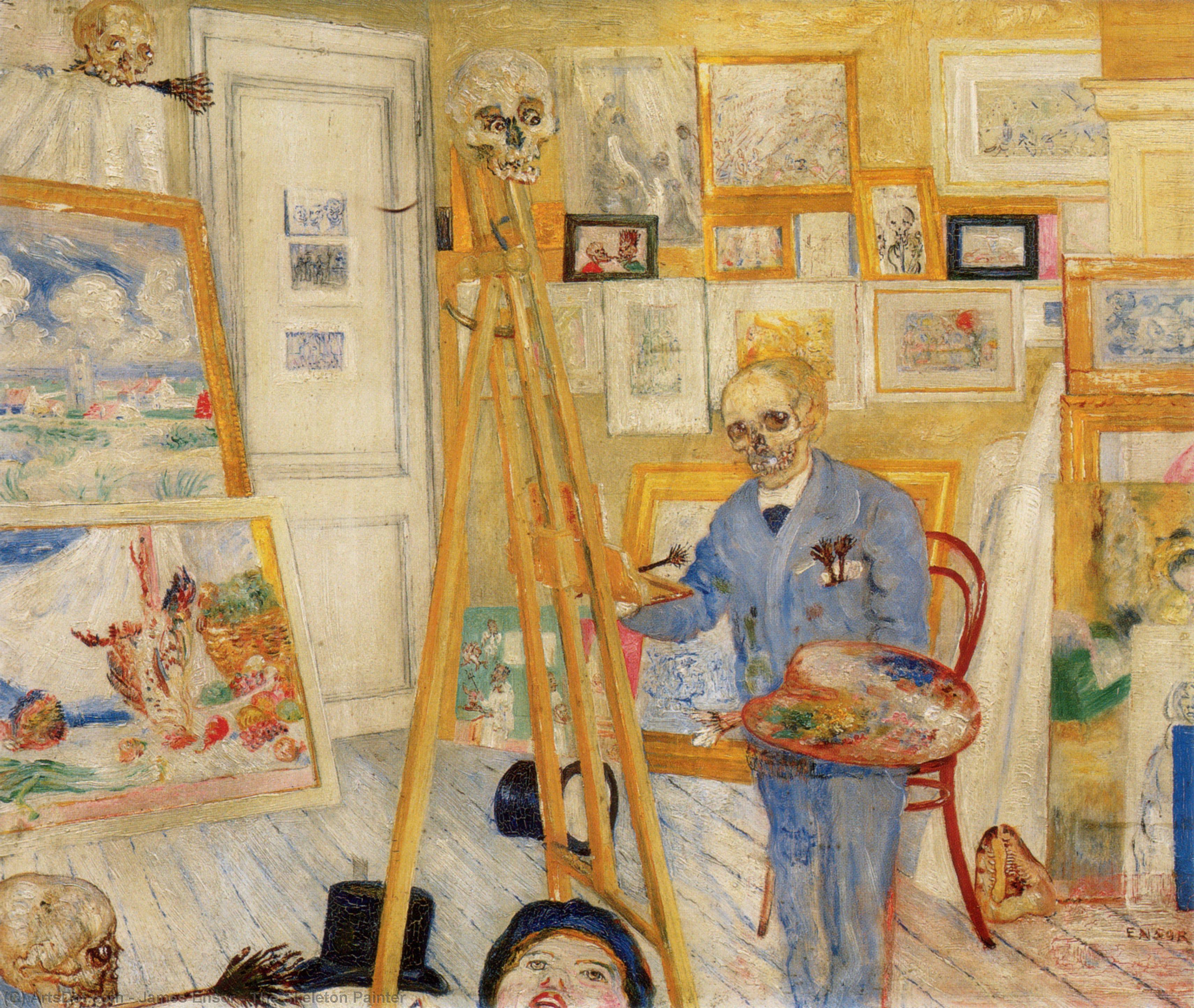
The Skeleton Painter
Dimenzije reprodukcije
James Ensor's "The Skeleton Painter," completed in 1895, is not merely a painting; it’s an unsettling plunge into the subconscious, a meticulously crafted tableau of morbidity and artistic obsession. The image, rendered with a distinctive and increasingly personal style, immediately confronts the viewer with a scene both bizarre and profoundly familiar – a room overflowing with art, dominated by a central figure: a skeleton diligently wielding a paintbrush. This isn’t a morbid spectacle intended to shock for shock's sake; rather, it’s a complex meditation on life, death, creativity, and the inescapable nature of artistic endeavor. Ensor, born in Ostend, Belgium, in 1860, cultivated an intensely individual vision, one deeply rooted in his upbringing amidst the vibrant chaos of a seaside resort town and fueled by a fascination with masks, disguise, and the theatricality of human experience.
The setting itself is crucial to understanding the painting's power. The room is crammed with canvases, each bearing witness to Ensor’s restless hand. A dining table, laden with objects—a clock, a partially consumed meal—suggests an interrupted life, a space where sustenance and creation intertwine. The presence of other skeletons, scattered amongst the chairs and leaning against walls, reinforces the pervasive theme of mortality. These aren't simply decorative elements; they are active participants in the scene, almost as if they’re observing or even contributing to the artist’s work. The inclusion of a cat, curled up near the left edge, adds an element of domesticity and perhaps a subtle critique – a creature of instinct and survival nestled within this world of intellectual pursuit.
Ensor’s technique is immediately recognizable. He employed a thick, impasto application of paint, building up layers of color to create a tactile surface that seems almost sculptural. The palette is deliberately muted – browns, greys, ochres, and deep blues dominate—contributing to the painting's somber mood. The skeletal figure itself is rendered with remarkable detail, highlighting the fragility of bone while simultaneously conveying a sense of focused determination. Notice how Ensor uses strong diagonals – particularly in the arrangement of the chairs and paintings – to create a feeling of unease and instability. The use of color is not about beauty; it’s about evoking emotion, creating a visual atmosphere of melancholy and contemplation. His style evolved significantly throughout his career, moving away from academic influences towards a highly expressive, often unsettling, approach that anticipated the Symbolist movement.
"The Skeleton Painter" can be interpreted as an exploration of Ensor’s own artistic identity and his relationship to mortality. The skeleton artist represents not just death but also the inevitable end of creative endeavor, the fading of inspiration with time. It speaks to the paradox of the artist – someone who often seems detached from the everyday realities of life, yet is ultimately defined by their engagement with them. Ensor’s own struggles with artistic recognition and his rejection of traditional academic training likely fueled this preoccupation with themes of isolation and the ephemeral nature of existence. The painting isn't a celebration of art; it’s a questioning of its purpose and its ultimate significance in the face of oblivion. It invites us to consider what drives an artist to create, knowing that their work, like their own physical form, will eventually succumb to time.
WahooArt offers exquisite, hand-painted reproductions of James Ensor’s “The Skeleton Painter,” allowing you to bring this haunting masterpiece into your home or office. Each reproduction is created with the same meticulous attention to detail and expressive technique as the original, capturing the painting's unique atmosphere and emotional depth. Explore our collection today and experience the unsettling beauty of Ensor’s vision.
James Sidney Edouard, Baron Ensor (Ostend, 13 April 1860 – 19 November 1949) was a Belgian painter and printmaker who stands as one of the most influential figures in the development of Expressionism and Surrealism. Born into an English father and Belgian mother amidst the vibrant atmosphere of Ostend’s seaside resort town, Ensor’s upbringing instilled within him a profound fascination with observation and detail—a foundation upon which he would construct his distinctive artistic vision.
From a young age, Ensor demonstrated an exceptional talent for drawing and painting. Encouraged by his parents' operation of a souvenir shop brimming with curiosities and carnival masks – a veritable cabinet of wonders that ignited his imagination – he pursued formal artistic training at the Académie Royale des Beaux-Arts in Brussels. Despite encountering resistance from the rigid academic conventions of the time, Ensor quickly recognized the necessity of forging his own path, prioritizing experimentation and personal expression above all else.
Around 1886–87, Ensor embarked on a transformative artistic journey, rejecting Impressionistic ideals in favor of a bold embrace of grotesque imagery. Influenced by Rembrandt’s masterful use of chiaroscuro, the unsettling visions of Francisco Goya, and the evocative symbolism of Japanese woodcuts, he developed a highly personal iconography characterized by jarring juxtapositions of color and form.
Ensor's oeuvre is marked by an unparalleled exploration of psychological complexity and social critique. Paintings like *The Oyster-eater* (1882) exemplify his meticulous attention to detail and his ability to convey profound emotional resonance, while *Christ’s Entry into Brussels* (1888–89), arguably his magnum opus, remains a monumental satire of religious hypocrisy—a painting initially met with vehement disapproval but now universally recognized as a cornerstone of Expressionist art.
James Ensor's uncompromising artistic vision profoundly impacted subsequent generations of artists. His rejection of academic formalism, coupled with his fearless confrontation of taboo subjects and his masterful manipulation of visual language—particularly the use of bold brushstrokes and vibrant hues—established him as a pivotal figure in the genesis of Expressionism and Surrealism. Today, Ensor’s work continues to inspire awe and provoke contemplation, serving as a timeless reminder that art possesses the capacity to unsettle conventions and illuminate the darkest recesses of human consciousness.
1860 - 1949 , Бележија
Recite nam o vašem projektu i naši stručnjaci za umetnost će vam pružiti 3 personalizovana predloga umetničkih dela.
Dozvolite nam da odaberemo 3 opcije specijalno za Vas - Besplatno!