


Giclée štampa ili print na platnu muzejskog kvaliteta uz brzu izradu i raznovrsne opcije završne obrade. ( Kupite ručno oslikano delo Pređi na digitalnu sliku)





























Izaberite jednu od naših unapred definisanih veličina koje odgovaraju originalnim proporcijama umetničkog dela.

Unesite željenu širinu i visinu kako bi se štampa uklopila u vaš ram ili zid. Štampu je moguće samo iseći, ali nikada povećati iznad dimenzija originalne slike, stoga format sa drugačijim proporcijama uzrokuje gubitak dela slike. Pre početka štampe, poslaćemo vam digitalni prikaz radi potvrde. Slika prikazana na ovoj stranici ne predstavlja stvarni isrez — to pokazuje samo digitalni prikaz.
Dostava širom sveta () za 2 nedelje umesto uobičajenih 4/5 nedelja. (15 новембар)
Old man
Dimenzije reprodukcije
An elderly man with a thick, weathered beard occupies the center of this medium close-up portrait. His bare chest and dark brown loincloth are rendered through heavy, expressive paint that emphasizes a rugged texture. Light enters from the upper left, carving the subject's features out of deep shadows and casting the right side of his face into darkness. The palette remains monochromatic, relying on earthy tones of burnt umber, sienna, ochre, and sepia to build form.
The brushwork is gestural and thick, utilizing an impasto technique where the oil medium creates a physical relief on the canvas. Rather than precise outlines, shapes emerge from the interplay of light and shadow, giving the figure a sculptural presence. This unfinished work contains traces of academic training, with visible underdrawing and several superimposed figure studies detected beneath the surface layers.
Created in 1878, this work reflects the artist's early period at the Académie Royale des Beaux-Arts in Brussels. The composition focuses on the upper torso and head, establishing an intimate connection with the viewer through eye-level perspective. The subject's aged skin and coarse beard suggest a life of endurance.
The somber atmosphere conveys themes of mortality and quiet introspection. Through the use of chiaroscuro-like lighting, the painting captures a sense of weight and permanence. The physical texture of the paint mirrors the weathered nature of the subject, grounding the portrait in a raw, realistic materiality.
„Old man”, autor Џејмс Енсор odiše Dramatic atmosferom i preporučuje se za Restaurant. Raspoloženje je ono što umetničko delo unosi u prostor oko sebe.
„Old man”, autor Џејмс Енсор je u Portrait formatu. Format opisuje proporcije kompozicije.
Pregled dela „Old man”, autor Џејмс Енсор možete pogledati na stranici Pregled u prostoru.

James Sidney Edouard, Baron Ensor (Ostend, 13 April 1860 – 19 November 1949) was a Belgian painter and printmaker who stands as one of the most influential figures in the development of Expressionism and Surrealism. Born into an English father and Belgian mother amidst the vibrant atmosphere of Ostend’s seaside resort town, Ensor’s upbringing instilled within him a profound fascination with observation and detail—a foundation upon which he would construct his distinctive artistic vision.
From a young age, Ensor demonstrated an exceptional talent for drawing and painting. Encouraged by his parents' operation of a souvenir shop brimming with curiosities and carnival masks – a veritable cabinet of wonders that ignited his imagination – he pursued formal artistic training at the Académie Royale des Beaux-Arts in Brussels. Despite encountering resistance from the rigid academic conventions of the time, Ensor quickly recognized the necessity of forging his own path, prioritizing experimentation and personal expression above all else.
Around 1886–87, Ensor embarked on a transformative artistic journey, rejecting Impressionistic ideals in favor of a bold embrace of grotesque imagery. Influenced by Rembrandt’s masterful use of chiaroscuro, the unsettling visions of Francisco Goya, and the evocative symbolism of Japanese woodcuts, he developed a highly personal iconography characterized by jarring juxtapositions of color and form.
Ensor's oeuvre is marked by an unparalleled exploration of psychological complexity and social critique. Paintings like *The Oyster-eater* (1882) exemplify his meticulous attention to detail and his ability to convey profound emotional resonance, while *Christ’s Entry into Brussels* (1888–89), arguably his magnum opus, remains a monumental satire of religious hypocrisy—a painting initially met with vehement disapproval but now universally recognized as a cornerstone of Expressionist art.
James Ensor's uncompromising artistic vision profoundly impacted subsequent generations of artists. His rejection of academic formalism, coupled with his fearless confrontation of taboo subjects and his masterful manipulation of visual language—particularly the use of bold brushstrokes and vibrant hues—established him as a pivotal figure in the genesis of Expressionism and Surrealism. Today, Ensor’s work continues to inspire awe and provoke contemplation, serving as a timeless reminder that art possesses the capacity to unsettle conventions and illuminate the darkest recesses of human consciousness.

1860 - 1949 , Белгија

Immerse yourself in the serene beauty of earthy driftwood tones. Explore 10 iconic masterpieces, from classical landscapes to muted modernism, and find inspiration for your decor with museum-quality reproductions. Discover all masterpieces on WahooArt.com.

Immerse yourself in the timeless beauty of olive-toned masterpieces. From Impressionist landscapes to classic oil paintings, explore the stories behind these iconic earthy works and find museum-quality reproductions for your decor. Discover all masterpieces on WahooArt.com.
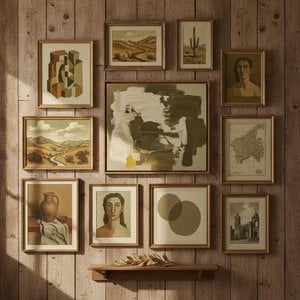
Immerse yourself in the serene beauty of earth tones. Explore 10 iconic paintings defined by khaki and neutral palettes, from Impressionism to classical landscapes. Find inspiration for your decor with museum-quality art reproductions. Discover all masterpieces on WahooArt.com.
 Pregledaj u prostoru
 Pošalji
 Podeli
 Detalji o delu
 Vodič
Vodič

 Preuzmi
 Slični predmeti
 Rendgenski snimak
 Automatska prezentacija
 Pitanja i odgovori
 Statistika

 Pročitaj više









 Opcija sa staklom dostupna je samo za dimenzije manje od 110 cm


